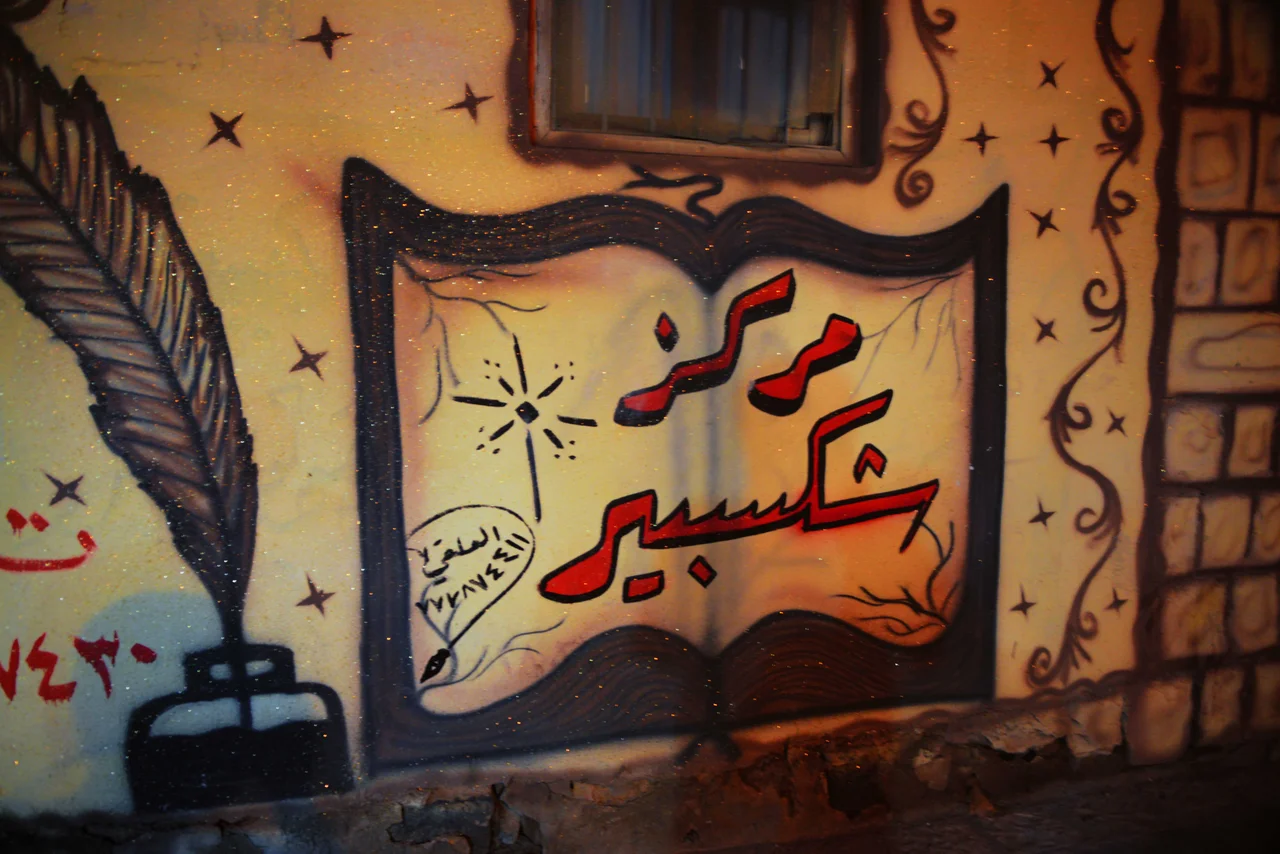

Sanaa
The song of Sanaa is a musical style so old and so central to the city's identity that UNESCO designated it Intangible Cultural Heritage in 2003. It dates to the 14th century. Musicians play it at weddings during the evening party called the samra and at the daily afternoon gatherings called magyal. The instruments are simple - the turbi lute, the sahn copper tray used as a percussion plate - but the songs preserve seven hundred years of poetry, lament, and praise. What makes Sanaa feel ancient is not just the mud-brick tower houses or the 1,000 Quranic manuscripts discovered in the Great Mosque in 1972. It is the continuity of small daily things.
The Fastest-Growing Capital
From the 1960s onward, Sanaa grew faster than almost any capital on earth - a 7 percent annual growth rate, more than double the national rate of 3.2 percent, fed by rural migrants coming to the city for jobs and schools that only Sanaa could offer. About 10 percent of the population still lives in the walled Old City. The rest spreads across new quarters that sprawl in every direction. This spreading happened on top of an aquifer - the Tawilah aquifer, first identified in 1972 - whose natural recharge rate was 42 million cubic meters a year, mostly from seasonal outflow of the surrounding wadis. By 1995, extraction exceeded recharge by 300 percent. More recent estimates put it at 400 to 500 percent. Sanaa is one of a handful of world capitals that may, within the current generation, simply run out of groundwater.
The Jewish Quarter
Sanaa held one of the oldest continuous Jewish communities in the world. For most of its history, Jewish residents of Sanaa lived in a series of evolving neighborhoods - first within the citadel near the ruins of Ghumdan Palace, then in al-Marbaki, then in al-Quzali, then in al-Sa'ilah. In 1679, during the Mawza Exile, they were forced out entirely. When they returned in 1680, they were given land outside the city walls where they built the new Jewish Quarter, al-Qa' - now Qa' al-'Ulufi. The community remained there for almost three hundred years. After the creation of Israel in 1948, roughly 49,000 of the estimated 51,000 Yemenite Jews were airlifted to Israel, almost 10,000 from Sanaa. The community that remained dwindled through the 20th century. In 2007, when the Houthi insurgency in northern Yemen directly threatened the remaining Jews, President Saleh's government offered them refuge in Sanaa itself. By 2017, about 40 of the last 50 Jews in Yemen were living in an enclave next to the American Embassy. On July 19, 2020, Mona Relief reported that only a handful remained. A community that had survived in this highland city for perhaps 2,000 years had effectively ended.
The Tower Houses
Sanaa's tower houses are six to nine stories tall, built from earth, basalt, and burnt brick, their walls white-highlighted with gypsum in geometric patterns, their upper floors crowned with qamariya - half-moon windows of colored glass and alabaster tracery. Some are more than four hundred years old. The lower floors held livestock and storage; middle floors were for daily living; the top floor - the mafraj, the sitting room - was for qat chewing, conversation, and prayer, with windows arranged to catch the highland sun from three sides. On the roof, householders traditionally mounted the horns of ibex or bull, sacred animals in pre-Islamic Yemen, to ward off the evil eye. The old city's houses stand shoulder to shoulder along narrow alleys so tightly wound that even residents occasionally get lost. UNESCO has listed the Old City since 1986. Airstrikes from the Saudi-led coalition damaged parts of it in June 2015, a fact that UNESCO condemned at the time.
Qat, Daily
Every afternoon, Sanaa's men - and many of its women - chew qat. The leaves are bought fresh each morning at the qat market; they must be consumed the same day, because the mild amphetamine-like alkaloids degrade within hours. Three varieties exist - Ahmar, Abiad, Azraq, translated red, white, and blue, with Ahmar the most prized and Abiad the weakest. Qat from north of Sanaa is considered the finest locally grown. The session happens in the mafraj, with friends or colleagues, and can last four hours or more - a chewed wad slowly swelling the cheek, conversation drifting from politics to poetry to complaints about water shortages. Qat is Yemen's largest agricultural product. It consumes water. It crowds out food crops. It is also, culturally, what social life in Sanaa is structured around.
A Capital at War
The ongoing civil war has reshaped Sanaa. Since 2014 it has been under Houthi control. Commercial flights from the airport resumed in May 2022 after a six-year halt, and intermittent truces have allowed humanitarian operations to continue. Israeli airstrikes hit the airport in December 2024 and repeatedly in 2025 in response to Houthi missile attacks on Israel. Residents cope as residents have always coped with war - by maintaining what can be maintained, by rebuilding what has been broken, by refusing to let the daily rituals lapse. The song of Sanaa is still sung. The coffee is still ground in the morning. The qamariya windows still throw their shifting colors on interior walls. The city has outlasted many empires and may outlast this one.
From the Air
Located at 15.35°N, 44.20°E at 2,250 meters elevation in Yemen's central highlands. Active conflict zone - no general aviation access. Sanaa International Airport (OYSN/SAH) is repeatedly struck by airstrikes. Recommended viewing altitude FL300+ for overview only. The city sits in a high basin ringed by mountains, with Jabal An-Nabi Shu'ayb (3,666m) visible to the southwest. Expect haze in summer months; clearer visibility in winter. The tan-and-white sprawl of the city covers approximately 125 square kilometers.
Nearby Stories
- Battle of Amran 20 km away
- Marib Dam 64 km away
- 2013 Radda airstrike 67 km away
- Al Hudaydah offensive 77 km away
- Battle of Port Midi 93 km away
- 2025 Israeli attacks in Yemen 93 km away
- Zafar, Yemen 105 km away
- Mundafan 332 km away