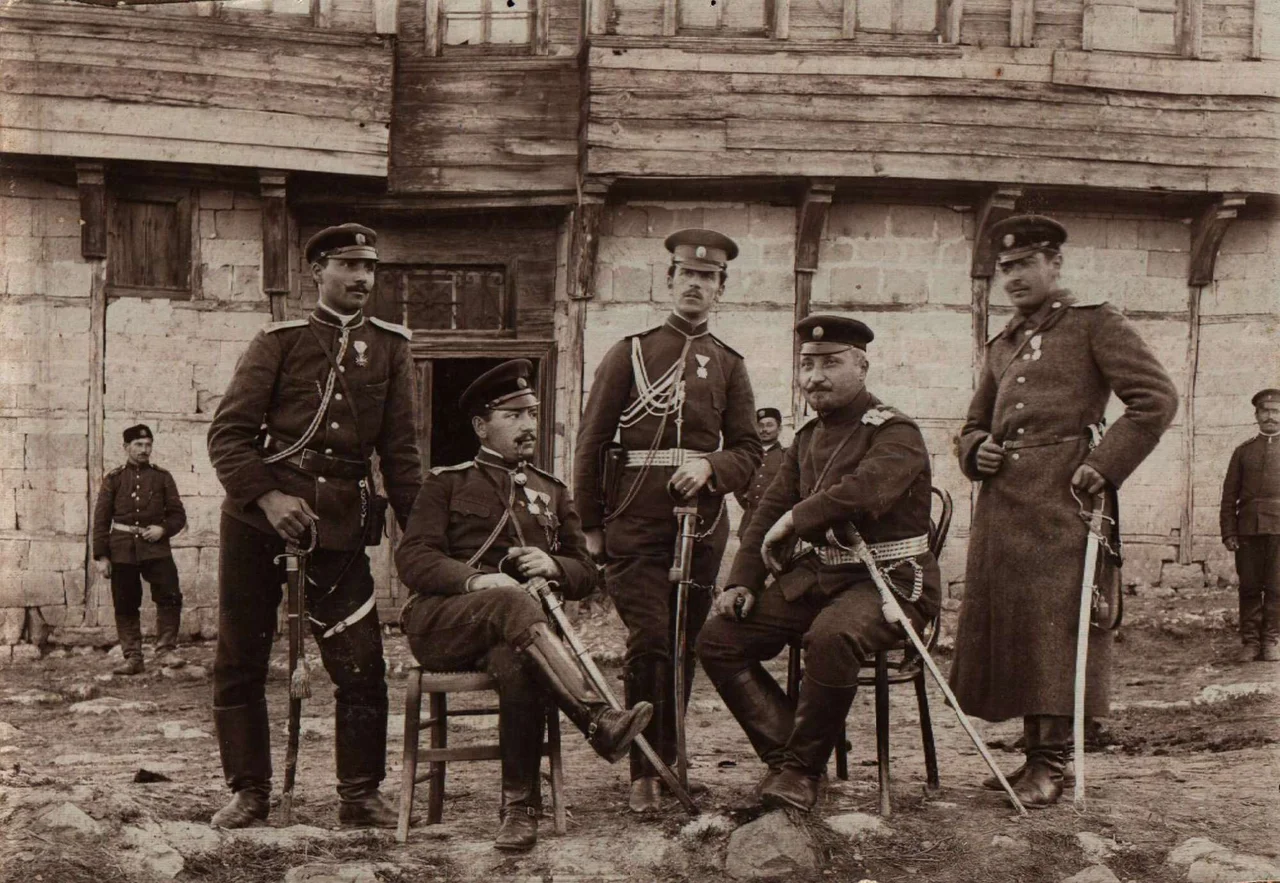

Second Battle of Çatalca
The fighting at Çatalca was, by the standards of the time, described as a 'continuous skirmish.' That phrase carries a clinical detachment that the reality did not afford. From February through April 1913, Ottoman and Bulgarian armies held fixed lines roughly forty kilometers west of Constantinople's ancient walls, and for those soldiers the experience was not a skirmish at all — it was weeks of cold, disease, and attrition. Cholera moved through the ranks with a speed and indiscrimination that artillery could not match. The men who died at Çatalca died in the muck of trenches and field hospitals, far from their families, from a war that would end with a stroke of a pen in London.
The Lines That Would Not Move
The Bulgarian advance through Thrace in the autumn of 1912 had been remarkably swift — a rout of Ottoman forces that brought the Bulgarian army to the edge of the empire's last European heartland. But at Çatalca, the Ottomans held. The First Battle of Çatalca in November 1912 stopped the Bulgarian advance cold, and both sides agreed to a two-month armistice to allow peace talks to proceed in London. The talks collapsed when, on January 23, 1913, a coup in Constantinople returned the Committee of Union and Progress — the Unionists — to power. Their position was non-negotiable: Adrianople (Edirne) must not be ceded. When the armistice expired on February 3, the fighting resumed. The Çatalca fortifications, anchored between the Black Sea coast and Lake Durusu, had been built by a German military advisory group and were formidable. The Bulgarians had already learned once that they would not fall easily.
A February Assault and Its Costs
On February 20, 1913, Ottoman commanders launched a coordinated attack. A separate assault was timed to strike from the Gallipoli peninsula simultaneously, stretching Bulgarian dispositions. The Greek Navy operated in the Thracian Sea to the south, complicating Bulgarian logistics. For a moment, the Ottoman offensive seemed to gain something. The Bulgarian defenders were pushed back — fifteen kilometers to the south and twenty to the west — before the lines stabilized and eventually returned to roughly where they had started. Neither side had broken through. Neither had gained ground that would hold. What the fighting had accomplished, above all, was to exhaust and sicken both armies. The winter conditions, the improvised field sanitation, the overcrowded positions: these were the ingredients for an epidemic. Cholera, already present in the region, found its opportunity.
The Epidemic Inside the Battle
Cholera does not distinguish between combatants. It spread through contaminated water, through the close quarters of men who had been campaigning for months without adequate supplies or rest. On the Bulgarian side, the losses to disease during the Çatalca engagements were severe — the Wikipedia source describes 'heavy Bulgarian losses to both fighting and cholera.' Ottoman forces were not spared. The men who died of cholera along the Çatalca lines were soldiers: some volunteers, some conscripts, most of them young, all of them far from home in a land where the early spring meant mud and cold. Their deaths were not heroic in any theatrical sense. They died of thirst and fever and internal hemorrhage, attended when luck allowed by overwhelmed field physicians. This was a common fate in the wars of 1912–1913, and it deserves to be said plainly rather than subsumed into casualty statistics.
Edirne Falls, and the Battle Fades
While the Çatalca lines ground on, a separate siege had been tightening around Edirne (the ancient Adrianople) since October 1912. On March 26, 1913, Edirne fell to Bulgarian forces — a blow to Ottoman morale and the collapse of the central justification for the Unionists' insistence on continued fighting. With Edirne gone, the prize was already lost. The fighting at Çatalca dwindled through late March and early April, not with a dramatic final engagement but simply with diminishing energy on both sides. By April 3 it had effectively ceased. A second armistice was agreed on April 16, and the war's last organized violence stopped. The Treaty of London, signed May 30, 1913, formalized the Ottoman loss of virtually all its European territory. The Çatalca line had held — but holding it had changed nothing fundamental about the outcome.
What the Ground Remembers
The Çatalca district today is a semi-rural area of Istanbul Province, caught between the city's expanding metropolitan fringe and the farmland and forests of Thrace. The ridgelines where the fortifications stood in 1912–1913 have long since been reclaimed by vegetation and time. There are no great monuments to the battle here — no equivalent of the Gallipoli memorials that dominate the peninsula to the south. The men who held or attacked these lines, Ottoman and Bulgarian alike, left behind relatively few traces visible to a traveler. But the landscape itself, the shallow valleys running toward the Black Sea coast, the flat ground near Lake Durusu where armies maneuvered — carries a quiet weight. History at this scale is rarely commemorated as loudly as it deserves.
From the Air
The Çatalca battlefield sits at approximately 41.14°N, 28.46°E, on the rolling terrain of European Turkey (Thrace), about 40 km west of central Istanbul. The nearest major airport is LTFM (Istanbul Airport), roughly 30 km to the northeast. At 3,000–5,000 feet, the Çatalca ridge system and the narrow strip of land between the Black Sea coast and Lake Durusu (Lake Terkos) are visible as a natural defensive barrier. The fortified lines ran roughly north–south across this neck of land. Visibility is generally good in the region outside summer haze periods, and the contrast between the lake, the forest ridges, and the coastal marshes makes the strategic logic of the position immediately apparent from the air.
Nearby Stories
- Mağlova Aqueduct 11 km away
- Sivriada 15 km away
- 2025 Istanbul Earthquake 15 km away
- SS Kurtuluş 34 km away
- Battle of Constantinople (922) 62 km away
- Ganos 64 km away
- Edirne 102 km away
- Ottoman conquest of Adrianople 146 km away