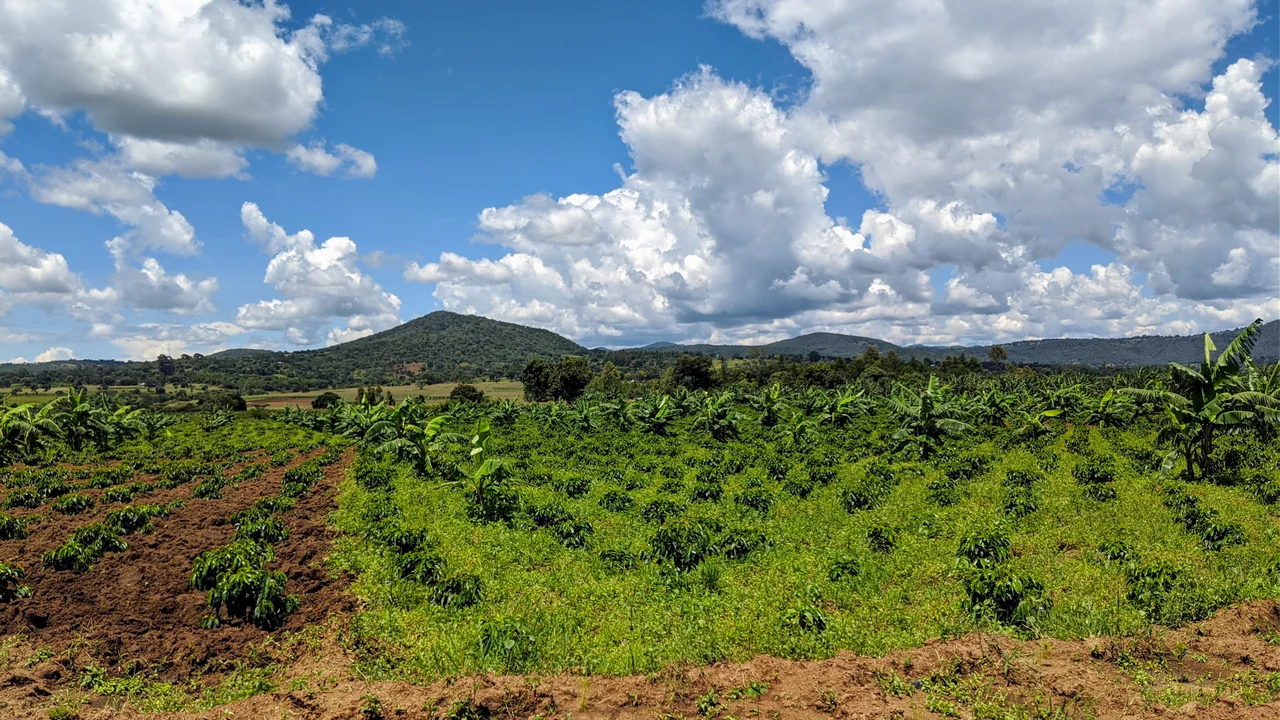

Songwe Region
On 29 January 2016, Tanzania cut Mbeya Region in half and renamed its western portion Songwe, after the river that forms part of the Malawian border. Overnight, nearly a million and a half people found themselves residents of a region that had not existed the day before. The regional capital is Vwawa - not a place most travelers have heard of, but a town sitting where the Tanzam Highway and the TAZARA Railway both run south toward Zambia. Songwe borders two countries and three Tanzanian regions. Its farms produce about one of every seven bags of coffee Tanzania sends to the world. And the Nyiha people - the largest of the region's indigenous Bantu communities, with roughly 450,000 members by 2017 estimates - have been working these highland soils long before any map labeled the ground 'Songwe.'
A Region Born From a Split
Songwe is the youngest of Tanzania's 31 administrative regions, formally established when the 2016 reorganization divided the older Mbeya Region along its natural geographic line. The western districts - Mbozi, Ileje, Momba, Songwe, and the border town of Tunduma - became the new region. The 2022 census counted 1,344,687 people living across its landscape, which is comparable in size to the country of Haiti. Regional capital Vwawa replaced Mbeya city as the administrative center for the newly independent half. This kind of administrative splitting is common in Tanzania. The pattern is always the same: a region grows too populous or too geographically awkward to administer effectively, the government carves off a portion, and life on the ground continues as it always has while officials work out which budget lines now belong to which desk.
Coffee Country
Agriculture employs about 75 percent of Songwe's households and dominates the regional economy. The Southern Highlands soil and climate produce an unusual combination of food and cash crops: maize, paddy rice, beans, sorghum, sweet potatoes, bananas, and potatoes for eating, alongside coffee, pyrethrum, sunflower, sesame, tobacco, and peanuts for sale. Coffee leads the cash crops, followed by sesame and sunflower. Songwe ranks among Tanzania's top seven agricultural producers. Livestock matters too - 410,000 cattle across the region, 244,000 goats, along with pigs, sheep, chickens, and donkeys. Along Lake Rukwa, in the Songwe and Momba districts, fishing is a significant livelihood. Mbozi District alone hosts 1,258 small-scale businesses, led by maize mills but including carpentry shops, welding operations, garages, and oil processors. It adds up to an economy that is not industrializing fast but is diversifying steadily.
The TAZARA and the Border
The TAZARA Railway - short for Tanzania-Zambia Railway Authority - runs through Songwe from Dar es Salaam toward Kapiri Mposhi in Zambia. Completed in 1975 with Chinese government assistance, TAZARA was one of the largest infrastructure projects in post-colonial Africa, built explicitly to give landlocked Zambia an alternative route to the sea that did not depend on apartheid South Africa or Portuguese-controlled Mozambique. The Tanzam Highway parallels the railway through the same corridor. Both meet the border at Tunduma, one of the busiest crossing points between East and Southern Africa, where trucks stretch back for kilometers waiting for customs clearance. Isongole handles the less-busy crossing into Malawi. For most Songwe residents, the railway is not a tourist curiosity - it is a working freight line, moving copper concentrate from the Zambian copperbelt north toward Dar es Salaam's port, and bringing manufactured goods south in return.
Mountains, Caves, Stones
The region's tourism sector is still developing. Historic sites include Nyayo za Watu wa Kale ('Footprints of Ancient People'), Galula Catholic Church, Michoro ya Kale (ancient rock paintings), Unyayo Kwenye Mwamba, and Makaburi ya Wakoloni (colonial-era graves). Mount Ilomwa, Kwimba, Kipala, Chingambo, Mwenekawenga, Pungwe, Mlomba, Ng'ongo, and Malinga offer varied hiking terrain. Linzitwa Cave and a network of forest reserves - Kaisumbe, Tiru, Msawe, Mengo, Nonda Chambo, Champande, Chingambo - preserve patches of miombo and montane woodland. The Momba and Songwe rivers drain the region. Life expectancy stands at 58.3 years as of the 2017 Tanzania Human Development Report, and GDP per capita at TZS 2.3 million. These are modest numbers, and the gap between the region's agricultural potential and its realized economic output remains wide - part of the everyday reality the Nyiha, Nyamwanga, Ndali, Manda, Bungu, and Lambya people are slowly, steadily narrowing.
From the Air
Located at 9.10 degrees south, 32.90 degrees east in the Southern Highlands of Tanzania. Regional capital Vwawa sits along the Tanzam Highway. The border town of Tunduma is the main crossing into Zambia. From altitude, the TAZARA railway and Tanzam Highway both run as a visible corridor through the highlands. Lake Rukwa is visible to the northwest.
Nearby Stories
- Mbeya 18 km away
- Mbeya Region 35 km away
- Chitipa District 62 km away
- Muchinga Province 85 km away
- Karonga District 85 km away
- Mbala, Zambia 110 km away
- Kalambo structure 123 km away
- Ruaha National Park 195 km away