
South Uist
On a Sunday afternoon on South Uist, you can buy a drink and a tin of beans. Travel a few miles north into Benbecula and that becomes uncertain; travel another few hours into Lewis and you will find every shop and pub locked. The dividing line is religious. South Uist remained largely Roman Catholic through the Reformation, and a Catholic island runs on a different Sabbath calendar than a Presbyterian one. The same line, drawn five hundred years ago, still tells you where to find a Sunday pint.
A Long, Thin, Atlantic Island
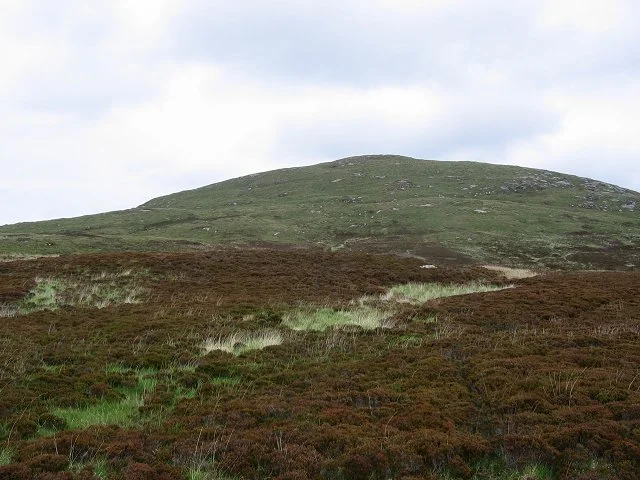
South Uist runs 25 miles north to south and only 5 miles east to west. The west coast is one continuous white-shell beach backed by machair - the fertile, low-lying coastal plain whose calcareous sand grows wildflowers in such density that the meadows hum with insects in July. The east coast is a wall of boggy brown hills, rising to Beinn Mhor at 620 metres and Hecla at 606. Most of the 1,650 islanders live along the west, exposed to the Atlantic but on the only ground worth crofting. Causeways link the island north to Benbecula and North Uist, and since 2002 south to Eriskay - which is itself linked by ferry to Barra. You can drive the entire chain in a day. You shouldn't.
Flora MacDonald and the Sea to Skye
Flora MacDonald (1722-1790) was born at Milton on South Uist. On 21 June 1746 she happened to be back on the island when the fugitive Bonnie Prince Charlie, defeated at Culloden and shipwrecked nearby on his first attempt to sail to France, turned up looking for help. Flora's family connections in Benbecula - loyal to the Hanoverians and therefore not suspect - allowed her to secure passage for the Prince, disguised, unconvincingly, as her Irish maid Betty Burke. They sailed to Skye, where Flora's relative's house steward briskly told the Prince to remove the disguise since it just made him more conspicuous. They parted at Portree and never met again. Charlie eventually reached France; Flora was thrown in the Tower of London. The 1884 song The Skye Boat Song is loosely based on the journey. The foundations of her birthplace cottage still survive near Milton, accessible day or night, marked by a small cairn.
The Mummies and the Missile Range
At Cladh Hallan in the south of the island, archaeologists found something no one else has found anywhere in Britain: two prehistoric mummies, intentionally preserved in the Bronze Age, parts replaced over centuries, then buried under a row of roundhouses. They are the only known prehistoric mummies in the British Isles, made at roughly the same era as the Egyptian pharaohs but by entirely different methods. At the north end of the island sits something almost as strange: MOD Hebrides, a missile testing range built in 1957-58 to launch the MGM-5 Corporal, Britain and America's first guided nuclear weapon. The arrival of English-speaking Army personnel prompted local fears for the Gaelic language and inspired the novel Rockets Galore, later filmed. The range still operates, testing Rapier missiles and unmanned drones over the Atlantic. The mummies and the missiles share a coastline.
Stoars Uibhist and the Community Buyout
In November 2006, the people of South Uist, Benbecula, and Eriskay completed the largest community land buyout in Scottish history. The 92,000-acre estate, owned by a sporting syndicate, was sold for 4.5 million pounds to a community company called Storas Uibhist - 'Uist Resource' in Gaelic. The buyout reversed centuries of absentee landlordism that began with the Highland Clearances, when many of the original inhabitants were forced onto ships to Canada. Storas Uibhist now owns the Lochboisdale marina, the 6.9-megawatt Lochcarnan wind farm, and the South Uist Estate itself, reinvesting the income into local infrastructure, Gaelic culture, and the housing that keeps young families on the island. The wind farm started generating in 2013. The herring boats are gone. The crofts remain.
Askernish, Ceolas, and the Sound of the Place
Askernish Golf Course was laid out in 1891 by Old Tom Morris, the same hand behind the Old Course at St Andrews. It was partially destroyed in the 1930s when a wartime runway was cut through it, then abandoned and lost. Its identity was rediscovered in the 2000s, restoration to Morris's original design began, and the course reopened in August 2008 - the oldest in the Outer Hebrides, run as a community asset. Meanwhile, every July, the summer school Ceolas brings Gaelic singers, fiddlers, and step-dancers to Daliburgh for a week of intensive teaching, contributing roughly 210,000 pounds to the local economy in 2019. The Middle District of South Uist is the strongest Gaelic-speaking community in the world at 82 percent. The course and the school are two ways the island has decided not to disappear quietly.
From the Air
South Uist runs from about 57.07 degrees north (Eriskay causeway) to 57.45 degrees north (the Benbecula causeway), centred near 57.27 degrees north, 7.32 degrees west. The only airport is Benbecula (ICAO: EGPL), just off the north end via causeway, served by Loganair from Glasgow (1 hour) and Stornoway. Barra Airport (EGPR) to the south lands on a tidal beach. From cruising altitude, South Uist is unmistakable: a long, narrow island with a continuous pale beach on the west, dark mountains on the east, and a road running its full length. Westerly Atlantic weather and frequent low cloud are the norm; VFR conditions are rare and often brief.
Nearby Stories
- Battle of Carinish 8 km away
- Amy of Garmoran 8.6 km away
- SS Seniority 14 km away
- Talisker 16 km away
- Muck 29 km away
- St Kilda, Scotland 63 km away
- SS Athelstane (1941) 121 km away
- German submarine U-516 146 km away