
SS Yongala
The warning was flying from the signal station, and the Yongala never saw it. As she steamed north past Mackay on 23 March 1911, the flags at Flat Top Island carried news of a cyclone gathering between Townsville and Mackay. Other ships read the signal and ran for shelter. But the Yongala had no wireless set yet, hers was still in transit from England, and she pressed on into open water and out of sight of land. Somewhere off Cape Bowling Green, the storm found her. All 122 people aboard were lost. Not one body was ever recovered.
A Fine Ship on a Long Run
The Yongala was barely eight years old and well loved. Built in 1903 at the Armstrong Whitworth yard on the Tyne for the Adelaide Steamship Company, she was a handsome vessel with electric lighting throughout and accommodation for 240 passengers. She had pioneered Australia's longest interstate route, a 2,700-nautical-mile run linking Fremantle to the eastern ports. Her name came from the South Australian town of Yongala, a word from the Ngadjuri people meaning broad water. On her final voyage she carried first- and second-class passengers up the Queensland coast, along with cargo, a Lincoln Red bull, and a racehorse named Moonshine. A harbour inspection had pronounced her in excellent trim.
The Days of Waiting
When the Yongala failed to arrive at Townsville, hope held on for a while. Perhaps she had simply taken shelter, as prudent ships did. By 26 March she was listed as missing, and the Premier of Queensland sent seven vessels to search. Then the sea began to give back its evidence. Wreckage washed ashore along the coast between Hinchinbrook Island and Bowen. The body of the racehorse Moonshine was found at Gordon Creek. Of the men, women and children, there was nothing. The government offered a thousand-pound reward for anyone who could find the ship. The reward went unclaimed and was eventually withdrawn. For their families, there was no wreck to mourn over and no graves to visit, only an empty stretch of the Coral Sea.
Forty-Seven Years in the Dark
The Yongala kept her secret for nearly half a century. Then, in 1958, the wreck was located on the sea floor off Cape Bowling Green. A fisherman recovered a safe from one of the cabins; inside was only black sludge, but part of a serial number survived, 9825W. Years later, the safe's English makers matched that number to the one they had supplied in 1903 for the cabin of the Yongala's purser. The mystery was finally closed. The ship lay on her starboard side in about thirty metres of water, more than a hundred metres of hull resting intact on open sand, her dead still within her. By Australian and international heritage law she is now strictly protected, and divers are forbidden from entering the hull, out of respect for those who never left it.
Where the Lost Ship Teems With Life
There is a strange grace to what the Yongala has become. Rising alone from a flat sandy seabed, the wreck is the only hard structure for miles, and over a century the ocean has claimed it utterly. Soft and hard corals encrust the hull. Giant groupers and Maori wrasse patrol the decks; sea snakes, turtles, eagle rays and schooling trevally swirl through the superstructure, while bull sharks cruise the blue beyond the bow. More than ten thousand divers come each year to one of the most celebrated wreck dives on Earth. They descend in silence, the way one enters a memorial. The Yongala is a grave that has filled with life, a place where loss and abundance share the same dark water, and the 122 are never quite forgotten.
From the Air
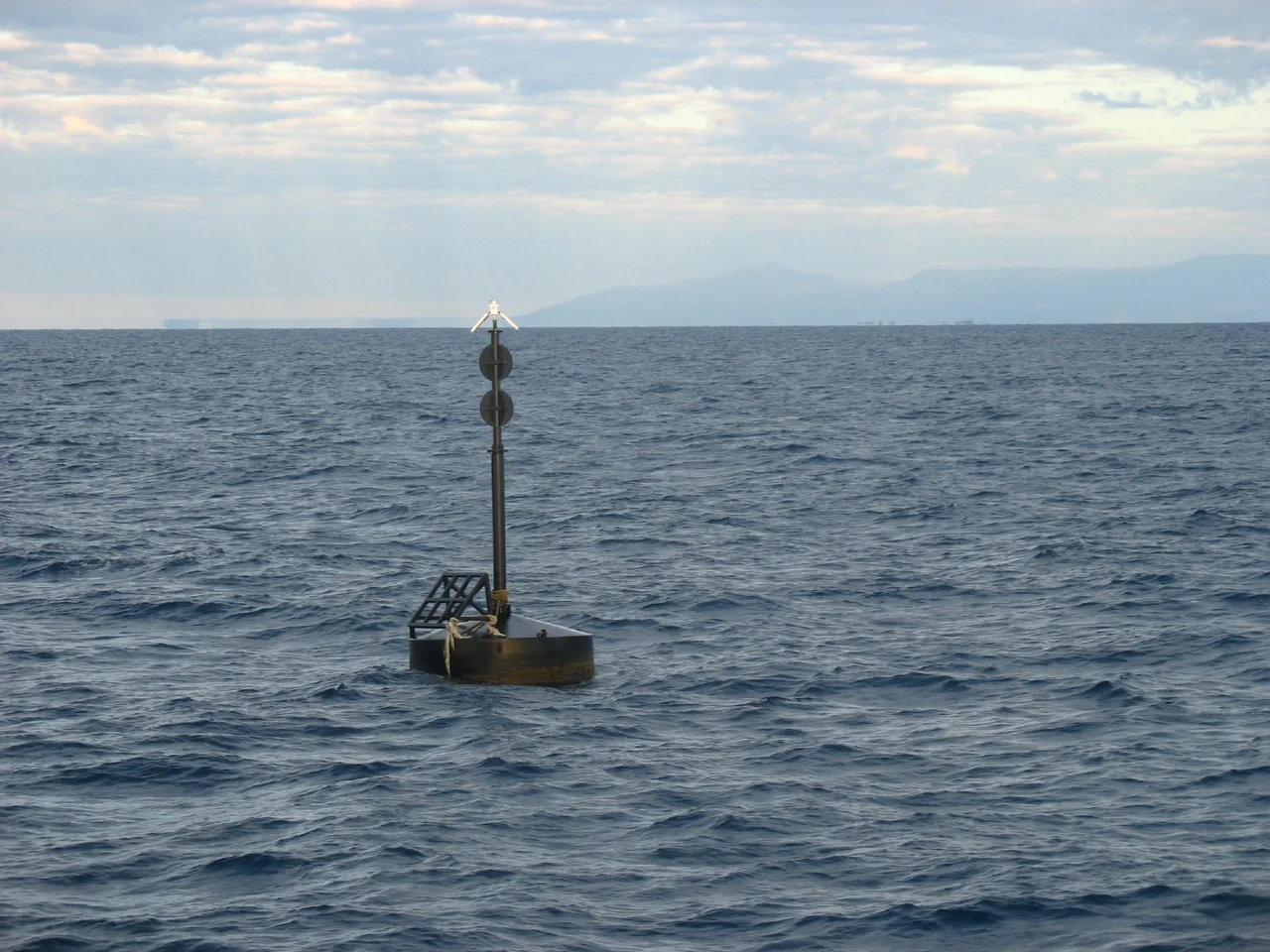
The Yongala wreck lies on the floor of the Coral Sea at -19.304, 147.625, about 22 km east of Cape Bowling Green and roughly 89 km (48 nautical miles) southeast of Townsville, within the Great Barrier Reef Marine Park. There is nothing to see on the surface, the wreck rests in about 30 m of water with its upper structure some 14-16 m down, but the site sits over open ocean off the long, low spit of Cape Bowling Green, whose lighthouse marks the nearest landmark to the northwest. Nearest airport is Townsville (ICAO YBTL). Conditions over this water are best in the calmer dry-season months; cyclone risk runs high from December through April, the same season that claimed the ship. Recommended transit altitude well clear of any developing tropical weather; treat the position as a place of quiet remembrance.
Nearby Stories
- Ayr 11 km away
- Andrew Ball (Townsville pioneer) 14 km away
- SS Gothenburg 14 km away
- Great Palm Island 48 km away
- Bowen 61 km away
- Imperial Hotel, Ravenswood 66 km away
- Palm Island, Queensland 99 km away
- Samarai 973 km away