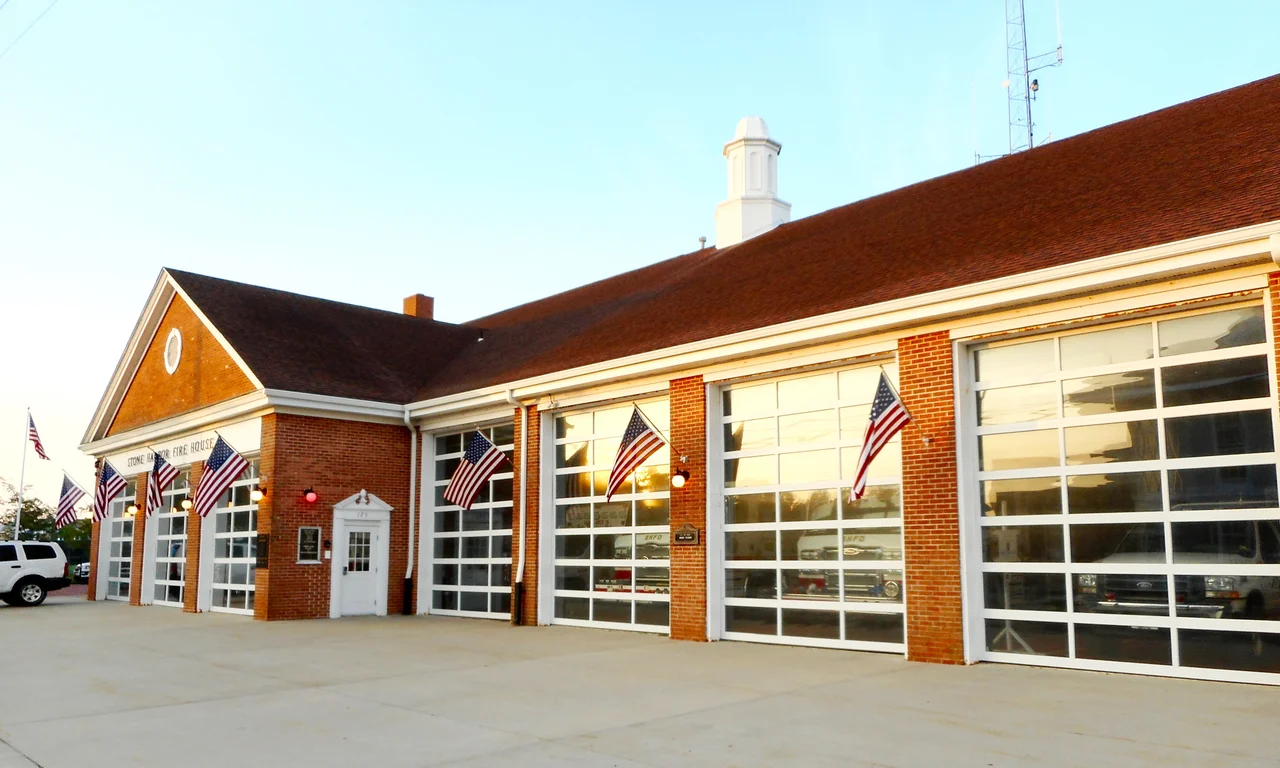

Stone Harbor, New Jersey
Taylor Swift summered here until she was fourteen, and years later she still described Stone Harbor as a "pretty magical place to grow up." The borough she meant is a small slice of Seven Mile Island - the southern half, with Avalon occupying the northern - and an even smaller slice of permanent population: 796 people, give or take, in the most recent census. In July that figure swells past 20,000. The summer people are wealthier than the year-round residents, which is saying something. The New York Times once described Stone Harbor as a place of "gleaming McMansions and elegant shops," with average single-family home prices around $2.5 million in 2008. The Peter Max water tower mural is gone now, but it lived long enough that anyone who summered here in the early 2000s remembers it.
Captain Stone's Refuge
The borough is said to take its name from an English sea captain named Stone who took shelter from a storm in the natural harbor on the back-bay side of the island sometime in the eighteenth or nineteenth century. The story is unverified but well-told, the kind of origin tale that small towns prefer to the duller alternatives. What is documented: development began in the late nineteenth century as a beach resort along the West Jersey and Seashore Railroad line. The railroads brought Philadelphia wealth south, and the wealthy Philadelphians bought lots, built houses, and turned a stretch of windswept barrier island into a second-home market. Stone Harbor was incorporated as a borough on April 3, 1914, carved out of Middle Township by referendum. It gained a small piece of Avalon on December 27, 1941. The borders have not changed since.
A Water Tower Painted by Peter Max
The Stone Harbor Water Tower, built in 1978, stands 133 feet high above the island and holds 500,000 gallons of water, pumped from four wells dug 890 feet down into the Kirkwood-Cohansey aquifer beneath South Jersey. The 1924 pumping station at 96th Street, which still stands, is the oldest municipal structure remaining in the borough. In 2005, the pop artist Peter Max - by then a fixture of American commercial art - developed a plan to wrap the tower in a vinyl mural made from digital prints of his paintings. Four large vinyl panels were attached to the tower's support column and displayed during the summer of 2006, with prints sold through Ocean Galleries as a fundraiser for the Wetlands Institute. The wrap is no longer installed annually, but the project established the water tower as a landmark visible from every street in town. The locals call it the silver giant or the Stone Harbor tower, depending on the day.
The Bird Sanctuary
On the back-bay side of the borough, between 111th and 116th Streets, sits the Stone Harbor Bird Sanctuary - twenty-one acres of preserved upland forest and salt marsh that once hosted one of the largest heron rookeries on the East Coast. Common, snowy, and great egrets nested here, along with black-crowned night herons and yellow-crowned night herons, in numbers that drew birders from across the country. The colony collapsed in the 1990s for reasons that ornithologists still debate - changes in water quality, predation pressure, habitat shifts, or some combination. The sanctuary remains, and migratory birds still pass through. Stone Harbor sits on the same Atlantic Flyway as Cape May to the south, and the bird sanctuary is one piece of a larger habitat network that the southern Cape May County peninsula provides every spring and fall.
Nun's Beach
In June 1937 the Sisters, Servants of the Immaculate Heart of Mary opened a convent on the Stone Harbor oceanfront called Villa Maria by the Sea. The convent is still there, used by the order as a retreat. The beach directly in front of the property is called Nun's Beach by everyone in town, and not officially named anything else. Nun's Beach is also one of the better surf spots on Seven Mile Island - sandbar configuration produces consistently rideable waves when the swell is right. The Nun's Beach Surf Invitational, held each summer, raises money to support the sisters' retreat work. It is the kind of arrangement that makes more sense the longer you live in a small beach town - a Catholic retreat order, a surf contest, and a fundraising relationship that benefits both sides.
Born Wealthy, Stayed Small
Stone Harbor never quite became Avalon. The borough is roughly half the size, with a smaller commercial district, fewer through-streets, and a quieter rhythm. The school district had only 78 students enrolled in 2023-24 - the fourth-smallest in New Jersey. The Stone Harbor and Avalon school districts technically operate separately but function as one, sharing teachers across the two buildings. The summer real estate market is global - Philadelphia, New York, and Quebec residents all hold property here in disproportionate numbers - but the year-round population is tiny, conservative, and politically engaged. Forbes ranked Stone Harbor's ZIP code as the 191st most expensive in the country in 2014. The author Joseph Hergesheimer, who lived here in the early twentieth century, wrote naturalistic novels about decadent wealthy life. He chose his subject matter from the right address.
From the Air
Stone Harbor occupies the southern half of Seven Mile Island on the New Jersey shore at approximately 39.05 degrees north, 74.76 degrees west. From cruising altitude, look for the southern segment of the long narrow barrier island just south of Avalon, separated from the Wildwoods by Hereford Inlet to the south. Cape May County Airport (KWWD) sits about thirteen nautical miles south; Atlantic City International (KACY) is about thirty nautical miles northeast. County Route 657 provides the only mainland access via a causeway from the Garden State Parkway. The borough's commercial district centers around 96th Street; the bird sanctuary occupies the area between 111th and 116th Streets on the back-bay side.
Nearby Stories
- Atlantic Shores Offshore Wind South 7.9 km away
- Air Mobility Command Museum 19 km away
- Sussex County, Delaware 21 km away
- USS Jacob Jones (DD-130) 30 km away
- USS General G. W. Goethals 32 km away
- Fort Delaware: The Island Prison Where 33,000 Confederates Waited Out the War 38 km away
- The Pine Barrens: Home of America's Oldest Monster 45 km away
- The Burning of the Morro Castle: Murder, Fire, and a Ship That Beached Itself at a Resort 95 km away