.jpg)
Stornoway
In the summer of 1963, a fourteen-year-old boy walked into the Crown Inn on Castle Street and ordered the only drink he could think of the name of. The boy was Prince Charles, now King Charles III, on a sailing outing from his loathed boarding school at Gordonstoun. Locals had recognised the school yacht in the harbour and crowded the bar. The prince fled inside. He asked for a cherry brandy. His bodyguard, who had let it happen, was sacked. Charles went back to Gordonstoun and its cold showers, dawn runs, and bullying. Stornoway, characteristically, kept the story.
The Only Town There Is
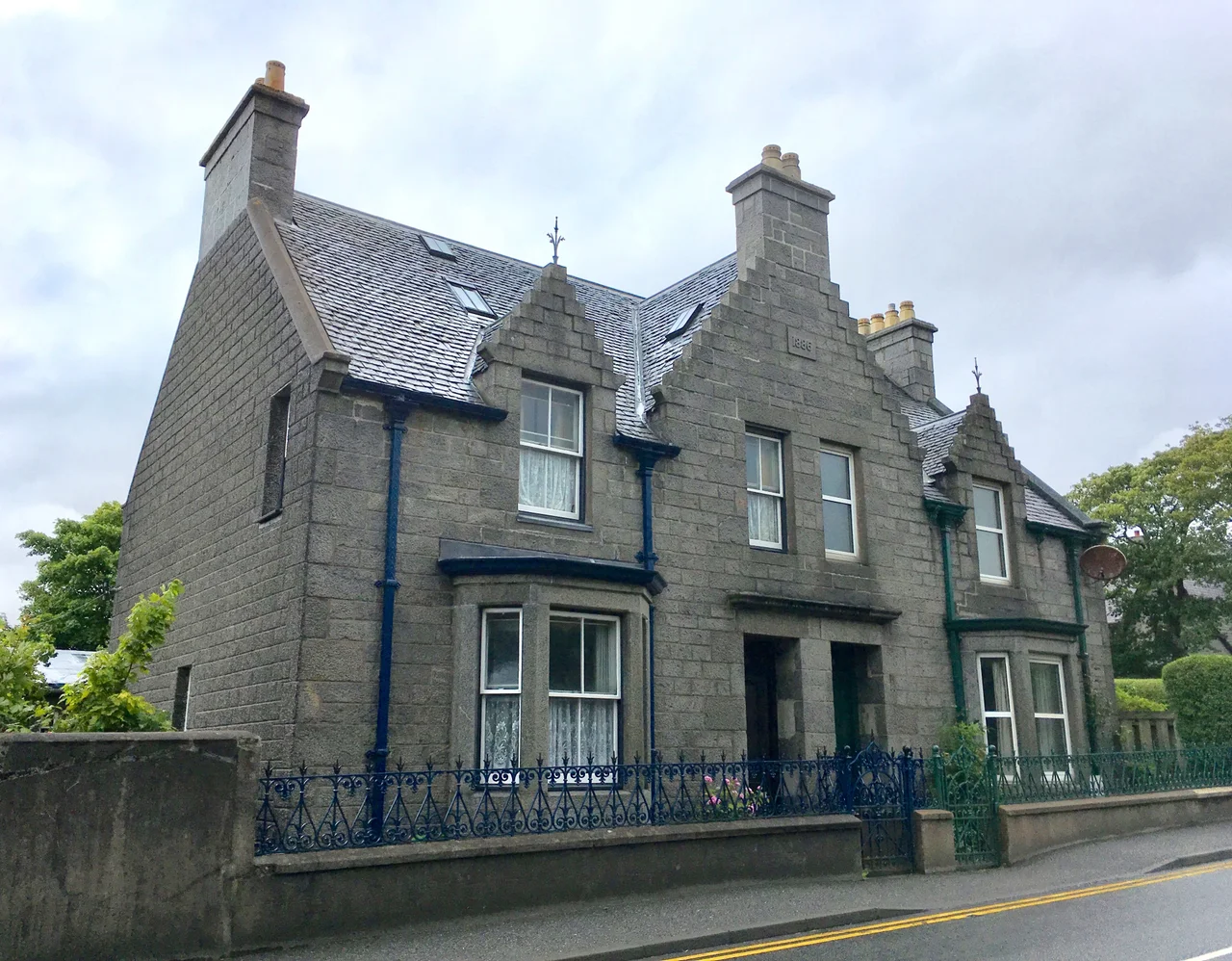
Stornoway, Steòrnabhagh in Gaelic, is the capital of the Outer Hebrides for the simple reason that nowhere else in these islands qualifies as a town at all. The population was 4,800 in 2021, sharply down on previous figures, but the place still serves as the administrative centre, the transport hub, and the shopping district for every settlement from Barra to the Butt of Lewis. It is industrial rather than picturesque, a working port stitched around a deep harbour where Calmac ferries from Ullapool dock twice a day, weather permitting. The buildings are low and weather-beaten. The wind has opinions about everything. And almost every road on Lewis eventually converges on the bus station beside the ferry terminal.
Never on a Sunday
Stornoway is still a town where the Sabbath has teeth. Lewis Sabbatarianism has been fighting a long rearguard action against modernity, and although flights and ferries now run on Sundays, almost every shop stays shut except Engebret's filling station. Pubs and entertainments wind up by midnight on Saturday. In November 2024, Tesco made national news simply by announcing that its Stornoway store would open on Sundays, a decision still being argued out. There is something both stubborn and gentle in this resistance, an island community deciding that one day of the week belongs to something other than commerce. Whether the line holds is another question. The Crown Hotel's cherry brandy, at least, can be ordered any day.
Harris Tweed and Black Pudding
Several shops along Cromwell Street sell Harris Tweed by the metre or stitched into jackets and bags, the dense wool cloth woven on hand looms in the houses scattered across Lewis and Harris. Stornoway black pudding has its own protected designation, made with oatmeal, suet, and onion in proportions every local butcher will defend as the only correct ones. The town centre runs along South Beach, Cromwell Street, and Point Street, and you can walk it end to end in twenty minutes. Lews Castle stands across the inner harbour, its Victorian sandstone bulk now housing a museum and a venue for the HebCelt music festival each July. The castle grounds spread out behind it as a working public woodland with twenty miles of off-road bike trails.
Iolaire
In the early hours of New Year's Day 1919, the yacht HMY Iolaire was bringing home sailors demobilised at the end of the Great War. She struck a rock called the Beasts of Holm at the entrance to Stornoway harbour and sank within sight of the lights of the town she was trying to reach. The official death toll was 205, mostly local men from Lewis and Harris, but the boat was badly overcrowded and the true number may have been higher. Nearly every village on the island lost someone. The memorial at Holm, east of town along the lane that branches south just before the airport entrance, is a quiet stone tower looking out over the rocks that took them. There is no easy reading of what happened. The men had survived the trenches, the U-boats, the long grey war, and they died less than a mile from the pier where their families were waiting.
Getting There and Away
Loganair flies in from Inverness, Glasgow, and Edinburgh into Stornoway Airport, three miles east of town. Calmac ferries from Ullapool on the Scottish mainland take two and a half hours, with two sailings most weekdays and a thinner Sunday service. There is also the long route up through the chain of islands: ferry to Barra, road and ferry through the Uists and Harris, and finally the bus into Stornoway, possible to do in a single day if you start before dawn at Castlebay. Most visitors use Stornoway as their base for exploring Lewis and Harris, the Callanish Stones, the Butt of Lewis lighthouse, and the wild beaches at Uig. For practical purposes, this is where you stop, sleep, and resupply before the rest of the Western Isles.
From the Air
Stornoway sits at 58.21 N, 6.39 W on the east coast of the Isle of Lewis. Stornoway Airport (ICAO EGPO, IATA SYY) lies 3 nm east of the town centre on the Eye Peninsula. The harbour offers a clear visual approach landmark, with Lews Castle and the museum on the western shore and the ferry terminal at the head of the inner basin. Nearest alternates: Benbecula (EGPL) 65 nm south, Inverness (EGPE) 90 nm east-southeast. Weather is highly variable: maritime stratus, sudden squalls, and gusty crosswinds off the Minch are routine.
Nearby Stories
- German submarine U-905 13 km away
- Loch Seaforth 13 km away
- Rua Reidh Lighthouse 19 km away
- The Minch 25 km away
- The Flannan Isles Mystery: The Lighthouse Keepers Who Vanished 33 km away
- Sollas 44 km away
- Sandwood Bay 84 km away
- The Laki Eruption: The Volcano That Changed World History 856 km away