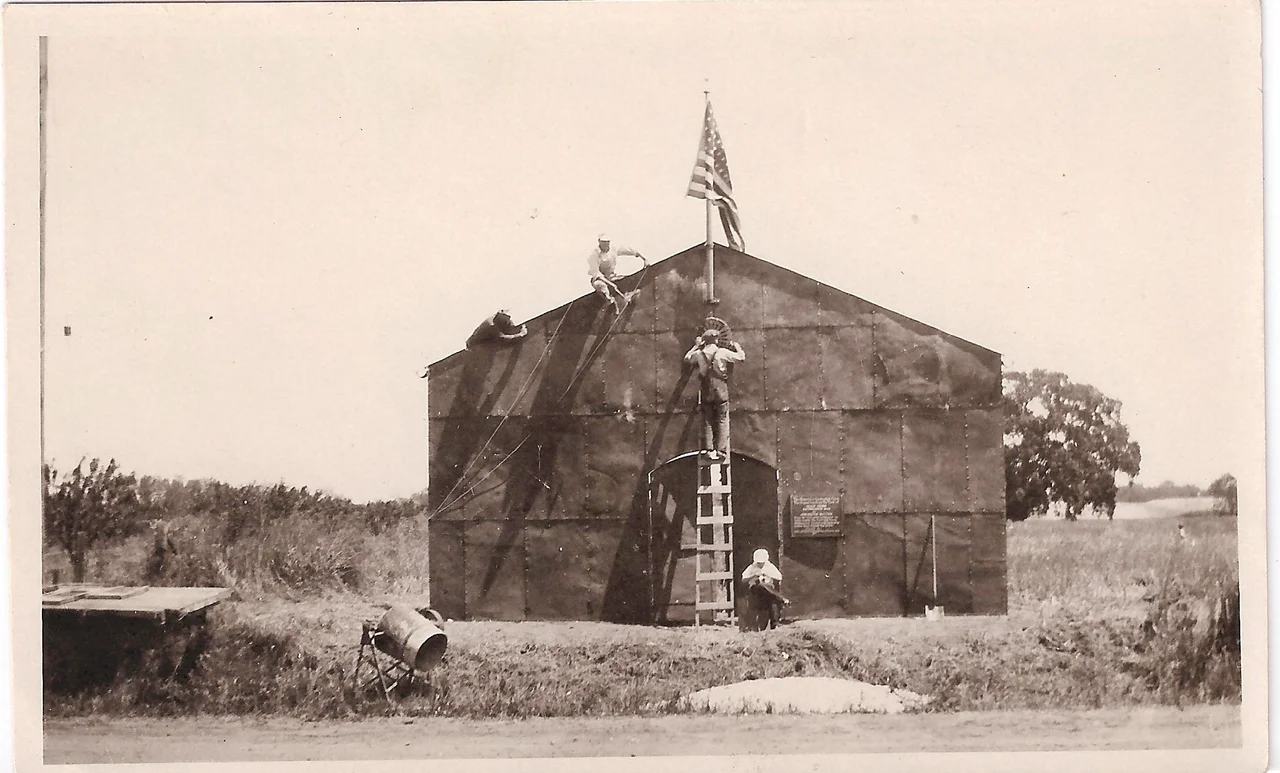

Sutter Hock Farm
John Sutter died in a Washington, D.C. hotel room in 1880, still petitioning Congress for money he believed he was owed. He had once controlled an empire. His fort at Sacramento launched the Gold Rush that transformed California, and his land grant from the Mexican government stretched across thousands of acres of the Sacramento Valley. But the place Sutter loved most was none of those grand holdings. It was Hock Farm, a sprawling agricultural estate on the Feather River in what is now Sutter County, where he planned to grow old surrounded by orchards, vineyards, grain fields, and cattle. Instead, the farm became the stage for his ruin.
The First Farm in Northern California
Established in 1841, Hock Farm was the first non-Indigenous settlement in Sutter County and the first large-scale agricultural operation in Northern California. Sutter envisioned it as more than a commercial venture. This was where he intended to bring his wife and children from Switzerland, to build a permanent home after years of restless frontier enterprise. The farm's name likely derived from a Maidu village that had occupied the site along the Feather River. Sutter planted orchards and vineyards, ran cattle across the bottomlands, and grew grain in quantities that made Hock Farm a significant supplier in the region. For a time, the vision held. The farm prospered, the mansion rose above the riverbank, and Sutter imagined himself a landed gentleman in the California sun.
Gold Devours Its Discoverer
The discovery of gold at Sutter's Mill in 1848 made Sutter famous and destroyed him. The rush drained his workforce overnight. Laborers abandoned the fields for the goldfields, and Sutter could not compete with the wages the mines offered. Worse, the flood of migrants brought squatters who simply took what they wanted. They butchered his cattle, felled his timber, and occupied his land with no legal consequence. Sutter's own son, August, arrived from Switzerland to help manage the family's affairs but proved disastrously naive, losing vast property holdings to swindlers. The elder Sutter's business dealings fared no better. By the mid-1860s, the man who had once held more California land than he could ride across in a day was nearly penniless, his fortune consumed by litigation costs as he tried to defend his Mexican-era land titles in American courts.
The Night the Mansion Burned
On June 21, 1865, the mansion at Hock Farm was deliberately set ablaze. The arsonist was a vagrant ex-soldier whom Sutter had allowed to stay on the property. After being caught stealing, the man had been bound and whipped on Sutter's orders. He retaliated with fire. The blaze consumed everything: Sutter's personal records documenting decades of pioneer life, works of art collected over years of frontier commerce, and irreplaceable relics from the earliest days of American California. Sutter managed to save only a few treasured medals and portraits. The fire did not merely destroy a building. It erased the documentary record of one of the most consequential figures in Western expansion. Historians have worked with fragments ever since, piecing together Sutter's story from scattered letters and secondhand accounts because the primary archive went up in a single night of revenge.
Exile from Eden
Five months after the fire, Sutter left Hock Farm and California for good. He traveled to Washington, D.C., where he spent the last fifteen years of his life lobbying Congress for compensation. His argument was straightforward: the Mexican government had granted him the land, the American conquest had attracted the squatters who stole it, and the American courts had failed to protect his titles. Congress considered various relief bills on his behalf but never passed one. Sutter died on June 18, 1880, at the age of seventy-seven, in a hotel in Washington, D.C., far from the Feather River bottomlands he had once called home. The farm site eventually passed through other hands and was designated a California Historical Landmark, a modest recognition for a place that once represented one man's idea of paradise.
What the River Remembers
Today, the Hock Farm site along the Feather River retains little visible trace of Sutter's grand agricultural estate. The orchards are gone, the vineyards long since uprooted, the mansion reduced to ash more than 160 years ago. What remains is the landscape itself: the broad, slow curve of the Feather River, the rich bottomland soil that made the farm productive, and the proximity to Marysville and the Sacramento Valley that once made this location strategic. Archaeological work has recovered artifacts from the site, and the California Historical Landmark designation ensures its place in the public record. But the deepest irony of Hock Farm is temporal. Sutter built it as a retreat from ambition, a place to rest after a life of striving. Instead, it became the site where ambition's consequences finally caught up with him.
From the Air
Sutter Hock Farm is located at 39.0489N, 121.633W along the Feather River in Sutter County, California. The site sits in the flat agricultural bottomlands of the eastern Sacramento Valley, approximately 5 miles south of Marysville. Yuba County Airport (KMYV) is the nearest field, roughly 5 nautical miles to the north. The Feather River provides the primary visual reference for locating the site from the air. At low altitude, the distinction between former farmland and surrounding agricultural parcels is subtle. Beale Air Force Base (KBAB) lies approximately 15 nautical miles to the east; pilots should be aware of associated restricted airspace. Sacramento Executive Airport (KSAC) is about 35 nautical miles to the south.
Nearby Stories
- Sutter's Mill 6.5 km away
- Where a Quarter Million Wings Converge 6.7 km away
- Feather River 15 km away
- Yocha Dehe Wintun Nation 17 km away
- Oroville Dam 18 km away
- Malakoff Diggins State Historic Park 28 km away
- Western Pacific Railroad Museum 62 km away
- August Complex Fire 73 km away