
University of Maryland Eastern Shore
Nine students walked into a converted farmhouse on sixteen acres in Princess Anne on September 13, 1886. Benjamin and Portia Bird were waiting for them. By the end of that first academic year, the enrollment had grown to thirty-seven. The school had a brand-new name - the Delaware Conference Academy - and a parent denomination, the Methodist Episcopal Church, that had founded it as a preparatory school for Black students bound for the Centenary Biblical Institute in Baltimore. Almost everything about the place would change in the next 140 years. The size of the campus. The name on the gate. The denomination, then the absence of any denomination. The crops studied, the degrees offered, the size of the donor checks. What did not change was the school's mission. It was always there to teach Black students from the Lower Eastern Shore.
Six Names, One Mission
The school has carried at least six names over its history. It opened in 1886 as the Delaware Conference Academy. In 1890, after Congress passed the Second Morrill Act requiring states to fund land-grant colleges for African American students, the academy became Morgan College's industrial branch, then took the name Princess Anne Academy. State archives sometimes called it the Eastern Shore Branch of Maryland Agriculture College, an awkward bureaucratic title that captured the segregated arrangement: Black students were barred from College Park, so Maryland funded a separate school here. In 1936 the state bought the campus outright from the Methodist Church for $100,000 in four installments. By 1948 it was Maryland State College, a formal division of the University of Maryland. On July 1, 1970, it took its current name: the University of Maryland Eastern Shore. The series of names traces the country's slow, uneven movement from segregation to integration, with each renaming marking what the white state was willing to admit it owed.
Super Bowl III and the Bowling Champions
UMES has produced a remarkable run of athletes for a school its size. In the 1968 Super Bowl III, where Joe Namath's New York Jets beat the Baltimore Colts, five UMES alumni took the field - Earl Christy, Johnny Sample, and Emerson Boozer for the Jets, and Charlie Stukes and Jim Duncan for the Colts. UMES is tied with Florida State for the most alumni from a single university in a single Super Bowl. Future Pro Football Hall of Famer Art Shell played here. In the 1973-1974 season, the men's basketball team led the entire nation in scoring at 97.6 points a game and reached the NIT quarterfinals. The football program, once a power in Black college football with five undefeated seasons between 1947 and 1960, was disbanded in 1979 under the combined pressure of Title IX compliance and Division I costs. But the bowling team filled the trophy case. In 2008, the UMES women's bowling team beat Arkansas State for the NCAA Championship - the first HBCU to win a women's NCAA national title in any sport. They won again in 2011 and 2012. And in 2012, Olympic sprinter Lenora Guion-Firmin ran the 400 meters for France.
MacKenzie Scott Notices
In December 2020, MacKenzie Scott gave UMES twenty million dollars - unrestricted, no strings, no name on the building. Scott had built her giving practice around identifying organizations that worked hard with little, and she sent UMES one of her larger HBCU gifts. Then in October 2025 she did it again. This time the check was for thirty-eight million dollars - the largest single gift in the university's 139-year history. The two checks together amount to fifty-eight million dollars in unrestricted philanthropic capital, which for an institution of UMES's size is transformational. Money like that can build labs, endow chairs, fund scholarships, and keep tuition flat all in the same year. The school that started with nine students in a farmhouse now has an endowment kick that competes with schools many times its age.
The Campus and the Marsh
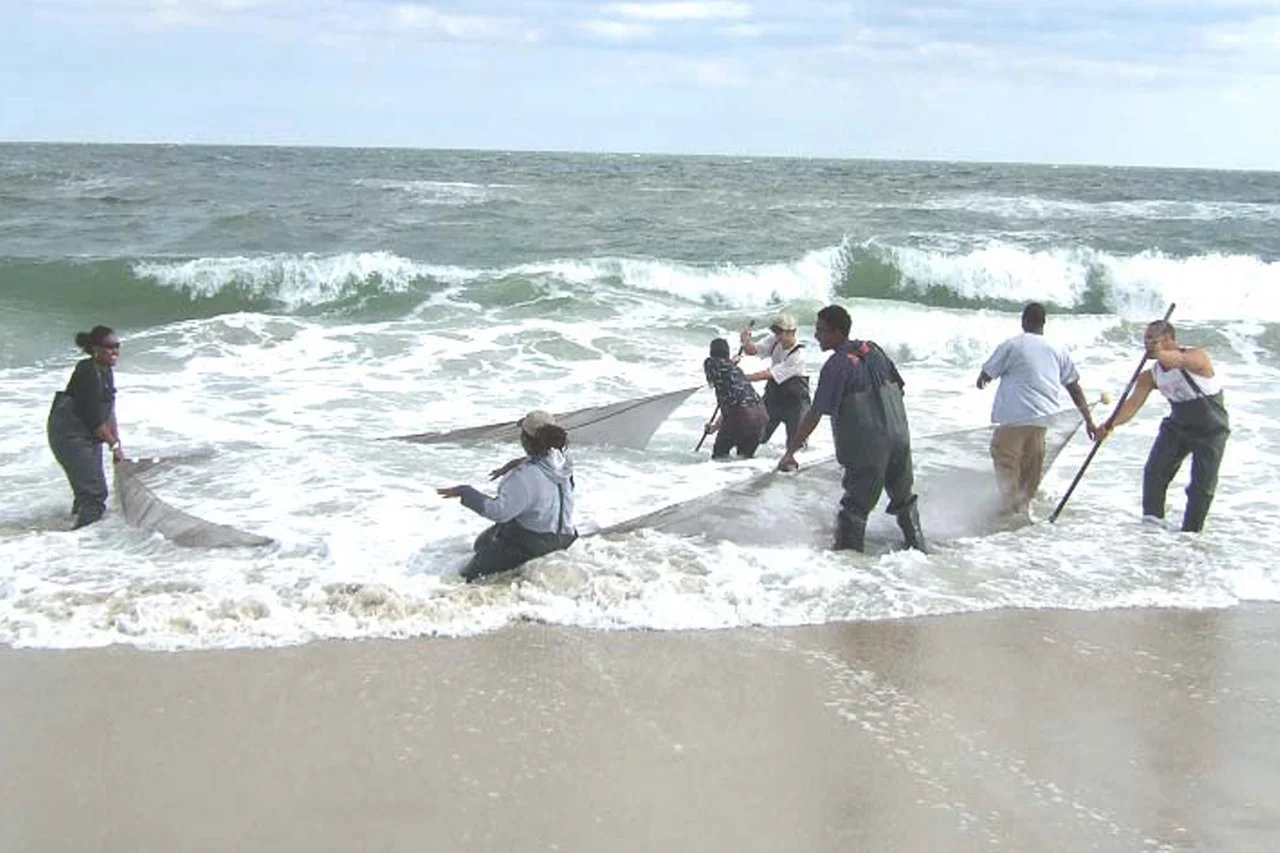
The main campus covers 745 acres on the outskirts of Princess Anne, the Somerset County seat. The Hawks compete in fifteen Division I sports, seven men's and eight women's, in the Mid-Eastern Athletic Conference. Five schools organize the academic side: Agricultural and Natural Sciences, Education, Social Sciences, and the Arts, Business and Technology, Pharmacy and Health Professions, and Graduate Studies. There are 37 undergraduate areas of study and 23 graduate degree programs. Beyond the main campus, UMES runs a 385-acre research farm in southern Somerset County and the Paul S. Sarbanes Coastal Ecology Center on eight acres near Assateague Island - the barrier island where wild ponies graze the dunes. Students at the coastal center work with NOAA on the kind of estuarine research that has practical urgency on a coast that is sinking and warming at the same time.
Princess Anne
Princess Anne, where UMES sits, was laid out in 1733 and named for the daughter of King George II of Great Britain. The town has under three thousand residents and the look of an Eastern Shore county seat that never quite urbanized - brick courthouses, white-painted churches, marsh edges visible at the end of every other street. The university is the largest employer in Somerset County and the cultural center of the lower shore. The annual UMES homecoming brings alumni back from across the country to a small town that doubles in size for the weekend. The school's slogan, Inspired Excellence, sounds at home on a campus where the football team is gone and the bowling trophies stack on the shelf, where farmhouses turn into research universities given a hundred and forty years and the right people walking through the door.
From the Air
UMES sits at 38.21 degrees north, 75.69 degrees west, in Princess Anne on Maryland's Lower Eastern Shore. The 745-acre campus is visible from low altitude as a green block on the western side of US-13, with a small lake and a cluster of brick buildings. Salisbury Regional (KSBY) is about 11 nautical miles north-northeast and serves as the principal commercial field. The Wallops Flight Facility (KWAL) is 35 southeast. The terrain is flat, with pattern altitudes of 1,000 feet AGL adequate for sightseeing. Watch for waterfowl crossing low across the marshes south of the campus, particularly in fall migration.
Nearby Stories
- Assateague State Park 7.9 km away
- St. Mary's City, Maryland 13 km away
- Bethany Beach 16 km away
- Accomack County, Virginia 23 km away
- Punkin Chunkin 32 km away
- SS Monroe (1902) 39 km away
- Columbia Air Center 46 km away
- Gloucester County, Virginia 66 km away