
University of North Carolina at Charlotte
On the night of September 23, 1946, two hundred and seventy-eight students walked into Central High School in downtown Charlotte for their first college classes. They were veterans, mostly, returning from the Pacific and Europe on the GI Bill, and they were enrolled in something called the Charlotte Center of the University of North Carolina. There was no campus. There was no faculty list to speak of. There was a doctoral student named Charles Bernard who had agreed to direct the operation. Eighty years later, those night classes have become a research university with thirty-two thousand students on a thousand wooded acres northeast of the city.
Miss Bonnie
Charlotte had been trying to land a public university since the 1880s, when it lost the bid for what became North Carolina State to Raleigh after a farmer offered free land. In 1949, when the state moved to close the Charlotte Center, a mathematics teacher named Bonnie Ethel Cone refused to let it die. Cone, who had grown up in Lodge, South Carolina and taught high school for years, organized the local push that produced the Charlotte Community College System. Two schools opened that year: Charlotte College for white students and Carver College for Black students, a stark architectural fact of segregation that the schools could not erase. Cone served as director, then president of Charlotte College through its junior college years and its growth into a four-year institution. Students called her Miss Bonnie. The school desegregated in 1954 after Brown v. Board of Education. By 1957 it had nearly five hundred students and had outgrown its downtown classrooms.
A Campus in the Pines
In 1961 Charlotte College moved to a tract of land northeast of the city, between U.S. Route 29 and N.C. Highway 49. The first buildings rose in concrete, utilitarian and lean, because state funds were tight. On March 3, 1965, the General Assembly made Charlotte College the fourth campus of the University of North Carolina, effective July 1. Bonnie Cone served as acting chancellor that first year. The inaugural UNC Charlotte graduating class numbered eighty-one students; the school opened its first dormitory in 1969. Dean W. Colvard, who had once defied Mississippi State University's policy against integrated competition to send his basketball team to play Loyola Chicago in 1963, became Charlotte's first chancellor and grew enrollment from 1,700 to over 8,000.
April 30, 2019
On the last day of classes in spring 2019, a gunman entered the Kennedy Building at the end of the school day. Riley Howell, a twenty-one-year-old environmental studies major from Waynesville, charged the shooter and tackled him, an act that ended the attack but cost Howell his life. Reed Parlier, a nineteen-year-old computer science student from Midland, was also killed. Four others were wounded. The North Carolina medical examiner's office later determined that Howell had absorbed three rounds at close range. Howell received the Purple Heart and Bronze Star posthumously, along with the Army ROTC Medal of Heroism. The university dedicated a memorial plaza on the site of the attack. The two students are remembered every spring on April 30, and their names appear on scholarship endowments and dorms across campus. Both families have continued to speak publicly about gun violence and the children they lost.
Two Campuses, One City
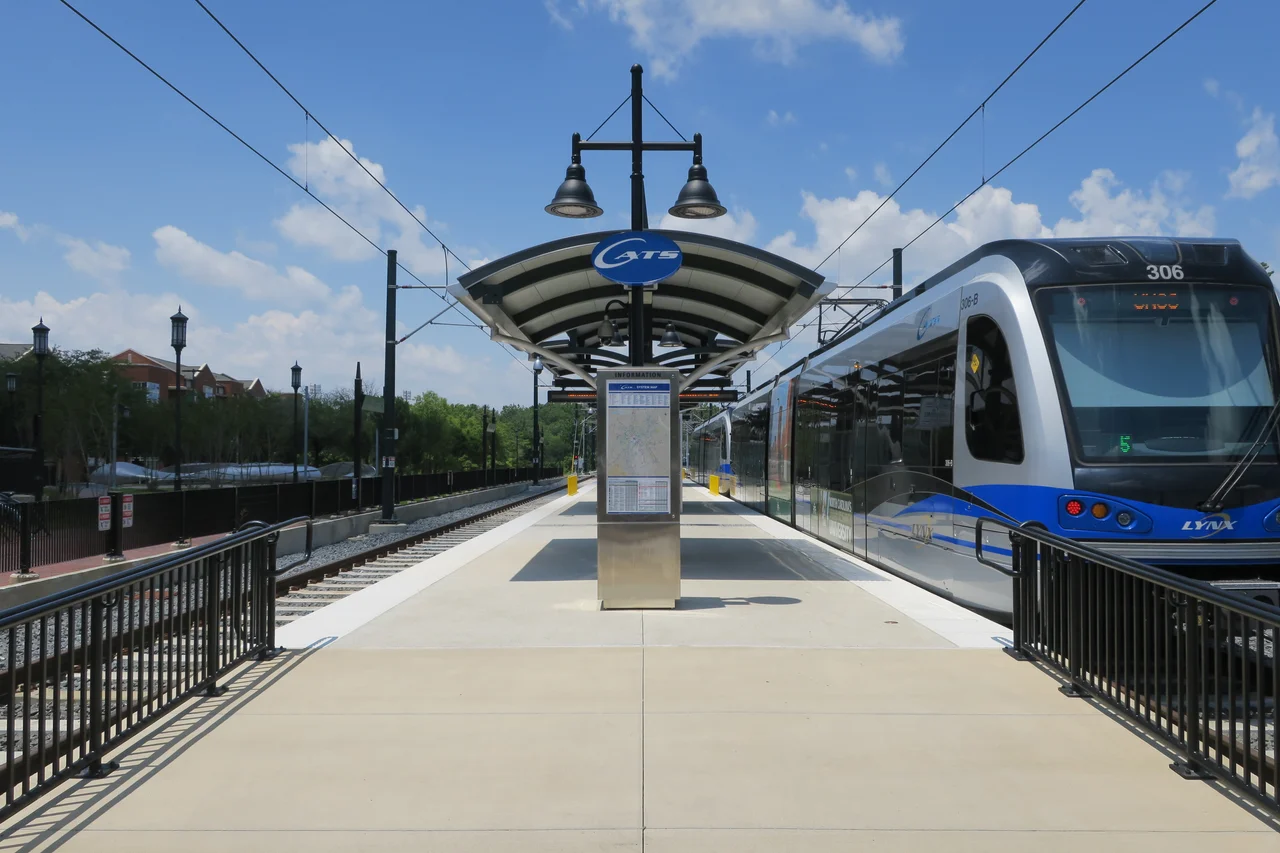
UNC Charlotte today operates on two campuses. The main campus, in the University City neighborhood about ten miles from Uptown, sits on rolling, wooded land with man-made lakes and a botanical garden that draws over three hundred thousand visitors a year. The Dubois Center at UNC Charlotte Center City, a twelve-story KieranTimberlake design whose cantilevered floors stack like books, opened at 320 East 9th Street in 2011. The Lynx Blue Line light rail, extended to the main campus in 2018, finally tied the two pieces together: a twenty-five-station ride from Uptown's high-rises to a quad of brick and oak trees. The campus is heavily wooded, self-contained, and threaded with a quiet that surprises most first-time visitors who expect another commuter school.
From Night Classes to R1
The university is now classified R1 for very high research spending and doctorate production, a designation shared with the country's most research-intensive institutions. The William States Lee College of Engineering, the Belk College of Business, and the College of Computing and Informatics, which graduates more computer science students than any other program in North Carolina, anchor a research portfolio that pulls in tens of millions in grants. The football team plays in the American Athletic Conference at Jerry Richardson Stadium, named for the Carolina Panthers founder, after a quick climb from FCS to FBS in just two seasons. Bonnie Cone, who died in 2003, is buried on campus near Cato Hall. Her grave looks out at a university she shaped from the first 278 night students.
From the Air
The main campus sits at 35.31 degrees N, 80.73 degrees W in University City, about 8 miles northeast of Uptown Charlotte. Best viewed from 4,000 to 6,000 feet AGL. Charlotte Douglas International (KCLT) is about 15 miles southwest; Concord-Padgett Regional (KJQF) is just 7 miles east. Look for the wooded campus enclave between U.S. Route 29 and N.C. Highway 49, with Jerry Richardson Stadium on the eastern edge.
Nearby Stories
- Battle of Colson's Mill 12 km away
- Kings Mountain Mine 13 km away
- Thyatira Presbyterian Church, Cemetery, and Manse 16 km away
- Andrew Jackson State Park 19 km away
- Hickory Motor Speedway 22 km away
- North Carolina Aviation Museum 29 km away
- Cheraw, South Carolina 40 km away
- Battle of Fishdam Ford 47 km away