
University of Reading
Somewhere in a brick building on the Whiteknights estate, computers are deciding what tomorrow's weather will look like. The University of Reading's meteorology department runs forecast models used by aviation, agriculture, and shipping across Europe - and has been ranked among the top five in the world for atmospheric science. The campus, landscaped in the eighteenth century by the Marquis of Blandford and named for a thirteenth-century knight nicknamed the White Knight, sprawls across more than a square mile of meadows, lakes, and woodland just east of Reading town centre. It is one of those English universities that grew sideways from Oxford, then quietly became something specific and useful on its own.
An Extension That Took Root
Reading began in 1892 as an outpost of Christ Church, Oxford - the University Extension College, a way of bringing higher education to working townspeople who would never see a Senior Common Room. Its first home was the old hospitium building behind Reading Town Hall, and its first president was the geographer Halford Mackinder, who would later become famous for coining the phrase 'heartland' in geopolitical theory. The college outgrew its borrowed identity quickly. By 1902 it was University College, Reading. By 1926 it had a royal charter from George V - the only university to receive one between the two world wars, a curious distinction earned in the gap when other ambitions were buried in trenches or postponed by depression.
Weather, Wheat, and Words
Reading specialises in things you can taste, predict, or harvest. Its School of Agriculture, Policy and Development has been ranked first in the United Kingdom and eleventh in the world by QS. Its meteorology department, sharing space and staff with the European Centre for Medium-Range Weather Forecasts in nearby Shinfield, is where the science of forecasting lives in Britain. The Centre for Dairy Research, on 8.5 square kilometres of university farmland in the villages of Arborfield, Sonning and Shinfield, runs an actual working farm - dairy cows, ewes, beef cattle - because some kinds of knowledge still come from boots in mud. The university also holds the largest Samuel Beckett archive in the world. The playwright donated his manuscripts here in 1971, drawn by a young academic who simply wrote and asked.
The Whiteknights Estate
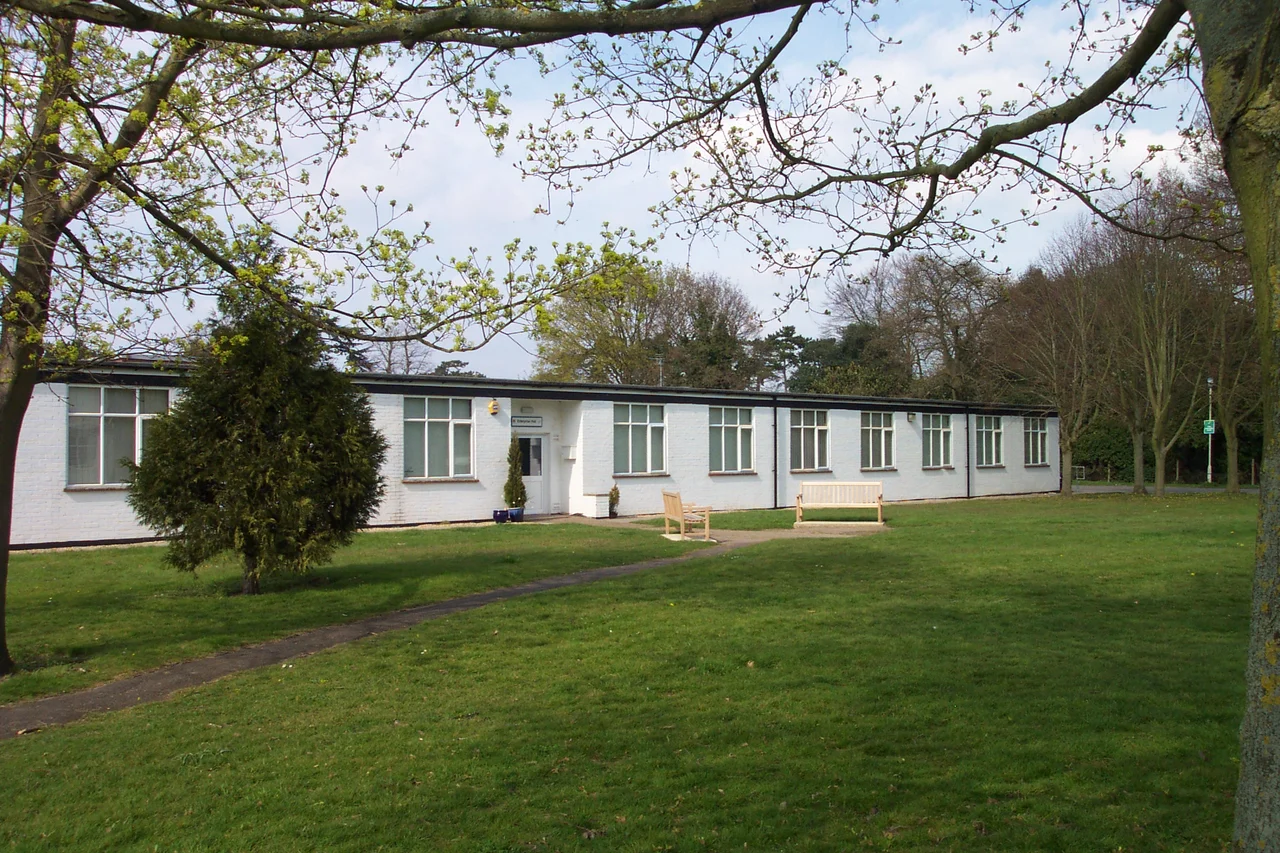
The main campus sprawls across 1.3 square kilometres of what was once a private estate. The name comes from John De Erleigh IV, a thirteenth-century knight remembered as the White Knight; the landscaping comes from the Marquis of Blandford, who in the eighteenth century turned the grounds into one of the great picturesque gardens of southern England. The lake, the meadows, the avenues of oaks - all survive, threading between modern faculty buildings. In 2017 the campus was voted one of the best green spaces in the United Kingdom for the seventh year running. The brutalist URS building, designed by Howell, Killick, Partridge and Amis in the 1970s, is now Grade II listed - which is what happens to concrete in England if it survives long enough.
Museums of the Specific
Reading collects unusual things and houses them in unusual places. The Museum of English Rural Life, near the London Road campus, holds the country's most comprehensive collection of agricultural history - the ploughs, the smocks, the gypsy caravans, the wagons painted in the colours of forgotten counties. The Ure Museum of Greek Archaeology, founded by the husband-and-wife team Percy and Annie Ure - he the first professor of classics, she the museum's curator - holds Greek pottery older than the idea of Greece. The Cole Museum of Zoology displays a five-metre Indian elephant skeleton next to a giant squid preserved in alcohol. The Department of Typography keeps the archive of Isotype, the visual language Otto Neurath invented in 1920s Vienna to teach statistics to people who could not read.
Edith Morley's Chair
In 1908, Reading appointed Edith Morley as Professor of English. She was the first woman to hold a full professorial chair at any university-level institution in Britain - sixteen years before Oxford would award women full degrees, four decades before Cambridge would. She held the chair for thirty-two years, fought for refugees in the 1930s, took Jewish academics into her home when the universities of central Europe were purged, and wrote one of the earliest scholarly studies of the Romantic critic Henry Crabb Robinson. Reading made history without much announcing it. The composer Gustav Holst lectured here in music. Edward Elgar conducted student orchestras. The pattern recurs across the university's century: distinguished people doing solid work in a town that does not boast.
From the Air
Whiteknights Campus sits at 51.44°N, 0.95°W, on the eastern edge of Reading town centre. From altitude, the campus reads as a large rectangular green space east of the M4 motorway, between the towns of Reading and Earley. Whiteknights Lake is visible as a small water body in the campus interior. Reading itself lies in the Thames Valley, with the River Thames curving north of the town. Nearest airports: London Heathrow (EGLL) 25 nautical miles east, Farnborough (EGLF) 18 nautical miles southeast, Booker / Wycombe Air Park (EGTB) 15 nautical miles north, and RAF Benson (EGUB) 17 nautical miles northwest. Recommended viewing altitude is 2,500 to 4,000 feet AGL. Weather is the local speciality, so check actuals - the meteorology department is on the ground floor of the Harry Pitt Building, in case you want to ask.
Nearby Stories
- Hampton Court Palace: Henry's Obsession, William's Ambition 1.7 km away
- Hungerford Massacre 7.4 km away
- Chequers 9.7 km away
- Hatfield rail crash 12 km away
- Mottisfont Abbey 15 km away
- Queen Victoria Hospital 25 km away
- Hampshire 32 km away
- Cotswolds 34 km away