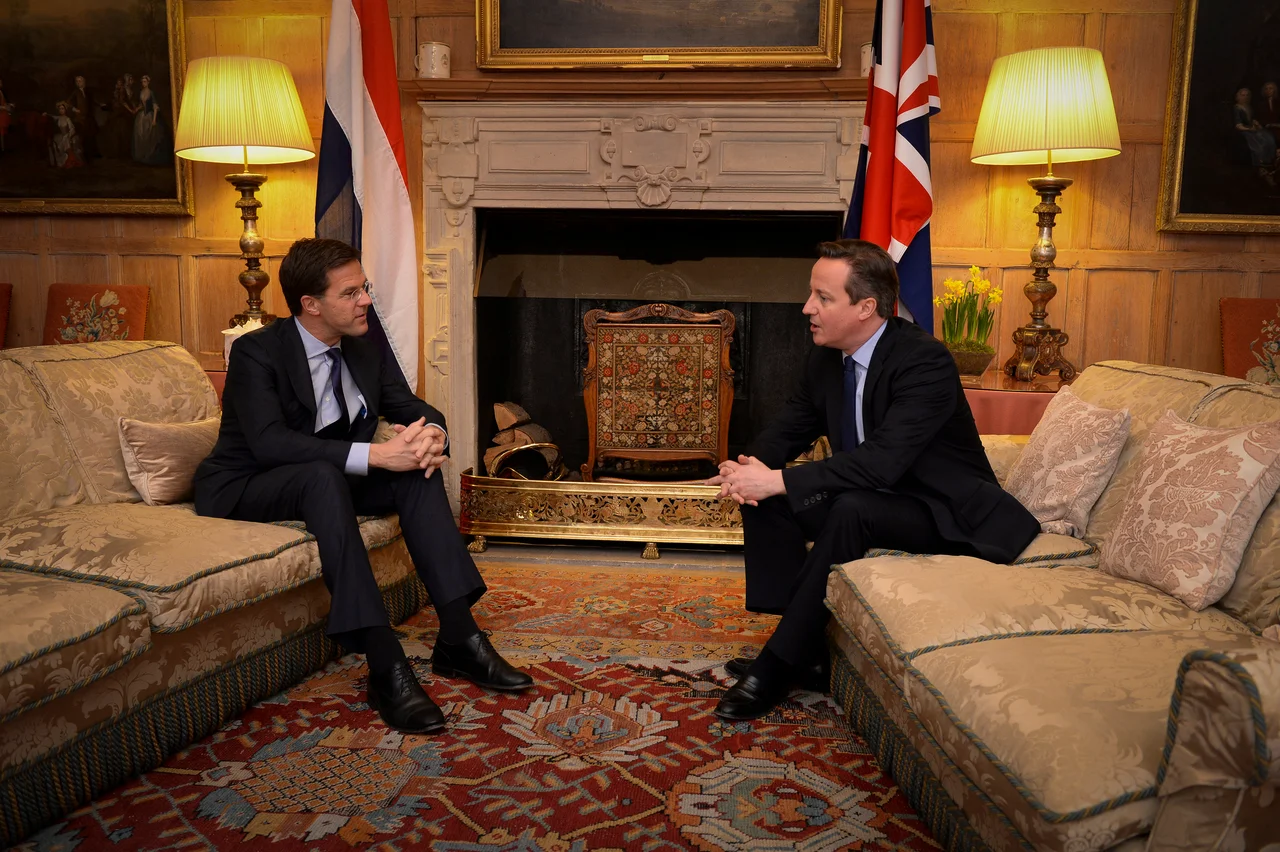

Chequers
The name Chequers comes from a 13th-century civil servant who would barely recognize the country house his family loaned its name to. Elias del Checker - sometimes rendered in Latin as Elias de Scaccario - was an usher at the King's Exchequer in the reign of Henry III. His job involved the chequered cloth used for medieval accounting; his surname declared what he did for a living. The family held a small estate in Buckinghamshire that became known by their occupation. Seven centuries later, the house that grew up on that estate became the country residence of every British prime minister since 1921. Lloyd George was the first to use it. Every prime minister since has slept in the same rooms.
The Tudor House
William Hawtrey built the current house around 1565, probably reconstructing an earlier building on the same site. The Hawtreys had married into the Checker family in the 1250s, when Elias's grandson Ralf died without a male heir. The estate passed through them and then, through descent in the female line, to the Wooley family, the Crokes, the Thurbanes, and eventually to the Russells. A reception room at Chequers still bears Hawtrey's name. Within months of the new house being built, Hawtrey was given an unusual task: he became custodian of a royal prisoner. Lady Mary Grey, younger sister of the nine-day queen Lady Jane Grey, had married a court official named Thomas Keyes in 1565 without permission from Queen Elizabeth I. Both were imprisoned. Lady Mary was sent to Chequers and held there for two years, from 1565 to 1567. The room where she slept survives in its original condition - one of the few places in Britain where you can stand in the exact space a Tudor prisoner was confined.
The Cromwell Inheritance
In 1715, the woman who owned Chequers married John Russell, a grandson of Oliver Cromwell. The connection was significant. Cromwell's reputation had been destroyed at the Restoration in 1660 - his body was dug up and posthumously executed - and most of his personal possessions had been scattered, hidden, or destroyed. But the Russell-Cromwell line preserved what they could, and Chequers became one of the largest repositories of Cromwell memorabilia in the country. The house still holds portraits, weapons, books, and personal items belonging to the Lord Protector, including the death mask taken from his face in 1658. A British prime minister sleeping at Chequers tonight is doing so under the gaze of a man who once tried to abolish the English monarchy. The Greenhill-Russell family, as they became known, in the 19th century employed the architect Henry Rhodes to modernize the house in Gothic style. He ripped out the Tudor paneling and windows and installed battlements and pinnacles. It was a fashion. The fashion ended.
The Astley Restoration
The house passed through marriage to the Astley family at the end of the 19th century. Bertram Astley spent the years between 1892 and 1901 painstakingly undoing the Gothic Revival modifications and restoring Chequers to its Elizabethan original. He consulted Reginald Blomfield, one of the great country house architects of the era, and the work was completed by the architect John Birch. The result is what the prime minister sees today: a substantial Tudor manor in red brick with stone dressings, set in a wooded park at the foot of the Chiltern Hills. The current building looks almost exactly as it did in the 16th century, even though many of its visible details are scarcely a hundred and twenty years old. This kind of historical layering - prison, Tudor home, Gothic Revival, Elizabethan revival - is characteristic of how English country houses have survived. They are accumulated rather than preserved.
Lord Lee's Gift
Sir Arthur Lee, later Viscount Lee of Fareham, was a Conservative politician and Anglophile American sympathizer. He and his wealthy American wife Ruth Moore bought Chequers in 1909. By 1917, they had made a remarkable decision: they would give the house to the nation. Lord Lee had no children, and he believed the prime minister of the United Kingdom needed somewhere outside London to retreat, think, and entertain heads of state without the constant pressure of being in central government. The Chequers Estate Act passed Parliament in 1917, though the actual transfer waited until 1921. David Lloyd George was the first prime minister to use Chequers in that capacity. Lord Lee's reasoning included an interesting class observation: a prime minister of working-class origin, he argued, needed a country house to entertain on equal terms with people who had been raised in country houses. The house came with sufficient endowment to maintain itself.
Churchill, Brexit, and the Coronavirus Sickbed
Chequers has hosted nearly every major diplomatic guest of every prime minister for over a century. Churchill spent weekends here during the Second World War, working from the Long Gallery and walking the grounds when he could not sleep. Eisenhower stayed. So did Roosevelt's emissaries. The house has provided the backdrop for cabinet meetings and treaty negotiations. In July 2018, Theresa May used Chequers as the setting for an attempt to forge a Cabinet position on Brexit - the resulting plan was called the Chequers Plan, and was effectively dead within weeks. In April 2020, Boris Johnson convalesced at Chequers after being hospitalized with COVID-19. The house lies near the village of Ellesborough, halfway between Princes Risborough and Wendover, about 40 miles northwest of central London. Coombe Hill, the second-highest point in the Chilterns, rises northeast of the estate and was originally part of it. The grounds are not open to the public, and the airspace above Chequers is closely watched. But on a clear day from Coombe Hill you can look down on the chimneys of the Tudor manor and remember that it has held thirty-three prime ministers, one prisoner, and the death mask of the man who beheaded a king.
From the Air
Located at 51.7434N, 0.7820W in Buckinghamshire, at the foot of the Chiltern Hills near the village of Ellesborough. The estate lies between the towns of Princes Risborough (3 nm west) and Wendover (3 nm northeast). Restricted airspace surrounds the property when the prime minister is in residence. Best viewed from low altitude (1,500-3,000 feet AGL), but pilots should consult NOTAMs and observe the protected status under the Serious Organised Crime and Police Act 2005. Nearest airports: London Luton (EGGW, 17 nm northeast), London Oxford (EGTK, 23 nm west-northwest), and RAF Halton (EGWN, 4 nm northeast). London Heathrow (EGLL) lies 23 nm south. From the air, the wooded park at the foot of the Chilterns and the rising scarp of Coombe Hill to the northeast are clear features.
Nearby Stories
- Boston Manor House 2.7 km away
- Wolverton Railway Works 5.6 km away
- Reading Abbey 8 km away
- Hatfield rail crash 9.1 km away
- Hungerford Massacre 12 km away
- Battle of Edgehill 13 km away
- St Neots 23 km away
- Cotswolds 33 km away