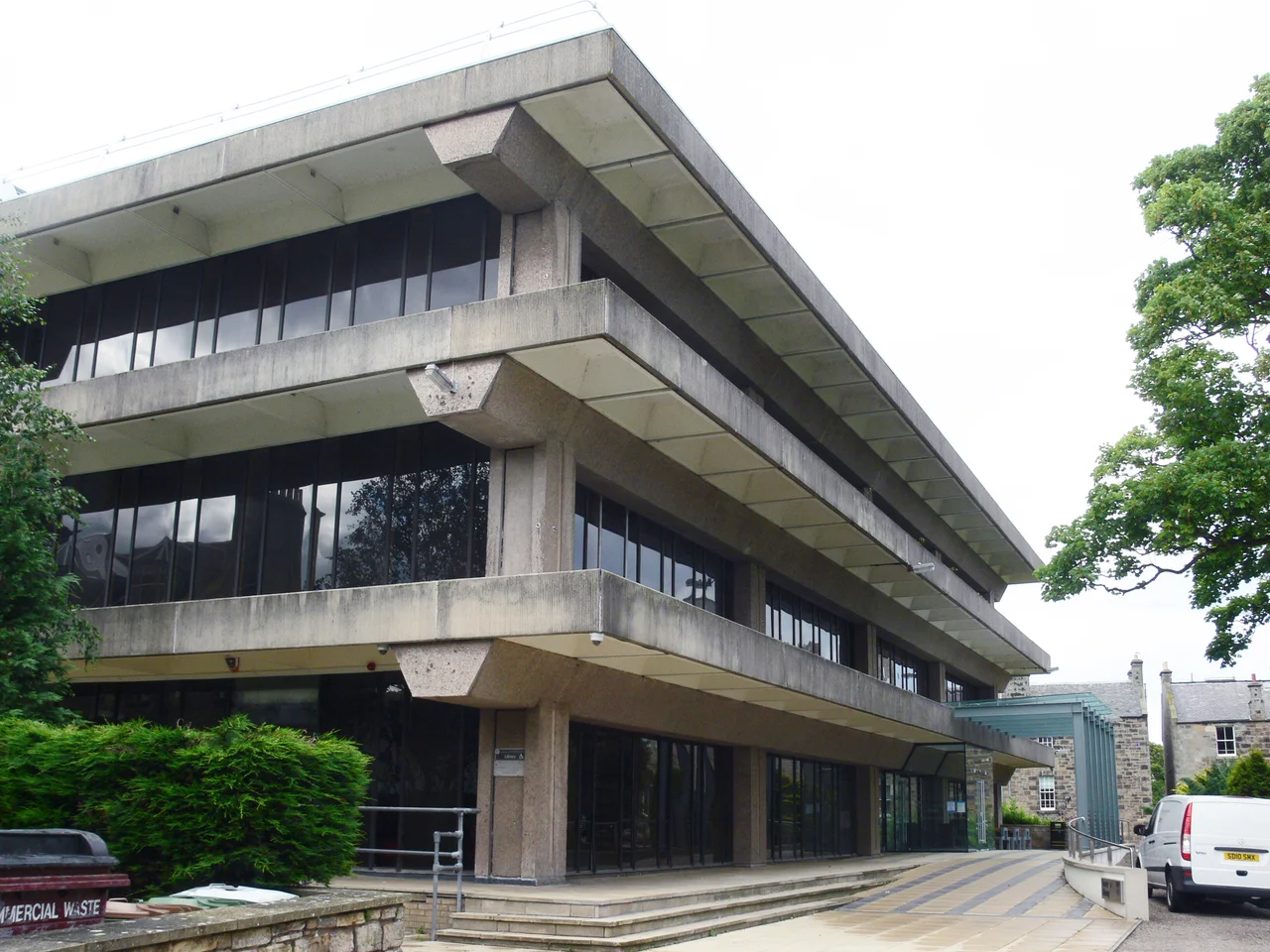

University of St Andrews
Walk down North Street on a cold morning and you might see them coming: clusters of students in long scarlet gowns, the wool catching the North Sea wind, billowing behind them like banners. The gowns are not costume. They are a six-hundred-year-old conversation in cloth, telling anyone who can read it what year a student is in and what they study. First-years wear theirs on the shoulders. Fourth-years let them slip down to the elbows, almost ready to be shed. In a town the size of a postage stamp on the easternmost edge of Fife, Scotland's first university has spent six centuries layering tradition on tradition, until the very streets seem to remember.
The Oldest Voice in Scotland
When the bull of foundation arrived in 1413, sent by Pope Benedict XIII, the small huddle of clerics and scholars who had been teaching unofficially in St Andrews finally had a university. It was the first in Scotland and the third in the English-speaking world, beaten only by Oxford and Cambridge. The town then was already a place of pilgrimage, drawn by the relics of Saint Andrew kept in its now-ruined cathedral. The university grew up around that sanctity. St Salvator's College was founded in 1450, St Leonard's in 1512, and St Mary's in 1538. The Chapel of St Leonard's holds stones dating from 1144, older than the university itself. Walking from one quad to the next, you pass through centuries the way other places pass through neighbourhoods.
Cobblestones and Curses
Set into the cobbles outside the main gate of St Salvator's, the initials "PH" mark the place where Patrick Hamilton was burned at the stake in 1528. Hamilton was twenty-four, a young Protestant theologian whose death helped spark the Scottish Reformation. Six centuries later, students still go out of their way to avoid stepping on those letters. Tradition holds that anyone who treads on them will fail their degree. There is a remedy, and it is exactly as Scottish as you might hope: on May Day at dawn, students gather and run together into the freezing North Sea, washing away academic sin while the University Madrigal Group sings on the sand. They call it the May Dip. They also call it, more practically, a reason to swim before exams.
A Royal Romance
In September 2001, a new geography student named William moved into St Salvator's Hall. He met a fellow student named Catherine Middleton at breakfast on the first day. They became friends, then flatmates with two others on Hope Street, then a couple. They graduated together in 2005, William with a degree in Geography, Catherine in History of Art. Nine years later, as Prince William and Princess Catherine, they returned to receive honorary degrees. The locals took it in stride. St Andrews has watched royalty come and go for longer than most countries have existed. Long before William and Catherine, King James II of Scotland studied here, and James I of England (then James VI of Scotland) founded the university library in 1612 with a personal donation of three hundred and fifty books.
Raisins and Reformation
Each new student, called a Bejant if male or Bejantine if female, is assigned academic parents - third- or fourth-year students who guide them through the strange weather of first year. The reward, by tradition, was a pound of raisins. The reward, by modern practice, is a bottle of wine. In return the parents write their academic children an elaborate receipt, in Latin, on whatever surface they choose - a surfboard, a fish, a refrigerator. On Raisin Monday, every first-year gathers at noon outside St Salvator's clutching their receipts, ready to be challenged on the accuracy of their Latin by older students. Errors are inevitable. The whole ceremony now ends in a shaving-foam fight on the Lower College Lawn. The university provides a special first-aid hotline for the weekend.
Where Land Runs Out
The town sits on a headland where Fife ends and the North Sea takes over, just south of the wide blue mouth of the Firth of Tay. RAF Leuchars airfield, now a British Army base, lies a few miles to the northwest, its runways once shielding St Andrews from German bombers. Dundee Airport is just across the Tay estuary. The University Library on North Street holds over a million volumes, including the King James Library from 1643. The Bell Pettigrew Museum keeps the bones of a dodo and a Tasmanian tiger, animals as extinct as the certainties of the world that built these colleges. Notable alumni run from John Knox to John Napier to Tolkien lecturer J. R. R. Tolkien himself, who delivered his famous "On Fairy-Stories" address here in 1939. Six hundred years of names, and counting.
From the Air
University of St Andrews sits at 56.34°N, 2.79°W on the Fife coast of eastern Scotland, on a small headland jutting into the North Sea. The town is compact and instantly identifiable from the air by its ruined medieval cathedral and castle, the long sweep of West Sands beach, and the Old Course golf links to the northwest. Best viewed at 2,000-4,000 ft AGL in clear weather. Nearest airports: Dundee (EGPN) 12 nm northwest across the Firth of Tay; Leuchars (EGQL) 4 nm northwest; Edinburgh (EGPH) 35 nm southwest. Watch for North Sea haar (sea fog) in spring and early summer.
Nearby Stories
- Tantallon Castle 2.2 km away
- Battle of Kinghorn 4 km away
- Lindores Abbey 4.1 km away
- Battle of Dun Nechtain 11 km away
- Eyemouth Disaster 20 km away
- Edradour Distillery 35 km away
- Eyemouth Lifeboat Station 52 km away
- River Dee Ferryboat Disaster 60 km away