
Valmet Automotive
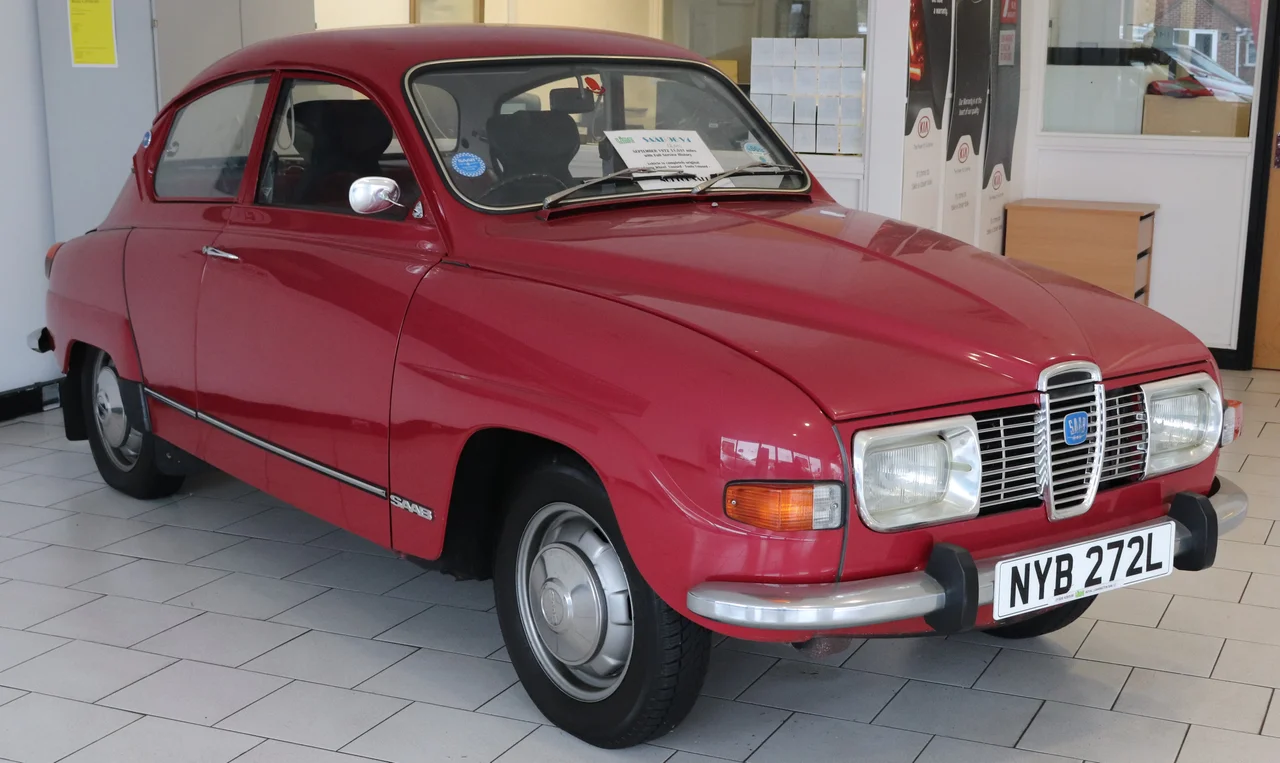
Saab 96s. Talbot Horizons. Lada Samaras rebuilt for the export market. Opel Calibras. Porsche Boxsters and Caymans, 227,890 of them. Fisker Karmas. Mercedes-AMG GT four-door coupés. They all came out of the same plant, on the northern edge of a Finnish coastal town of fewer than fifteen thousand people, and none of them carried its name. Valmet Automotive has assembled more than 1.9 million vehicles at Uusikaupunki since 1968 without ever selling a car of its own to the public. That is the business: you own the factory, someone else owns the badge, and you survive by being able to build whatever the next contract happens to be.
A Joint Venture on a Cold Coast
Saab-Valmet was founded in 1968, a marriage between the Finnish state industrial group Valmet and Swedish Saab-Scania, and the plant went up at Uusikaupunki. For the first eleven years it built nothing but Saabs, and it kept building them until 2003: the 95, 96, 99, 90, 900 and its convertible, the 9000, the 9-3 and its convertible, and the hard-edged 9-3 Viggen. Two models existed largely because Finland asked for them. The long-wheelbase "Finlandia" combi-coupé version of the 99 and the four-door Saab 900 CD were built here for Finnish ministries, municipalities and industrial boards, who wanted a car with genuine rear legroom and no foreign flag on it. For thirty-four years, a Swedish marque's most distinctive variants came from a Finnish town most Swedes could not place on a map.
The Talbot Bargain
In 1979 Valmet went looking for a second customer and found a hard one. The company wanted to build the compact Simca-Talbot Horizon; the French would not license it unless Valmet also assembled the larger, slower-selling 1307. So Uusikaupunki took both, along with the Solara, and turned out 31,978 Talbots between 1979 and 1985. Unlike the Saabs, these were meant strictly for the domestic market, with only a contractual sliver of hope that Finnish-made parts might one day be exported to Talbot's own plants. What the deal did produce was a supply chain: some thirty local firms fed the line, and within half a year of start-up the Finnish parts content had reached thirty percent. The Talbots are long gone. The suppliers, and the knowledge of how to stand up a new model quickly, stayed.
Whatever Comes Next
After Talbot, the pattern set. Opel Calibras from 1991 to 1997. Lada EuroSamaras, reworked for western buyers, from 1996 to 1998. Then the long Porsche era, Boxsters and Caymans from 1997 to 2011, which is what put Uusikaupunki into car enthusiasts' vocabulary. Electric work began early, with the Garia golf car and the Think City from 2009. The Fisker Karma came in 2011 and left in 2012 when Fisker collapsed. Mercedes-Benz has been the anchor since: the W176 A-Class from August 2013, the GLC from 2017 to 2022, the W177 A-Class from August 2018, and the Mercedes-AMG GT four-door coupé from 2023. Two solar-car contracts, Lightyear and Sono Motors, were signed and then cancelled when the customers ran out of money. Alongside all this the company bought Karmann's roof business in November 2010, and now supplies convertible roofs, active spoilers and charging flaps to Mercedes, BMW, Mini, Bentley, McLaren and Porsche.
Batteries Under the Same Roof
The electric turn came as a separate business line, renamed IONCOR in 2024. Large-scale production of 48-volt systems started at Salo in 2019, with high-voltage capacity added in the summer of 2021. That September a battery plant opened at Uusikaupunki itself, so that high-voltage packs and the cars they go into are now made under one roof, and a third plant followed at Kirchardt in Germany in 2023. Testing and engineering sites are scattered across Bad Friedrichshall, Weihenbronn, Munich and Turku. Then, in September 2025, the structure changed: IONCOR was separated off to Finnish Minerals Group, a fully state-owned company building out Finland's battery value chain, and the Finnish state took majority ownership of Valmet Automotive itself with 79 percent, leaving Pontos Group as a 21 percent minority owner.
Armour, Buses, and the Next Contract
The reason for that restructuring showed up quickly. European car demand was weak, and Valmet's answer was to sell the one thing it has always actually sold: the ability to run complex serial production. In December 2025 it agreed with Sisu Auto to manufacture military vehicles and components. In February 2026 came a preliminary deal with Jeti Industries for series production of electric buses, and in April a long-term arrangement with Carrus Delta to build coach bodies. In June 2026 the company announced a significant expansion of its work with Patria on armoured vehicles. The 2025 results, published that April, showed profitability back in positive territory on the strength of these new industries while automotive stayed soft. About 1,600 people work across the three countries, from more than fifty nationalities, most of them in Finland.
From the Air
60.809°N, 21.446°E, on the northeastern edge of Uusikaupunki. The site is impossible to miss from 2,000 to 4,000 feet: a long pale industrial roofline running roughly northwest to southeast, flanked by rectangular open lots holding several thousand finished cars, and a rail spur curving in from the east. The Uusikaupunki Automobile Museum sits a few hundred metres away on the same complex. The Bothnian Sea coast and the town's wooden grid lie about 3 km west. Turku (EFTU) is roughly 65 km southeast and Pori (EFPO) about 75 km north. This is flat coastal country with no terrain to work around; the main visibility issue is winter ice fog rolling in off the sea, which can obscure the whole industrial area while the inland approach stays clear.
Nearby Stories
- Turku Castle 5.8 km away
- Kurjenrahka National Park 13 km away
- Old Rauma: Six Hundred Wooden Houses, Still Occupied 16 km away
- Köyliönjärvi 18 km away
- Archipelago Sea 20 km away
- Sigyn (ship) 34 km away
- Battle of Bomarsund 75 km away
- 1971 Söderhamn Courthouse Murders 219 km away
Sources
- Valmet Automotive - Wikipedia
- Valmet Automotive 2025: Profitability turned positive and business is expanding into new industries
- Valmet Automotive and Sisu Auto to collaborate on manufacturing military vehicles and components
- Valmet Automotive and Jeti Industries sign preliminary agreement for serial production of electric buses
- Valmet Automotive and Carrus Delta enter into long-term cooperation in serial production of coach bodies
- Valmet Automotive and Patria to Significantly Expand Their Cooperation in the Production of Armoured Vehicles