
Wiston Castle
Catastrophic flooding in Flanders in 1108 drove refugees onto the doorstep of Henry I of England, and the king saw an opportunity. He settled the Flemings in the lordship of Pembroke - lands he had just confiscated from a rebel baron - and gave them the work of holding contested ground. One of those refugees was a man named Wizo. He built a steep earthen mound, threw a wooden tower on top, dug a ditch around the whole thing, and called the result home. Nine centuries later, that mound is still there. Fifty steps lead up to its summit. From the top you can see the stone shell of the keep that replaced the wooden one, the surrounding green expanse where the bailey once stood, and beyond it the parish church of St Mary Magdalene - everything Wizo built to control a corner of Wales that had been changing hands for two hundred years.
The Refugees and the King
Pembrokeshire in the late 11th century was a frontier. The Welsh kingdom of Deheubarth had collapsed when its king, Rhys ap Tewdwr, died in battle in 1093 attacking the Norman baron Bernard de Neufmarche near Brecon. Within months Norman lords had seized most of the territory. Arnulf de Montgomery took the west and built a castle at Pembroke. But Arnulf rebelled against Henry I in 1102, and the king declared his lands forfeit. Six years later, when catastrophic floods swept across Flanders - the homeland of Henry's mother Matilda - many of the displaced sought help from the English crown. Henry settled them on his newly seized Welsh lands, particularly around Roose and Dungleddy. The Flemings kept their language and customs for at least a century, identifiable as a distinct community within the wider Welsh population around them. They were a working solution to two problems: nowhere to put the refugees, and nobody to defend the marches.
Wizo's Town
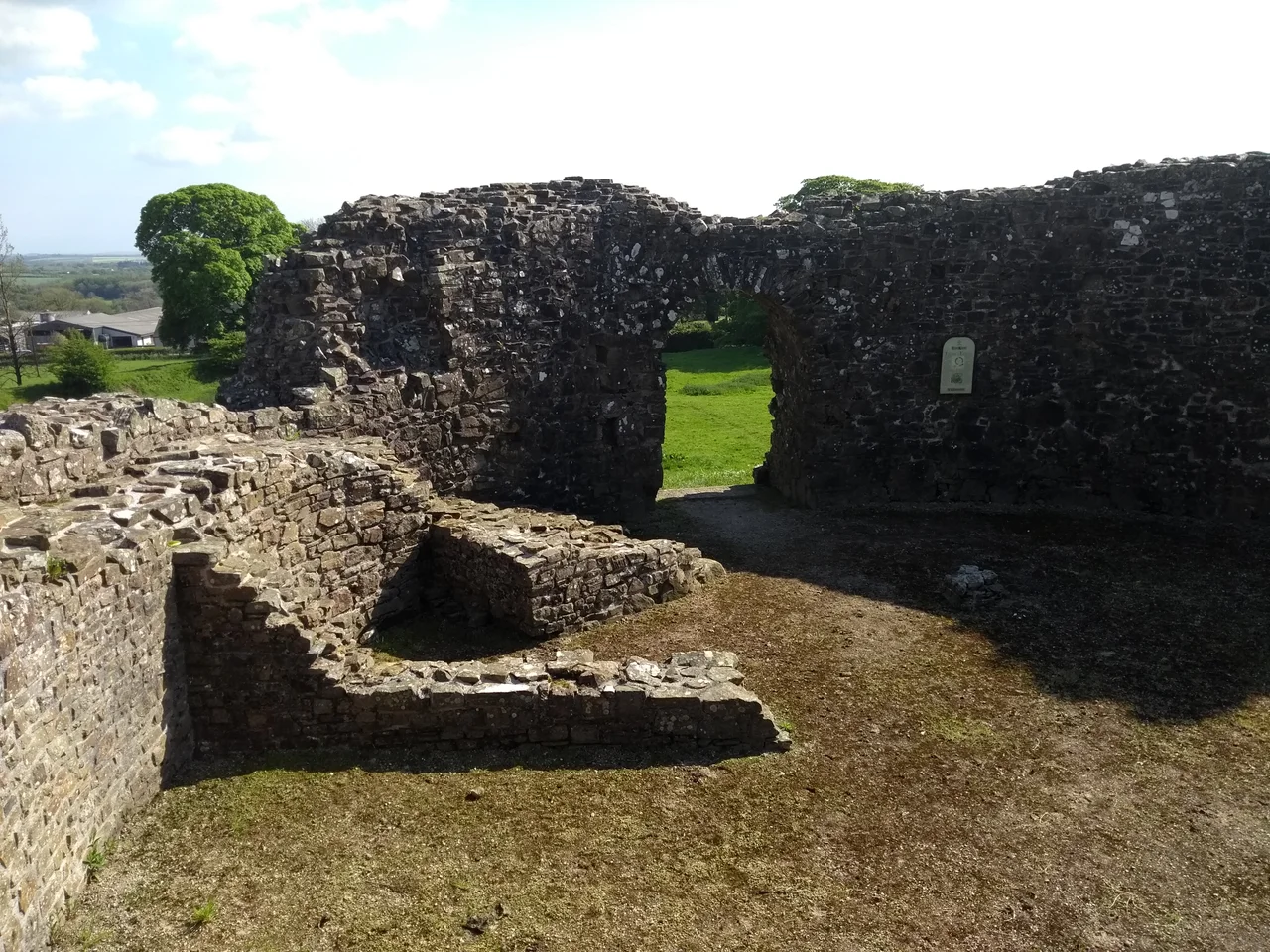
The leader of the Flemish settlement in Dungleddy was a man called Wizo, and the castle he built proved effective at controlling the surrounding country. A settlement grew up around it, taking his name in Old Flemish or Saxon - Wizo's enclosure, Wiston. Wizo eventually parcelled out lands to lesser Flemish settlers. In 1130 he granted some to his own son, Walter fitz-Wizo. Wizo's career did not end in Wales: he went on to lead a similar colonisation in Lanarkshire, where his name still echoes in Scottish place-names. But the Welsh did not forget what had been taken. In 1147 Hywel ab Owain led a Welsh force that captured Wiston Castle. The Flemings took it back. In 1193, near the end of the century, Hywel the Saxon - son of the great Welsh prince Lord Rhys - attacked again, captured the castle, and took Wizo's other son Philip prisoner along with Philip's wife and sons. The wooden tower had been replaced with stone by then. The stone keep still stands, but barely - a circular ruin whose walls have weathered eight centuries of Welsh weather.
Why the Mound Survives
Most motte-and-bailey castles vanished. Their timber rotted, their earthworks were ploughed flat, and the stones of any later keep were quarried away for farm walls and field gates. Wiston survived because its owners walked away. In the 13th century the lord of Wiston moved his household two miles south to Picton Castle, which had been newly rebuilt in stone on better ground. The motte at Wiston was abandoned rather than dismantled. No medieval town engulfed it. No improving Georgian landowner flattened it for views. The earthen mound, the stone shell keep, and the bailey enclosure all remain in something close to their original geometry - which is why Cadw, the Welsh heritage agency, considers it one of the best examples of its type in Wales. The castle is a Grade I listed building and a Scheduled Monument.
What You Find at the Top
The fifty steps to the summit are modern. The motte itself is a steep cone of compacted earth, deliberately built tall to discourage assault. The surrounding ditch is shallower than it once was - eight centuries of leaf-fall and slumping soil have softened the engineering - but the outline reads clearly from above. The stone shell keep is a low ring of masonry, roofless, the kind of structure that once felt impregnable and now feels like a stage set for buzzards. Below the motte, across a small lane, sits the parish church of St Mary Magdalene. Wizo built the castle to hold the land. His descendants built the church to bless it. The pairing has outlasted everything else in the story - the language, the dynasty, the political map that put them here. From the air you can read the whole tableau in a glance: mound, ditch, churchyard, and the wedge of farmland that Wizo and his neighbours took as their inheritance.
From the Air
51.83 degrees N, 4.87 degrees W. The motte rises directly opposite St Mary Magdalene Church in the village of Wiston, Pembrokeshire. Picton Castle is two miles south. Nearest airports: EGFE Haverfordwest (5 nm southwest), EGFH Swansea (35 nm east). The grass-covered mound and stone shell keep stand out clearly at low cruise altitude; look for the circular form just north of the church.
Nearby Stories
- St Andrew's Church, Bayvil 1.6 km away
- Skomer 3.7 km away
- National Botanic Garden of Wales 9 km away
- HMS H47 13 km away
- Mumbles Lifeboat Disaster 32 km away
- Strata Florida Abbey 38 km away
- Lighthouses on Lundy 38 km away
- Tehidy Country Park 140 km away