.jpg)
1957 Bagé VARIG Commando Crash
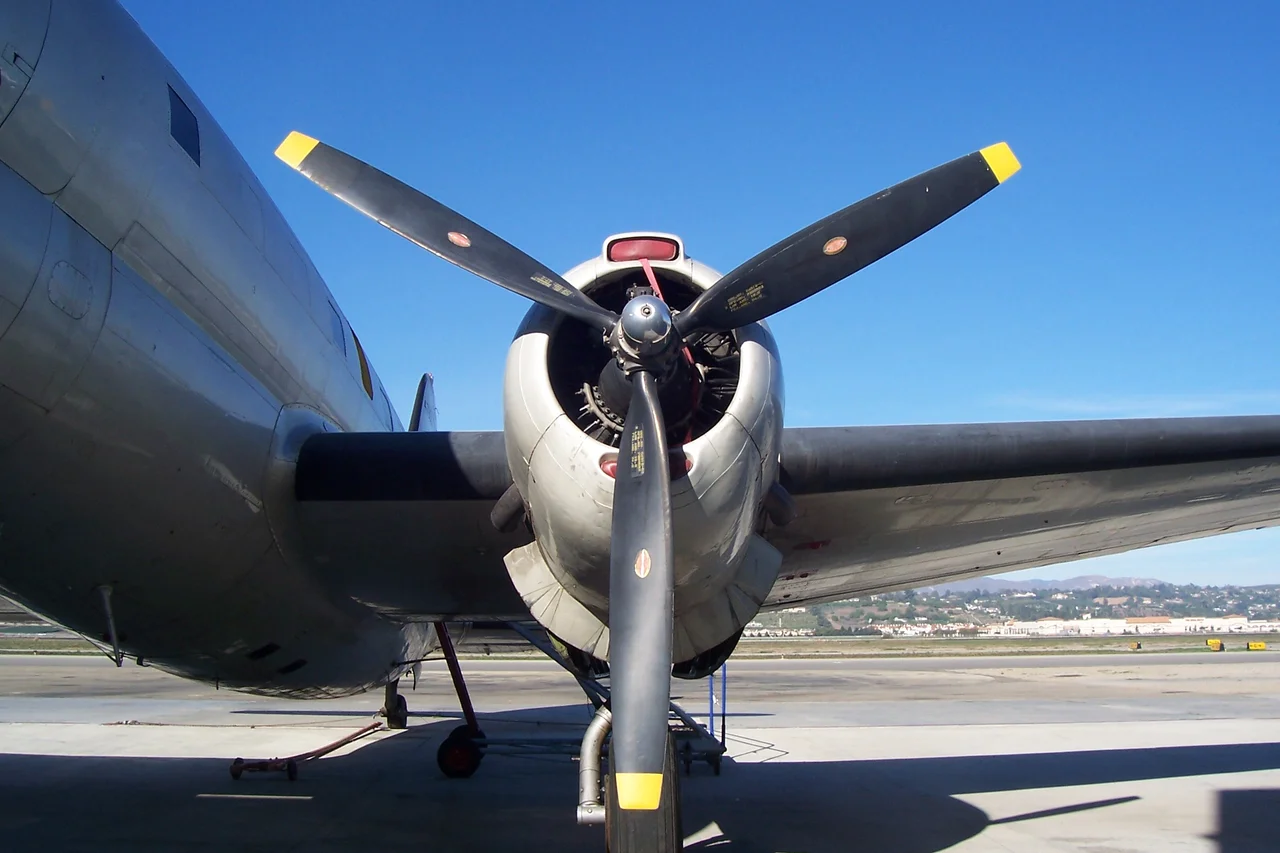
It was meant to be a routine morning flight across the grasslands of southern Brazil - Livramento to Bagé to Porto Alegre, a short hop forty people had no reason to fear. The Curtiss C-46 lifted off from Bagé around half past eight on 7 April 1957. Three minutes later the crew radioed an emergency: fire in the left wing. They turned back, fought the flames, and tried to bring everyone home. They could not. All forty aboard - thirty-five passengers and five crew - died when the burning wing tore from the fuselage. The cause was a flaw none of them could have seen, hidden inside the wing itself.
Forty People on a Tuesday Morning
The crew numbered five: pilot Fernando Silva Leandro, co-pilot Antônio Aniceto Silva Filho, radiotelegraph operator Joésio Cruz, and flight attendants Nicanor Ferreira and Dietrich Engl. Behind them sat thirty-five passengers, people crossing the pampa on ordinary errands. Among them was Liberato Salzano Vieira da Cunha, a journalist, politician, and diplomat who served as Secretary of Education of Rio Grande do Sul until that morning. His death sent a wave of grief through the state. But every name on the manifest belonged to someone with a life and a destination, and the disaster that overtook them was not a statistic. It was forty separate losses, felt in forty homes.
The Fire They Fought
What the crew saw and what was actually happening were two different things, and the gap between them cost everyone aboard. The flames appeared to engulf the left engine, so the pilots did what training demanded: they discharged all four engine fire extinguishers and turned back toward Bagé. The fire seemed to come under control. On the first landing approach, they were told the landing gear had not fully deployed - a hazard given the fire risk - so they aborted and circled for a second attempt, treating the touchdown now as a precaution rather than a desperate measure. They were still flying when the wing failed. The fire had never been in the engine at all.
The Flaw Inside the Wing
The inquiry traced the disaster to a cruel chain of small things. Rural airfields in Rio Grande do Sul were surfaced with gravel and pebbles to keep the dirt from turning to mud in the rain. On takeoff, the landing gear flung those stones up into the wheel well, where the sharp edges cut into fuel lines already worn by years of service. Made of duralumin, the lines fed the wing tanks; the early C-46 had no drains to carry leaking fuel away. So the fuel pooled inside the wing, ran onto the hot engine exhaust, and ignited. The flames reached the main wing spar, which could not bear the heat, and the left wing detached in flight. To the crew, it had all looked like an engine fire - the true source was completely invisible from the cockpit.
What Their Deaths Changed
The C-46 had a grim reputation long before Bagé - poor single-engine performance, heavy fuel consumption, and tanks that leaked. Several aircraft had burned or vanished in mysterious crashes before anyone understood that the duralumin fuel lines and the absence of wing drains had turned each wing into something that could ignite from a single spark. After the loss of PP-VCF, VARIG installed drains in the wings of its Curtiss fleet and replaced the duralumin ducts with stainless steel. Bagé's runways were finally paved with concrete in the mid-1960s. The airline retired its last C-46s in 1971. The forty who died that morning bought, with their lives, the knowledge that made the skies safer for those who flew after them.
From the Air
The crash occurred at Bagé Airport, near 31.39°S, 54.11°W in Rio Grande do Sul, Brazil. The field is today's Comandante Gustavo Kraemer Airport (ICAO: SBBG, IATA: BGX), serving the city of Bagé; its runways - unpaved gravel in 1957 - were surfaced with concrete only in the mid-1960s. From 5,000 to 7,000 feet the city reads as a compact grid set in open ranch land, the airport on its outskirts. The original 1957 route ran from Santana do Livramento on the Uruguayan border, through Bagé, toward Porto Alegre. Across the frontier to the southwest lies Tacuarembó Airport (ICAO: SUTB) in Uruguay, with Montevideo's Carrasco International (SUMU) far to the south. The pampa offers little relief; clear days give long visibility over flat grassland.
Nearby Stories
- 2009 Brasil de Pelotas Bus Disaster 70 km away
- Melo, Uruguay 83 km away
- Minas de Corrales 95 km away
- Santana do Livramento 102 km away
- Jaguarão 103 km away
- Battle of Ituzaingó 130 km away
- Tacuarembó 141 km away
- Santa Cruz do Sul 183 km away