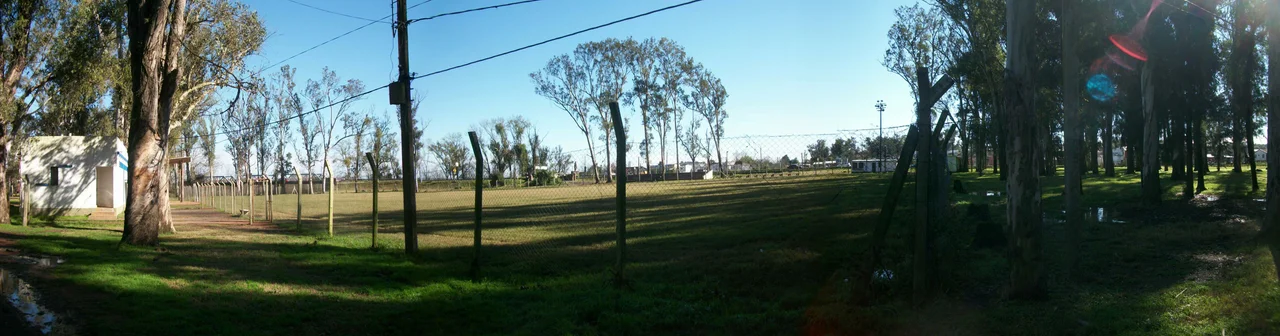

Tacuarembó
"If you insist - Uruguayan, born in Tacuarembó." Carlos Gardel, the most famous voice tango ever produced, said it to a Paysandú newspaper in October 1933, and northern Uruguay has held him to it ever since. France keeps the birth records that place his arrival in Toulouse; Tacuarembó keeps a museum, a valley, and a conviction that no archive can dislodge. The dispute may never be settled. But spend a day among the horses and the wide grass here, and you understand why a town this far from the coast would fight so hard to claim a man whose songs made the whole world ache.
The Valley That Claims a Voice
Twenty-one kilometers from town, in a green fold of country called Valle Edén, a small museum opened in 1999 to make the case. The Uruguayan version of the story runs like this: Gardel was born in 1887 at an estancia called Santa Blanca, the son of Colonel Carlos Escayola, the powerful political and police chief of the department. Scholars who examined the French baptismal records reached a different conclusion, and the official biography still reads Toulouse. The museum does not apologize for the gap. It lays out the documents, the photographs, the claim, and lets visitors decide. What matters in Valle Edén is not the verdict but the longing - a country insisting that something this beautiful must have started on its own soil.
Capital of the Gauchos
Tacuarembó wears its cattle-country identity without irony. This is gaucho heartland, where horsemanship is not nostalgia but a living skill, and the town's pride is the Fiesta de la Patria Gaucha, held each March on the shore of Lavanderas Lake. It is not a costume party. Rural cultural societies, the sociedades criollas, compete in rodeo, in the faithful reconstruction of an old estancia or country schoolhouse, in cooking, even in horsemanship and eloquence. On the festival's Saturday, the whole assembly rides through town in a single parade - locals count somewhere between three and five thousand horses moving together down the streets, hooves and dust and silence broken by the creak of leather.
Older Than the Conquest
Not everything here is about cattle and tango. Near the town lies an Indigenous cemetery that has been in continuous use since pre-Columbian times - a thread of human presence that runs unbroken from before the Spanish arrived to the present day. It is a quiet reminder that the gaucho story, dramatic as it is, sits atop a far older one. People have buried their dead in this ground for longer than any colonial record can measure, long before the first horse was ever loosed onto these plains to breed wild and remake the culture entirely.
Mild Days and Cold Stars
March in Tacuarembó means hot, bright afternoons that surrender quickly once the sun goes down. Temperatures drop sharply after dark, and campers at the Patria Gaucha learn to keep a coat within reach as the night air falls toward ten degrees. Local wisdom holds that the festival is never quite complete without a day of rain, so revelers plan around it the way they plan around everything else here - with the unhurried patience of people who measure time in seasons and saddle-hours rather than minutes. The festival runs all day and well into the night, the crowds drifting home to rest and returning for the music after dark.
From the Air
Tacuarembó sits at 31.71°S, 55.98°W in Uruguay's northern interior, roughly 390 km north of Montevideo. From a cruising altitude of 8,000 to 10,000 feet the town reads as a compact grid set in open ranch land, with the surrounding pampa rolling out in every direction and the Tacuarembó River threading nearby. Tacuarembó Airport (ICAO: SUTB, IATA: TAW) lies about 5 km east of the city with a single runway, 10/28, served by the TBO non-directional beacon and TMB VOR-DME. Montevideo's Carrasco International (SUMU) anchors the long return south, while Bagé's Comandante Gustavo Kraemer Airport (SBBG) lies northeast across the Brazilian frontier. Clear autumn days around the March festival offer long visibility over the grasslands.
Nearby Stories
- Minas de Corrales 20 km away
- Battle of Masoller 45 km away
- Rivera 63 km away
- Cisplatina 112 km away
- Cerro Chato 129 km away
- Salto, Uruguay 129 km away
- San Carlos Castle 138 km away
- Siege of Paysandú 144 km away