
Cerro Chato
On a Sunday in July 1927, in a dusty cattle town that could not decide which department it belonged to, women lined up to vote - and made history without quite meaning to. The ballot in Cerro Chato was about something almost comically local: which of three departments should claim the town. But by the rules they followed, every citizen was called to the polls, women included. It was the first time women had ever voted in Latin America, and the rest of the continent would take years to follow.
A Town in Three Pieces
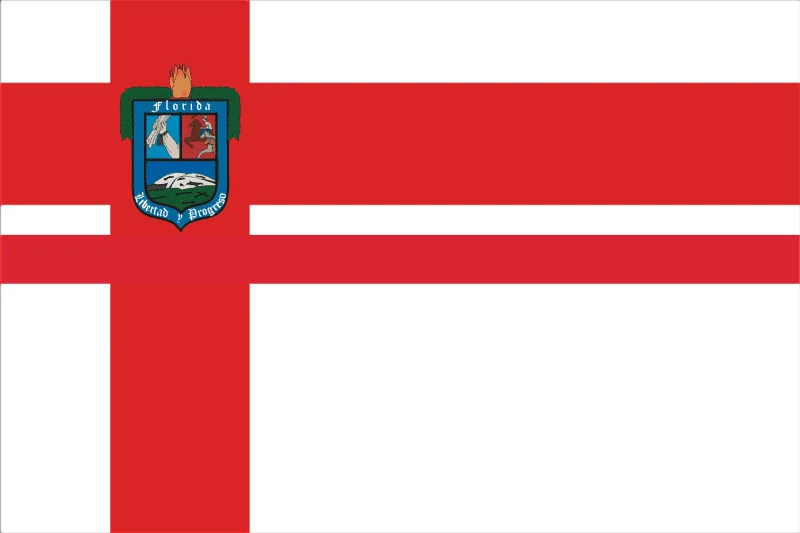
Cerro Chato has a problem of belonging. The town sits where the borders of three Uruguayan departments meet - Durazno, Florida, and Treinta y Tres - and so it is literally split among them, its streets divided by lines on a map. The name means Flat Hill, a plain description of plain country. It grew from cattle, founded around the vast livestock ranches that still define the region, and in the nineteenth century it served as a crossroads where postilions, stagecoaches, and herds of cattle passed through on their way to the rest of Uruguay. When the national railroad arrived in 1908, the town became a shipping point from which cattle could move across the whole country.
The Vote Heard Across a Continent
The plebiscite of 3 July 1927 was meant to settle the town's three-way split: should Cerro Chato be annexed entirely to Durazno? It was non-binding, almost a formality. But the organizers ran it by the full procedures of Uruguayan election law - secret ballot, every citizen summoned - and that included the town's women. So they voted, in numbers, in a real election, decades before women's suffrage was the norm anywhere in the hemisphere. Durazno won the ballot. The authorities, in the end, refused to accept the result. And so Cerro Chato remains divided among its three departments to this day, the question never truly resolved.
A First That Took Years to Repeat
What happened here in 1927 was genuinely ahead of its time. Uruguay had written women's suffrage into its 1917 constitution, but the principle sat largely unused; the country did not make it national law until 1932, and Uruguayan women did not vote in a national election until 1938 - eleven years after the women of Cerro Chato. For one Sunday in an obscure ranching town, the future arrived early. The voters were ordinary women of a cattle community at the back of beyond, and they cast their ballots over a parochial border dispute, not a grand cause. That is part of what makes the moment so striking: history turning on something small.
Cattle, Iron, and a Cancelled Mine
Cerro Chato has stayed what it always was - a place of cattle and sheep, grazing the quality grasslands near the source of the Yí River. The 2011 census counted 3,227 people, parceled out across the three departments. The town nearly took a very different turn: it was slated to host the Aratirí iron mining project, a development meant to pull 18 million tons of iron from the ground each year. The plan collapsed in 2016 after fierce opposition and widespread ridicule over what it would do to the surrounding farms. The grasslands won. And the town went on grazing its cattle, quietly carrying a piece of history far larger than itself.
From the Air
Cerro Chato lies in central Uruguay at approximately 33.10°S, 55.13°W, near the source of the Yí River and along Route 7, where the Durazno, Florida, and Treinta y Tres departments converge. This is open ranching country - rolling grasslands and gentle cuchilla ridges, sparsely settled, with the town a small grid in a wide green sweep. The nearest sizable airports are at Melo and Treinta y Tres to the east and northeast; the principal international gateway is Carrasco International (ICAO: SUMU) at Montevideo, roughly 110 nautical miles to the south-southwest. From the air the landscape reads as endless pasture stitched with fence lines and the occasional ranch, with Route 7 running through. Best viewed in clear daylight. Recommended viewing altitude FL200-FL300 en route, descending to take in the grasslands and the three-department crossroads below.
Nearby Stories
- Treinta y Tres 15 km away
- Cisplatina 45 km away
- Melo, Uruguay 64 km away
- Battle of Sarandí 66 km away
- Fuerte San Miguel (Uruguay) 94 km away
- Minas 111 km away
- Tacuarembó 135 km away
- Minas de Corrales 151 km away