
1979 Dniprodzerzhynsk Mid-Air Collision
Somewhere inside a cloud at 8,400 meters, on the afternoon of 11 August 1979, two airliners that should never have shared the same sky found each other. Both were Tupolev Tu-134s, both Aeroflot flights threading the crowded airspace over the Ukrainian steppe near Dniprodzerzhynsk, the city now called Kamianske. When they collided, 178 people died, and among them were seventeen young men who were nearly the whole of the Pakhtakor football club of Tashkent, bound for a match they would never play. In Uzbekistan, the date is remembered simply as the day a generation of the game was lost.
A Sky Too Full
The tragedy was born on the ground, in a control room stretched past its limits. Both flights were passing through the Kharkiv regional air traffic control center, an area of such dense traffic that a single controller might be juggling more than a dozen aircraft at once. The strain had been a known problem since the early 1970s, discussed but never fixed, and the southwestern sector was notoriously complex and unpredictable. On that afternoon the controller's mental picture of where each plane sat had drifted out of step with reality. When the supervisor glanced at the radar and heard the traffic on the frequency, he grasped the horror of what was unfolding and scrambled to pull the aircraft apart, ordering one flight up to a vacant altitude. The correction came seconds too late, and it sent one aircraft climbing straight into the path of the other.
The Collision
The two jets came together over Dniprodzerzhynsk, hidden inside cloud, their crossing airways meeting at a steep angle. One aircraft's right wing tore through the forward fuselage of the other, and in an instant the mid-air became a cascade of destruction: tails striking tails, an engine ripping through a keel, wings shearing away. One Tu-134 broke apart and tumbled from the sky at once. The other, gravely wounded and missing much of its tail, one engine, and part of a wing, held together long enough for its pilots to fight for an emergency landing. They nearly bought their passengers a chance. At around 4,000 meters they lost the struggle, and the aircraft went down northeast of the city. No one aboard either plane survived. Investigators found no explosion, no fire, no fault in the machines, only human error in the airspace above.
The Team That Was Lost
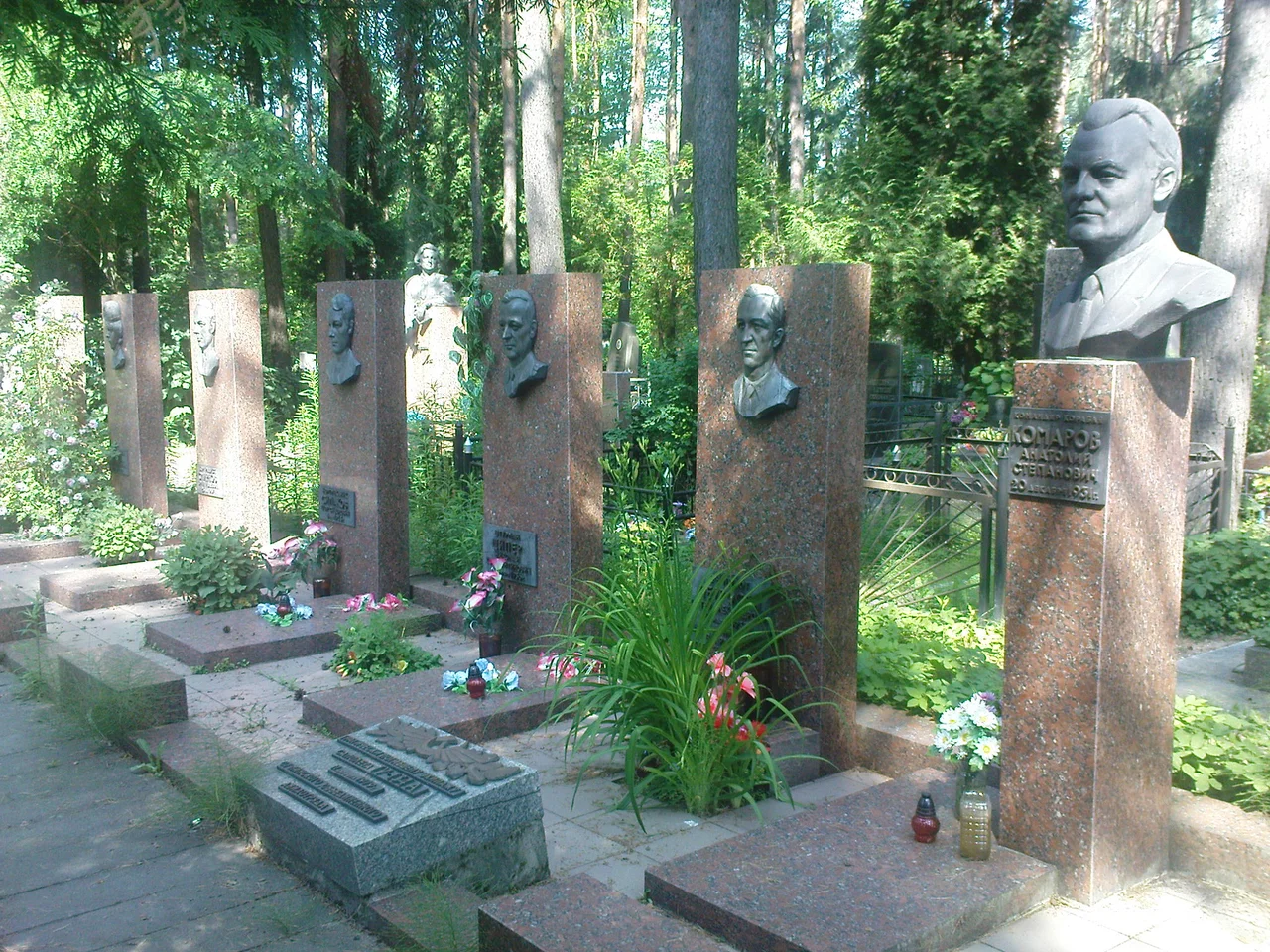
Aboard one flight, on their way to face Dinamo Minsk, were the footballers of Pakhtakor Tashkent, one of Soviet Central Asia's proudest clubs. Seventeen members of the team died in the sky over Ukraine, a loss so total that the Soviet football authorities ordered every top-league club to give up three players so Pakhtakor could be rebuilt, and shielded the shattered club from relegation for three seasons. Two air traffic controllers were later sentenced to fifteen years for the failures that led to the crash, a legal reckoning that brought little comfort. The grieving has never really ended. A monument stands at Botkin Cemetery in Tashkent, and each August the club holds a youth tournament in memory of the dead. Near the crash site at Kurylivka, thirty years on, a stone swan and a granite football were raised over the players' engraved names, marking the ground where so many young lives came down.
From the Air
The collision occurred over Dniprodzerzhynsk (now Kamianske) at roughly 48.588 N, 34.656 E, with wreckage falling northeast of the city. From 2,000 to 4,000 feet AGL the Dnieper River and the large Kamianske Reservoir dominate the view, with the industrial city on the south bank. Nearest airport is Dnipro International (UKDD) to the east-southeast.
Nearby Stories
- Samar 5.9 km away
- Aeroflot Flight 3630 14 km away
- Dnieper Rapids 18 km away
- Deriivka 25 km away
- Battle of the Vorskla River 37 km away
- Chortitza Colony 60 km away
- Kryvbas 63 km away
- Borki Train Disaster 115 km away