
1989 Jonesborough Ambush
Bob Buchanan's red Vauxhall Cavalier crested the hill on the Edenappa Road just after 3 pm on a cold March afternoon in 1989. A man in army fatigues stood in the middle of the road, waving him down. To Buchanan and his passenger Harry Breen, the figure looked like a British soldier at a checkpoint - one of dozens they had passed through over careers spent policing South Armagh. They slowed. They stopped. A stolen cream-coloured van that had been following them overtook and pulled into a laneway opposite. Four masked men jumped out with rifles and opened fire on the driver's side. The two policemen who died on that road were the highest-ranking RUC officers ever killed during the Troubles.
The Men in the Car
Chief Superintendent Harry Breen was 51. He had joined the RUC in 1957 as a young sergeant, served in Lurgan, Newry, and Banbridge, and risen to command H Division, which covered some of the most contested ground in Northern Ireland. Colleagues remembered him as a gentleman of the old school who always carried a dress handkerchief in his suit pocket. Superintendent Bob Buchanan was 55, from Bready in County Tyrone, commended six times across a 33-year career. He was the RUC's Border Superintendent, the officer responsible for liaison with the Garda Siochana across the line in the Republic. A devout Presbyterian, he had been writing a history of the Kellswater Reformed Presbyterian Church outside Ballymena. The book was published after his death. Buchanan was due to transfer to Newtownards the following month. His Garda counterpart in Dundalk later testified that Bob had been in a joyous mood that morning because of the news.
An Unscheduled Meeting
The meeting in Dundalk that afternoon had been arranged at short notice. Buchanan had phoned that morning. The agenda was Operation Amazing, a co-ordinated cross-border effort against suspected IRA smuggling on the Armagh-Louth border. At 2:10 pm Breen and Buchanan sat down in the office of Garda Chief Superintendent John Nolan. The conversation lasted just over an hour. When they left to drive back north, they took the Edenappa Road, crossing the border at Border Check Point 10. Investigators later established that someone had spotted them leaving Dundalk and radioed ahead to a team already in position at a hilltop near Jonesborough. Whether the tip-off came from inside the Garda station, from IRA surveillance, or from both, has been argued for decades. What is certain is that the killers were waiting and ready.
The Ambush
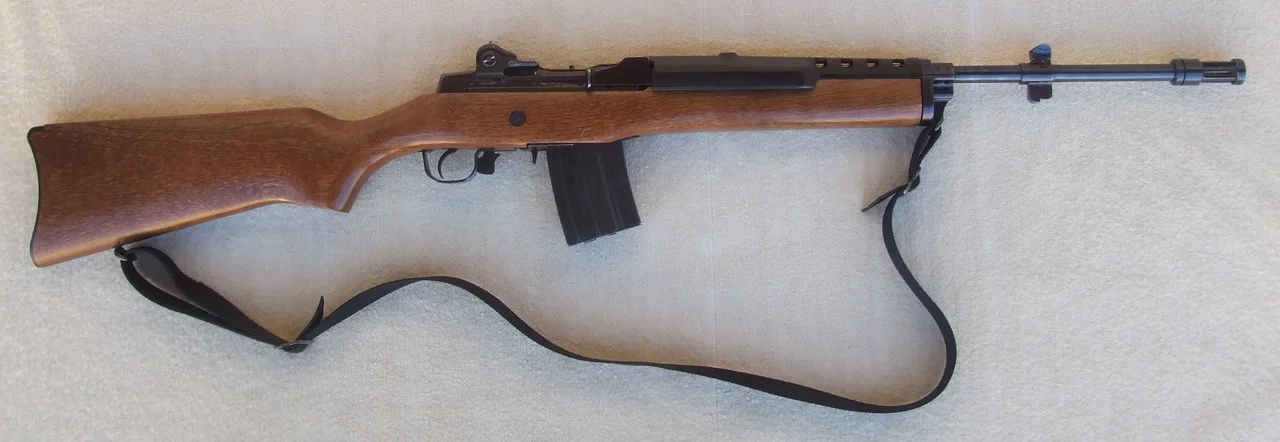
Buchanan, slowing for what looked like a British Army checkpoint, was trapped before he understood what was happening. The masked men fired through the driver's window with two Armalite rifles, a Ruger Mini-14, and a 7.62 Short. Buchanan tried twice to reverse; both times the car stalled. He was likely dead before it came to rest, his foot still on the accelerator, the gearstick still in reverse. Harry Breen, wounded but conscious, pulled himself from the passenger side and stood at the roadside waving the white handkerchief he kept folded in his suit pocket. Witnesses said one of the gunmen walked over, told him to lie down, and shot him in the back of the head. A second gunman returned to the car and shot Buchanan again at point-blank range. The killers took the officers' notebooks and personal papers, including the unfinished church history Bob Buchanan had been writing. Witnesses heard them cheer as they drove away.
Snow, Silence, and Two Widows
An emergency call reached Forkhill RUC station at 3:45 pm. Officers arrived nine minutes later to find Breen on the verge with his pen, his glasses, and the white handkerchief beside him. Buchanan was still belted into the driver's seat. A heavy snowstorm rolled in that afternoon, and the bodies could not be safely removed until the next morning because of the risk of booby-trap bombs. June Breen had asked her husband for years that, if he were ever killed, the RUC Chief Constable not be allowed to attend his funeral - a request rooted in Harry's private anguish about how senior command was handling allegations of collusion. Catherine Buchanan was left with her husband's notes, his church book, his children and grandchildren. Bob's son William and daughter Heather were grown. The grandchildren, Andrew and Robert, were small.
The Long Inquiry
No one has ever been charged with the killings. In 2003 the Cory Collusion Inquiry recommended a public tribunal. The resulting Smithwick Tribunal sat in Dublin from 2011 to 2013, hearing testimony from retired officers, former IRA members, soldiers, and journalists. Judge Peter Smithwick's report, published on 3 December 2013, concluded that he was satisfied there had been collusion in the murders - that someone within the Garda Siochana had passed information to the IRA. The tribunal also heard that the Edenappa Road had been declared out of bounds by security forces at 11 am that morning, but the warning was never relayed to Breen and Buchanan. Two competent, careful policemen had driven into an ambush nobody told them about. The road where they died is quiet today, a stretch of country tarmac winding up a tree-lined hill near a small village on the Irish border.
From the Air
The ambush site lies at 54.07 N, 6.37 W on the Edenappa Road between Dundalk in the Republic of Ireland and Jonesborough in County Armagh, Northern Ireland. The road climbs over a low forested hill in the broken country east of the Slieve Gullion massif. From the air the area is a patchwork of small fields and woodland, with the Republic-NI border tracing an invisible line through it. Belfast International (EGAA) lies about 65 km north; Dublin (EIDW) about 80 km south. The site is roughly 8 km north-east of Dundalk and 4 km south of Newry. The Cooley Mountains rise on the eastern horizon, and the distinctive cone of Slieve Gullion is visible to the west.
Nearby Stories
- Cootehill 1.9 km away
- Mellifont Abbey 5.8 km away
- Tandragee 7.1 km away
- Oldcastle, County Meath 8.9 km away
- 1990 British Army Gazelle shootdown 11 km away
- Slieve Donard 15 km away
- Downpatrick and County Down Railway 17 km away
- German submarine U-1051 42 km away