.jpg)
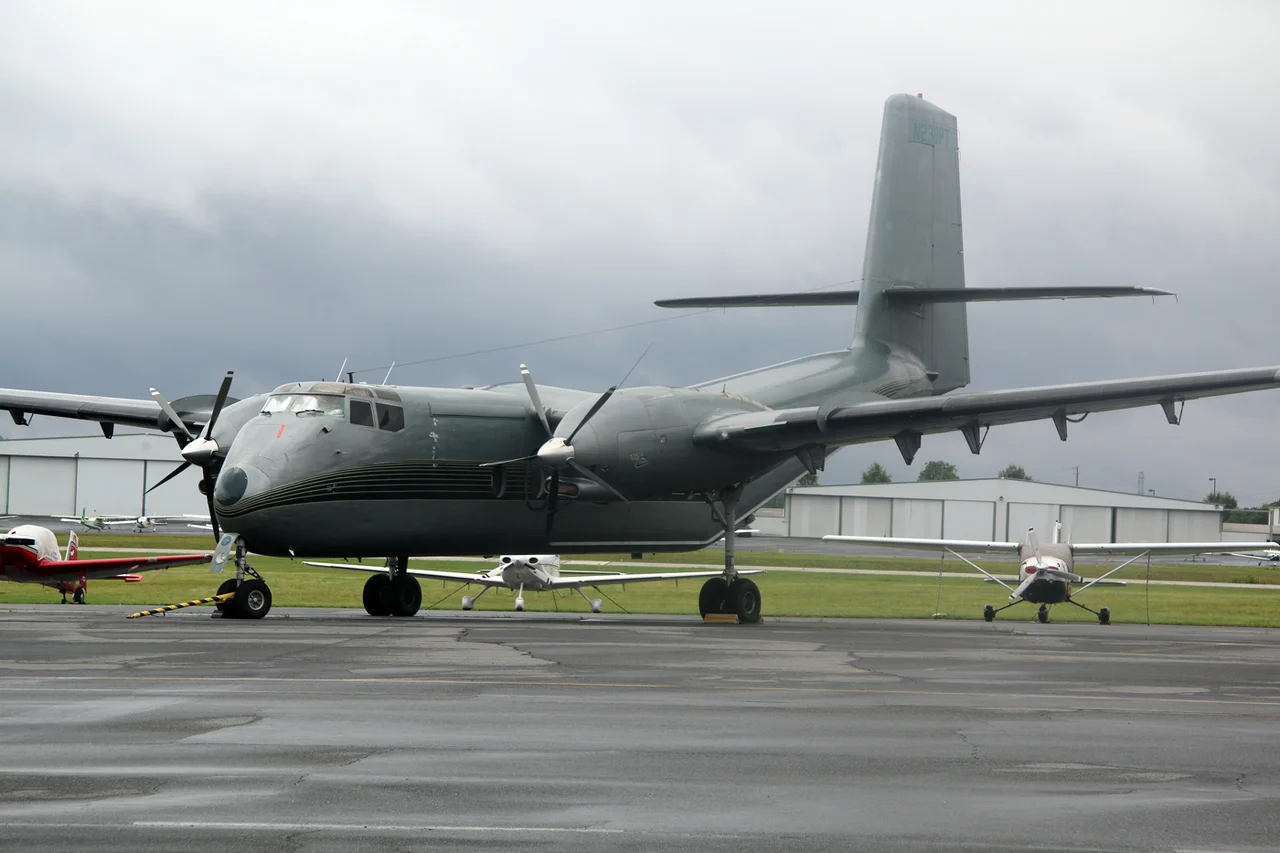
2016 Alfa Indonesia DHC-4 Crash
At 08:23 on 31 October 2016, the crew of a modified de Havilland Caribou checked in with Ilaga Tower and reported their position over Ilaga Pass, a narrow valley near their mountain destination. Four minutes later they were gone from the radio. No distress call. No partial transmission. Just the silence that pilots and air traffic controllers in Papua have learned to recognize as the first sound of a bad outcome. PK-SWW had lifted off from Timika at 07:57 carrying construction materials for a road project, four Indonesian crew on board. At 08:27 the pass swallowed them.
The Aircraft That Should Not Have Been Retired
The de Havilland Canada DHC-4 Caribou was designed in the 1950s for short, rough-field operations. It takes off in spaces no sensible aircraft should. It lands on grass, on mud, on anything flat enough. PK-SWW was an unusual example: a Caribou built in 1971, later modified by PEN Turbo with Pratt and Whitney Canada PT6-67A turboprop engines replacing the original piston engines, first flown in its new configuration in September 2014. Indonesia took delivery in May 2016. The aircraft entered service that September, jointly owned by the central government and the Puncak Regency authorities, purchased specifically to lower the cost of fuel flown into remote Papuan districts. It was six weeks into its Indonesian career when it disappeared.
The Infrastructure Push
The backdrop is politics as much as geography. For decades, Indonesian national development concentrated on Java and Sumatra. When Joko Widodo became president, he redirected attention east. Airports expanded. Subsidized pioneer flights increased. In Puncak Regency, the government bought a DHC-4 to reduce oil prices; the cost of a liter of fuel in the central highlands had long been a symbol of how little the state reached into these mountains. The Caribou was part of that answer. On 31 October, it was flying construction materials to Ilaga in the next valley, exactly the kind of work it was purchased to do.
Silence on the Frequency
At 09:22 local time, another aircraft picked up a signal near Jila that looked like an emergency locator beacon. Basarnas, the National Search and Rescue Agency, moved quickly. The Indonesian Air Force, the army, and the national police assembled a team with two helicopters and two fixed-wing aircraft. Three base camps were established. Then the Papua rain arrived, which is what Papua rain does, and the search was grounded. In these valleys, visibility closes in minutes. A helicopter that can reach a crash site in the morning can be weathered out of the air by noon, sometimes for days.
What They Found on Ilaga Pass
The wreckage was spotted on 1 November on the side of Ilaga Pass at an elevation of 12,800 feet, roughly nine nautical miles from Jila and six from Ilaga. The aircraft had burned completely. Debris was strewn across the valley, the impact severe enough that no one inside could have survived. Two helicopters carried the bodies out to Timika, where a procession was held to honor the four crew. None of them made it to 40. All four were Indonesian, working a cargo run in their own country's most difficult flying region. The aircraft had been in Indonesian hands for five months.
Black Boxes and Hard Lessons
The Flight Data Recorder and Cockpit Voice Recorder were both missing when the site was initially worked. On 6 November, search teams recovered them. Both were sent to Jakarta for analysis by the National Transportation Safety Committee, KNKT. The interim report recommended that the operator, Perkumpulan Penerbangan Alfa Indonesia, comply with a specific Directorate General of Civil Aviation safety circular from earlier that year. Papua's flying record is difficult reading. The combination of extreme terrain, unreliable weather, marginal infrastructure, and aircraft pressed into service in conditions they were never certified for has produced an almost annual roster of losses. Aviastar Flight 7503, Trigana Air 267, and now the Alfa Indonesia Caribou all sit on the same list. Four names are now on it too.
Why This Valley
Ilaga Pass sits in the central highlands at almost 13,000 feet, a corridor between jagged limestone ridges that regularly hide inside cloud. The standard routing from Timika requires threading such passes to reach the interior villages that have no road access and will not have road access in any foreseeable future. The Caribou, with its short-field performance and strong high-altitude engines, was one of the few airframes that could service strips like Ilaga at all. When it failed here, the failure was not just of a single flight. It was of the narrow margin on which all of this flying depends, every day, when the weather holds.
From the Air
Crash site at approximately 4.13°S, 137.64°E on Ilaga Pass, Jila District, at 12,800 ft elevation in the central highlands of Central Papua. The nearest airports are Ilaga Airport (ICAO: WAYB, roughly 6 nm northeast) and the larger Mozes Kilangin Timika (ICAO: WABP) at sea level to the southwest. This is extreme mountain flying territory; maintain minimum 14,000 ft above terrain and expect rapid weather changes. Morning departures only; afternoon cloud typically seals the passes.
Nearby Stories
- Tembagapura 2.4 km away
- Mapenduma Hostage Crisis 11 km away
- Lorentz National Park 45 km away
- Asmat 113 km away
- Foja Mountains 174 km away
- Central Papua 183 km away
- 2026 Smart Air Cessna 208 Crash 255 km away
- The Abyss That Isn't a Trench 685 km away