.jpg)
2018 South West Aviation Let L-410 crash
When investigators recovered the Flight Data Recorder and the Cockpit Voice Recorder from the wreckage of the Let L-410 that crashed into Lake Yirol on 9 September 2018, they found something unforgivable. The tapes had run out. They had not been replaced. Twenty-three people were on that aircraft - men, women, and at least one of them a bishop - and when the recorders were opened, there was nothing on them. The silence of those spools says more about the aircraft's last flight than any recording could have.
Juba to Yirol
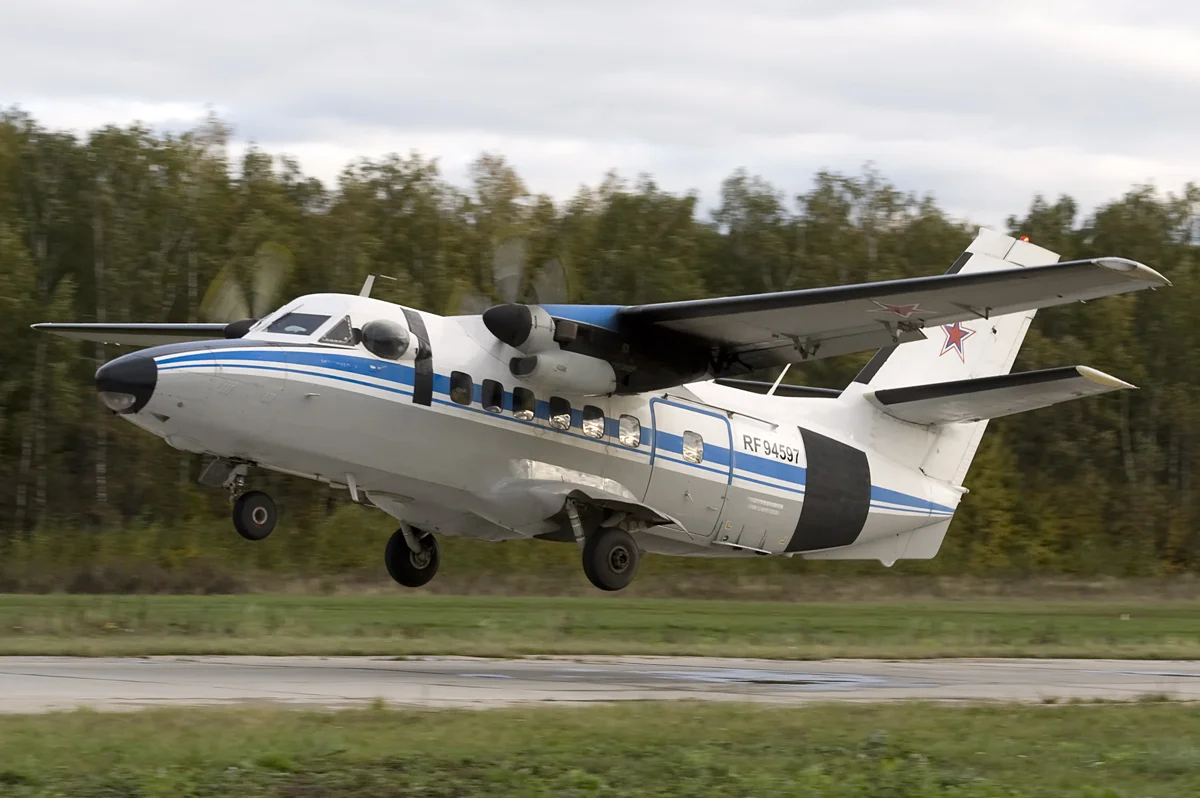
The Let L-410 Turbolet, a small Czech-built twin turboprop registered UR-TWO, took off from Juba International Airport in South Sudan at eight in the morning local time. Its destination was Yirol Airport, about 122 nautical miles north - a short hop of roughly forty-five minutes. The takeoff weight was 5,700 kilograms, of which the aircraft itself accounted for 3,800. Twenty-one passengers and two crew were aboard: Captain Sami Qeily, fifty-seven, and First Officer Mohamed Shamseddine, twenty-seven, both Sudanese pilots rated on the type. Captain Qeily was old enough to be his First Officer's father. One of the passengers, the Anglican bishop of Yirol Simon Adut Yuang, was travelling home. The weather ahead was turning bad.
A Fleet With a Past
The aircraft had a history longer than either pilot's career. Delivered to the Soviet airline Aeroflot in 1984, it passed through various operators over the decades until 2006, when it was parked in storage at Rivne, in western Ukraine, for twelve years. In April 2018, a Ukrainian carrier called Slaver Kompani acquired it and wet-leased it to South Sudan-based South West Aviation from May onwards. The airframe was thirty-four years old when it flew into Juba the morning of the accident, piloted by a different crew from the one that would fly it out again a few hours later. Those who knew the industry in South Sudan called it a chain of handlers operating old planes on paper-thin margins.
The Decision Not Made
Heavy fog enveloped the approach to Lake Yirol. The airline had not obtained weather briefings to give to its crew. The crew, watching conditions deteriorate, should have diverted to an alternate airfield. Instead, they pressed on toward Yirol. The on-board altimeter, recovered later from the wreckage, was set to an incorrect pressure value - meaning it displayed altitudes higher than reality. A pilot relying on that instrument, with no visual reference through the fog, would believe himself safely above the terrain while gradually descending toward it. The Czech aircraft came down in the water of Lake Yirol. The investigation classified it, as so many such accidents are classified, as a controlled flight into terrain.
Bishop Yuang
Bishop Simon Adut Yuang was on his way back to his diocese. His death was marked by the Anglican Communion News Service and by mourners across Yirol, where he had led the Episcopal Church of South Sudan in a town ravaged by conflict. Twenty-two others died with him - ordinary passengers whose names appeared briefly in news reports and then slipped out of public record. A small number of people survived the impact. The circumstances of their rescue from the water were chaotic and underreported. In a country where medical evacuation infrastructure is sparse, survival depended on who was nearby and what they could do.
Lake Yirol
Lake Yirol sits in Eastern Lakes State, a shallow body of water in the flat savanna that characterises much of central South Sudan. The town of Yirol lies on its western shore - a cattle-keeping community where Dinka pastoralists bring their herds to water in the dry months. The airstrip is a packed dirt runway on the edge of town. When the weather turns in September, at the tail end of the rainy season, fog rises off the lake in dense layers at dawn. The landscape is beautiful in clear light. In low visibility, from 1,780 feet on a mis-set altimeter, it becomes indistinguishable from the cloud itself.
From the Air
The crash site lies in Lake Yirol at approximately 6.58 degrees N, 30.50 degrees E, in Eastern Lakes State, South Sudan. Yirol Airport (ICAO HSYL) is a packed-dirt strip on the lake's western shore; the flight originated from Juba International Airport (HSSJ) 122 nautical miles south. Morning fog over the lake during the late rainy season (August-September) is a significant hazard, and altimeter setting procedures in this region have been implicated in multiple controlled-flight-into-terrain accidents. The lake itself is a useful visual landmark from altitude in clear weather, appearing as a flat reflective surface amid surrounding savanna.
Nearby Stories
- Rumbek University 32 km away
- South Sudan 48 km away
- Twic East County 59 km away
- Bor, South Sudan 69 km away
- Jonglei Canal 79 km away
- Juba–Terekeka–Rumbek Road 104 km away
- Tonj 141 km away
- Lado Enclave 166 km away