
2025 Kartalkaya Hotel Fire
The first guests to smell smoke were awake at 2:30 in the morning. The Grand Kartal Hotel, perched in the pine-clad mountains of Bolu Province at the Kartalkaya ski resort, was 80 to 90 percent full. It was 21 January 2025 - the middle of the Turkish winter school break, when families crowd into mountain hotels for a week of sledding and skiing. There were 238 guests inside, many of them children. By the time someone formally reported the fire, around 3:27 a.m., it had been spreading from the fourth-floor kitchen for nearly an hour. The smoke detectors did not go off. The alarms did not sound. The sprinklers - which were supposed to have been installed in 2008 under Turkish fire safety law - had never been put in. Children woke up choking in pitch-black corridors. Seventy-eight people died. Most of them suffocated. At least thirty-four of the dead were children.
What Was Lost That Night
At least thirty-four of the dead were children. Some of them died with their parents and siblings beside them; one family lost more than ten members. Vedia Nil Apak was ten years old. She was a swimmer for Fenerbahçe S.K., the Istanbul club whose colors any Turkish child can name. She died with her mother. Atakan Yalçın, dean of the faculty of business at Özyeğin University, did not survive. A Sözcü newspaper writer and former Orduspor football club president lost his wife and both their children. A Georgian babysitter died alongside the two children she was looking after and their mother - four members of one extended family, foreigners working and vacationing in Turkey, all of them gone in one fire. Two hotel employees, including a chef, were among the dead. Seventy-seven of the seventy-eight who died were Turkish citizens. They were skiers and engineers and grandparents and ten-year-old girls who had a swim meet coming up. They are not statistics. They were the country at winter break.
The Fire That Should Not Have Killed Anyone
The Grand Kartal had been built in 1998. It had twelve stories, 161 rooms, and 350 beds. It was last renovated in 2015. The fire began in the kitchen-restaurant section on the fourth floor and moved upward through walls, ceilings, and stairwells that should have been compartmentalized but were not. According to survivors interviewed afterward, no fire-detection system activated. No alarms rang. The corridors filled with black smoke and the lights in those corridors did not work because the emergency exit lighting was non-functional. Some guests, trapped in upper-floor rooms, tied bedsheets and blankets together and tried to climb down the outside of the building. At least two people died after jumping from windows. When firefighters finally arrived - Kartalkaya has no dedicated fire service of its own - they used ladders to pull fifty people out through windows on the front facade. They did not arrive until 4:15 a.m., almost an hour after the fire was reported. According to one report, hotel management had instructed staff not to alert guests or authorities, hoping to manage the situation internally.
The Anatomy of a Negligence
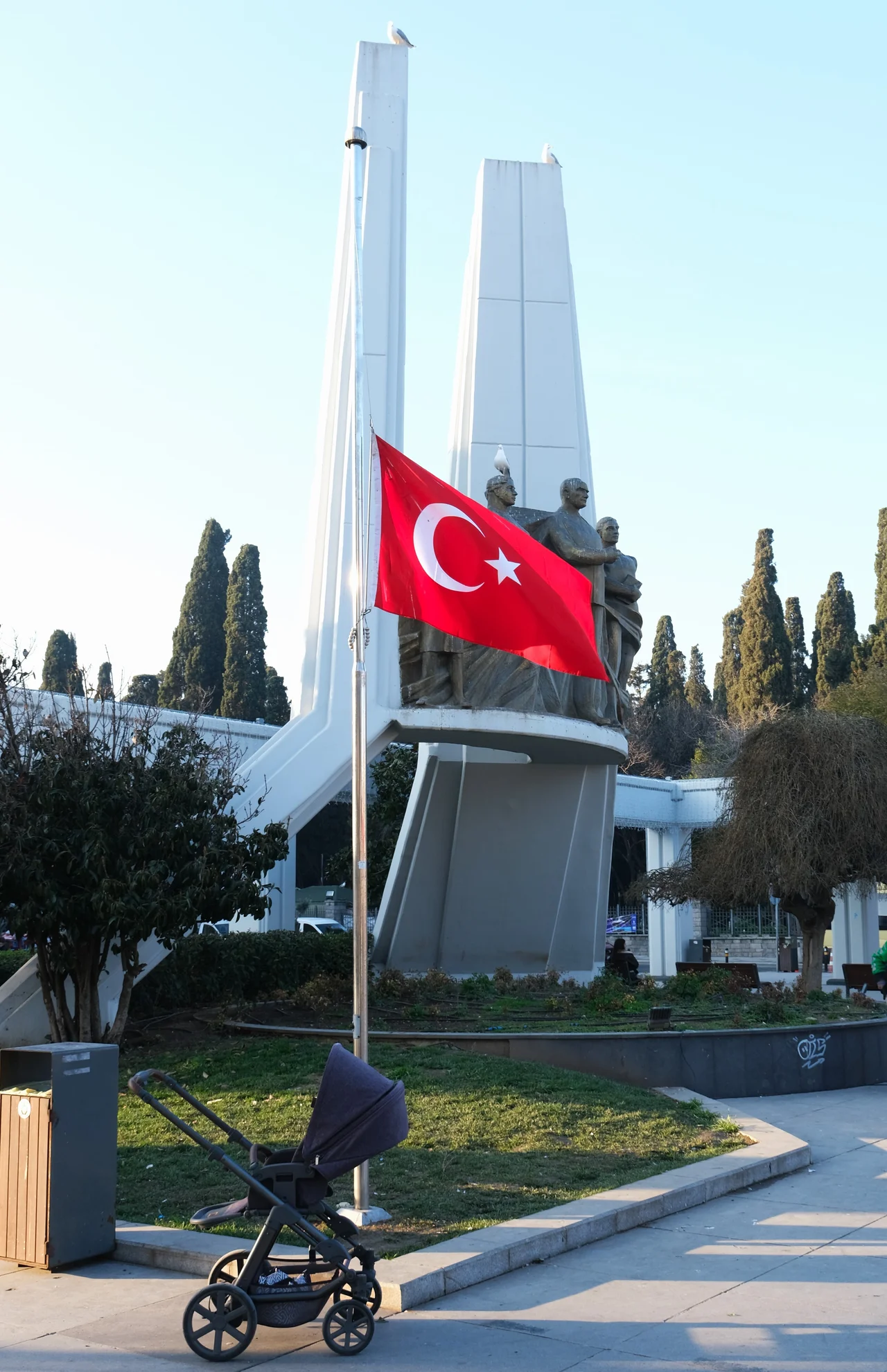
In the days that followed, Turkey turned over what had happened with a fury that newspapers compared to mourning. The Bolu engineers' and architects' union pointed out that automatic sprinklers had been mandatory under Turkish law since 2008 and were absent from the building. The head of the Ankara Chamber of Architects reported there were no functioning emergency exit lights. The Bolu municipality and the Erdoğan government's Ministry of Tourism began trading accusations - the municipality is controlled by the opposition Republican People's Party, the ministry by the AKP, and the question of who had inspected what and when became immediately political. There was even an allegation, reported by Halk TV, that AFAD search and rescue teams who wanted to rest at the hotel after their shift were charged a fee for accommodation. The Turkish Football Federation called for a minute of silence at all matches. President Erdoğan declared a national day of mourning on 22 January. Flags came to half-mast across Turkey and at embassies abroad.
Justice and the Cost of Silence
On the day of the fire, Turkey's broadcasting regulator imposed a media ban - a familiar reflex in a country where journalists routinely face restrictions, and one that was lifted the next day after the Workers' Party of Turkey filed an objection. Fourteen people were detained for questioning, including the hotel's owner, its architect, kitchen staff, the deputy mayor of Bolu, and the deputy fire department director. A trial of 32 defendants opened in Bolu on 7 July 2025. On 31 October 2025, after months of testimony, the hotel owner was sentenced to life imprisonment for severe negligence. Ten other defendants also received life sentences. The verdicts will not bring back the children of the winter break. They will not unmake the photographs of small coffins lined up outside the morgue, where the cold-storage truck had to be brought in because the regular morgue capacity was exceeded. They are an accounting, not a healing. Across Turkey, the fire has joined a list of preventable disasters - the Adana dormitory fire of 2016, the Gayrettepe nightclub fire of 2024 - that the country invokes when the question is asked, again, why this keeps happening.
From the Air
The Grand Kartal Hotel sits at 40.59°N, 31.81°E in the Köroğlu Mountains of Bolu Province, northwestern Turkey, at roughly 1,800 meters elevation. From the air, the geography is heavily forested mid-elevation peaks rising between the Black Sea coast and the Anatolian plateau. The Kartalkaya ski area is visible as cleared runs cut into pine forest. Best viewed at 12,000-18,000 feet on clear days. Nearest airports are Bolu (LTBN), Ankara Esenboğa (LTAC) to the south, and Istanbul Sabiha Gökçen (LTFJ) to the west.
Nearby Stories
- 1965 Hendek Bus Accident 46 km away
- Optimatoi 76 km away
- German Submarine U-20 (1936) 97 km away
- Bursa 188 km away
- Green Mosque of Bursa 233 km away
- Mevlâna Museum 265 km away
- Cappadocia: The Underground Cities That Hid 20,000 People 298 km away
- Soviet Destroyer Dzerzhinsky 396 km away