
Affric-Beauly hydro-electric power scheme
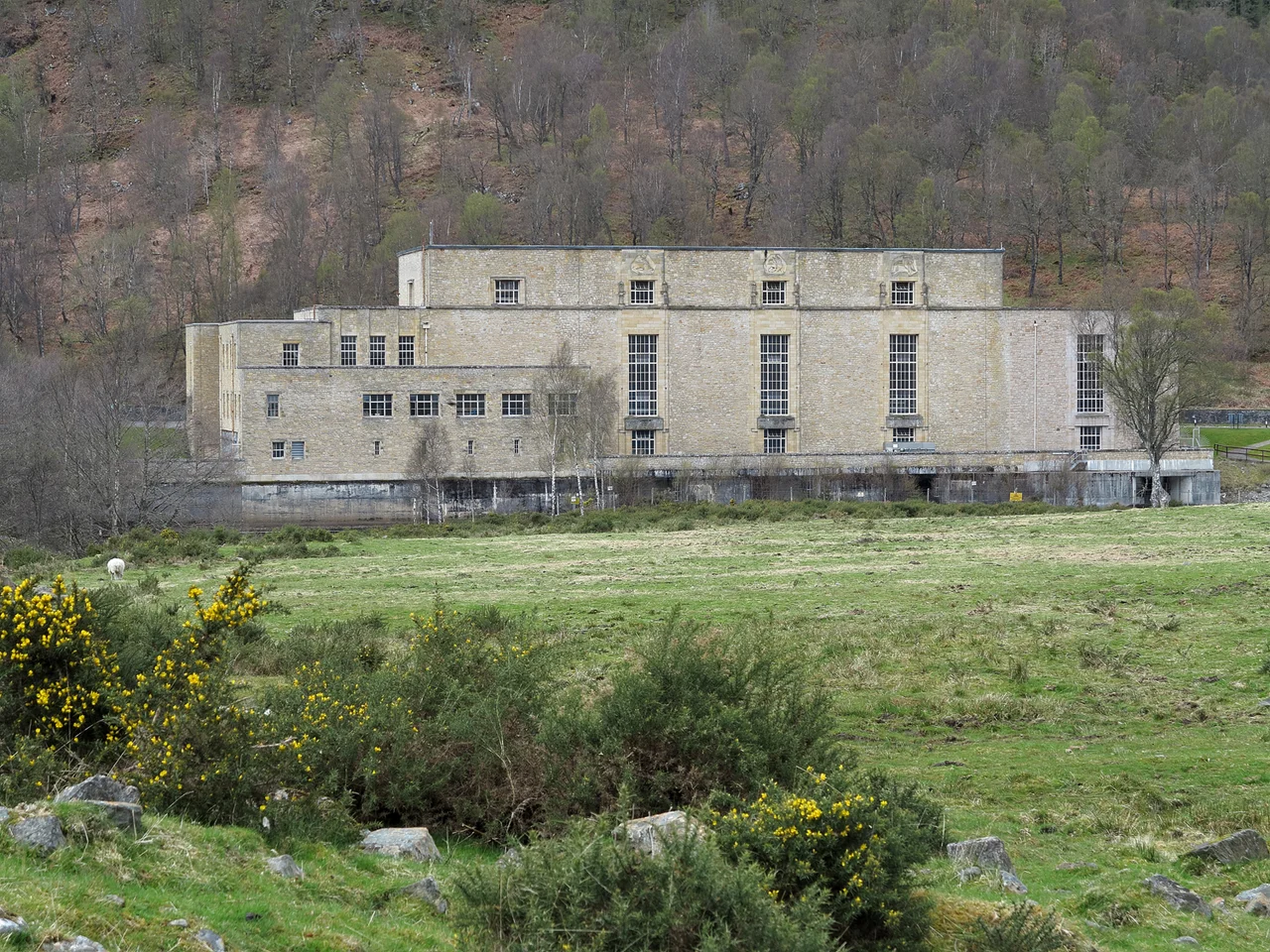
Prince Philip stood at Fasnakyle power station on 13 October 1952 and addressed the question that everyone in the Highlands had been arguing about for a decade. The Hydro Board was destroying the glens, the critics said. The Board was preserving them, the engineers said. The Duke of Edinburgh, who had accepted the invitation specifically to see for himself, delivered his verdict in a single sentence: 'To suggest that this power house alone destroys the beauty of Glen Affric is being as fastidious as the fairy-tale princess who could feel a pea under 15 mattresses.' The scheme he had come to open ran from Loch Mullardoch in the west to Kilmorack near Beauly in the east, eventually drawing power from five major lochs and ten power stations along three connected glens.
The Vision Tom Johnston Carried
The North of Scotland Hydro-Electric Board was created by the 1943 Act that Tom Johnston, then Secretary of State for Scotland, had championed during the war. His vision was unusual: a public body that would build hydro stations across the Highlands and use the profits from selling electricity to the lowlands to fund 'the economic development and social improvement of the North of Scotland.' Private consumers in remote areas would pay the same as urban customers, even though connecting them cost vastly more. The first two big schemes, at Loch Sloy and Tummel-Garry, had drawn fierce opposition over amenity and fishing. The Board responded by proposing something more restrained for Glen Affric—the Constructional Scheme No. 7, published in August 1946. Astonishingly, there were no amenity objections at all. Parliament approved in February 1947.
Mullardoch, the Largest Dam
The Loch Mullardoch dam at the head of Glen Cannich was the largest the Board ever built—2,385 feet long, 160 feet high from foundation to crest, holding back 7.5 billion cubic feet of water. John Cochrane and Sons built it in two halves, using an island in the middle of the loch to stage materials. Then a financial crisis hit in late 1949, and the government asked the Board to cut capital spending. They lowered the south wing of the half-built dam by 20 feet. By February 1951 the crisis had eased, and the Board wanted the original height back. Putting fresh concrete on top of cured concrete risks structural failure, so engineers borrowed a technique from Mundaring Weir in Western Australia: cover the downstream face with an 11.5-foot concrete blanket, separated from the original by a slot so the new pour could cure without overheating the old. Once set, they filled the slot with crushed aggregate and grout. The work finished in mid-1952.
Britain's Only Double-Arched Dam
The second phase—Constructional Scheme No. 30, Strathfarrar and Kilmorack—drew the riparian opposition the Board had dodged the first time. Lord Lovat received £100,000 in a private settlement for damage to fishing rights and spawning grounds. A public enquiry sat in December 1957, recommended approval, and Parliament cleared the project in July 1958. At Loch Monar in Glen Strathfarrar, the engineers built something Britain had never seen: a double-arched dam, curving in both horizontal and vertical planes. Single arches had been around since 1911, but the double version was nearly untested—a handful went up in the United States in the late 1960s, after Monar. The gorge sides at this site provided enough strength to resist the thrust, and the design saved about nine per cent on construction costs. The walls are only 11.5 feet thick in places. Strain gauges and resistance thermometers built into the dam were intended to provide scientific data on stresses in such structures, part of the Board's habit of trying new things for the engineering community.
James Shearer's Power Stations
The Fasnakyle power station, opened by Prince Philip, was the work of James Shearer—one of three architects the Board retained to ensure its stations looked like they belonged in the Highlands. Three vertical Francis turbo-alternators of 22 megawatts each draw water down a 5,025-foot high-pressure tunnel that splits into three steel-lined feeds in its final stretch. A fourth 17 megawatt turbine was added in 2003 in a new building beside the original; apart from missing an attic, it blends seamlessly with Shearer's design. Historic Environment Scotland made Fasnakyle a Category A listed structure in 1986, calling it a pre-eminent example of Shearer's ideals. The Deanie power station downstream, accessed by a road tunnel through solid rock, runs two Francis turbines for 38 megawatts. Culligran further down operates the first Deriaz turbine installed in Britain. Aigas and Kilmorack at the bottom of the cascade each pair twin 10 megawatt Kaplan turbines and run as run-of-the-river stations.
Borland Lifts and Atlantic Salmon
The rivers in this scheme matter for Atlantic salmon, and the dams at Beannacharan, Aigas, and Kilmorack carry Borland fish lifts—essentially navigation locks for fish, with an upper and lower pool connected by a sloping shaft. Each lift takes about an hour to fill. The Aigas and Kilmorack lifts run at least twice a day from April to November; Beannacharan runs three times a day from May to November. Beyond compensation flows, SSE releases freshets on a regulated schedule: 910 megalitres of water dumped over 56 hours, once a week for 15 weeks from early July, simulating the high flows the rivers would have experienced if the dams had never been built. The freshets help juvenile salmon migrate downstream. In 1945, when nationalisation threatened the Board's autonomy, Tom Johnston met Emmanuel Shinwell at Pitlochry and the two men walked away from their advisors near the future site of Loch Faskally. On their return, Shinwell announced: 'I've decided the Board will retain its autonomy.' That informal Highland conversation kept the Affric-Beauly vision intact until privatisation in 1989.
From the Air
Located at 57.325N, 4.794W in the western Highlands, with Glen Affric running roughly south-west to north-east. Inverness Airport (EGPE) sits 25 nm to the east-north-east. The Loch Mullardoch dam, with its unusual arrowhead plan, is the most striking aerial landmark. Loch Monar's double-arched dam at the head of Glen Strathfarrar is harder to spot but distinctive when caught against gorge walls. Recommended viewing altitude 3,000 to 5,000 ft AGL. Glen Affric is one of the most photographed wild landscapes in Scotland—the visual gentleness of Fasnakyle station nestled against its hillside reflects the Board's deliberate design philosophy. Weather changes rapidly; the glens funnel wind from the Atlantic.
Nearby Stories
- The Great Glen and Strathspey 2.3 km away
- HMS Natal 8.4 km away
- Highland Folk Museum 9.6 km away
- Lochalsh 11 km away
- Loch Maree 12 km away
- Culloden 12 km away
- Corrieshalloch Gorge 20 km away
- Knoydart 24 km away