
Air Canada Flight 759
Five seconds. That is how close Air Canada Flight 759 came to causing what aviation experts called potentially the greatest disaster in the history of flight. On the night of July 7, 2017, an Airbus A320 carrying 140 people from Toronto lined up not with Runway 28R at San Francisco International Airport, but with Taxiway C -- where four fully loaded, fully fueled passenger aircraft sat waiting for takeoff. The jet descended to 59 feet above the ground as it passed over a Philippine Airlines A340 — with less than 20 feet of clearance above the aircraft's tail. One analyst calculated that five more seconds without a go-around would have produced a collision. Over a thousand people were in the immediate zone of risk.
The Wrong Lights
At 11:46 p.m. local time, Flight 759 was on final approach to Runway 28R. The parallel runway, 28L, was closed for construction, marked by a 20.5-foot flashing X at its threshold. But the construction lighting on the closed runway resembled ramp lighting, and in the darkness the illuminated Taxiway C -- separated from 28R by less than 500 feet -- looked enough like a runway to fool the crew. SFO demands precision flying: the two parallel runways are laterally separated by just 750 feet. The crew was not using the instrument landing system, which would have immediately revealed the misalignment. Contributing factors included pilot fatigue after the cross-continent flight from Toronto.
Four Jets in the Dark
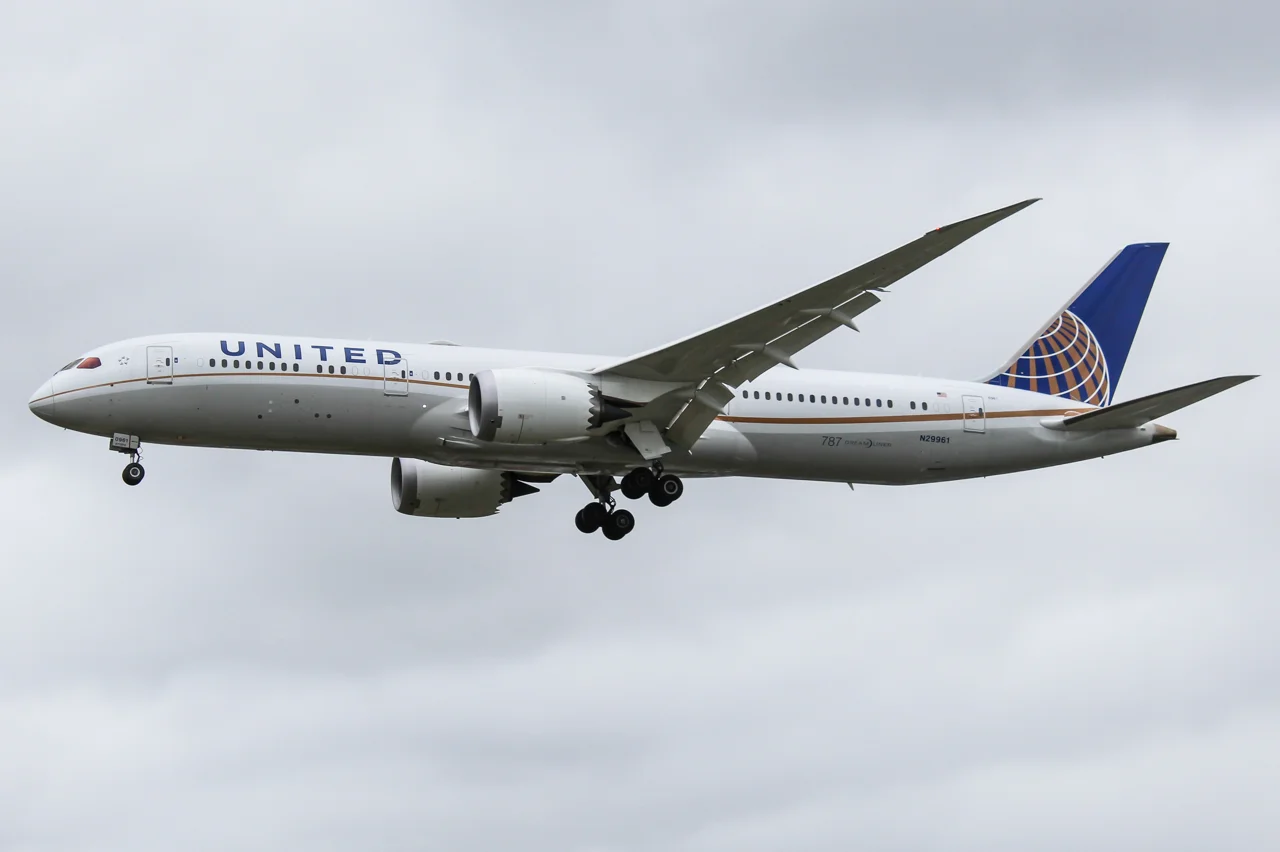
On Taxiway C, four aircraft were queued for takeoff. United Airlines Flight 1 to Singapore carried up to 252 passengers in a Boeing 787-9. Philippine Airlines Flight 115 to Manila held up to 254 in an Airbus A340-300. United Flight 863 to Sydney had another 252 aboard a 787-9. United Flight 1118 to Cancun carried up to 179 in a Boeing 737-900ER. When the Air Canada jet's flight data recorder showed the crew advancing thrust levers at 85 feet, the aircraft continued descending for another 2.5 seconds before beginning to climb. It passed directly over the United Airlines jet at approximately 100 feet, then descended to its minimum altitude of 59 feet as it cleared the Philippine Airlines A340 — with less than 20 feet between the Air Canada fuselage and the A340's tail.
The Investigation That Almost Didn't Happen
Under federal regulations at the time, the incident was not technically reportable. The NTSB was not informed until July 9, two days later. By then, the aircraft had flown three more commercial flights, and the cockpit voice recorder -- which overwrites itself every two hours -- had been erased. Former NTSB chairman Jim Hall called it "the most significant near-miss we've had in this decade" and urged the board to rethink its reporting requirements. The NTSB published its final report in September 2018, identifying the probable cause as flight crew confusion of the taxiway for the runway, with contributing factors including the failure to use the instrument landing system and pilot fatigue. The FAA received six recommendations, including requiring aircraft to be alerted when not aligned with a runway in Class B or C airspace.
Five Seconds from History
The Tenerife airport disaster of 1977, which killed 583 people, has long stood as the deadliest accident in aviation history. Had Flight 759 struck the aircraft on Taxiway C, the combined passenger load of over 1,000 people and the fuel aboard five aircraft could have produced casualties on a scale without precedent. Instead, the go-around worked, the jet landed safely on 28R minutes later, and all four taxiway aircraft departed for their destinations without incident. A former NTSB investigator later criticized the board's report for avoiding introspection and noted that the agency remains more reactive than proactive. The near-miss at SFO became a case study in how catastrophe can hide behind complacency -- and how close the margin was between an unremarkable Friday night and the worst day in aviation history.
From the Air
Located at SFO (KSFO), 37.616°N, 122.359°W. The incident occurred on final approach to Runway 28R, with the aircraft mistakenly aligned with Taxiway C. Pilots should note the close lateral spacing of 28R/28L (750 ft) and Taxiway C (less than 500 ft from 28R). ILS approaches are strongly recommended at SFO regardless of conditions.
Nearby Stories
- Point Bonita Lighthouse 2.7 km away
- Alviso, San Jose 11 km away
- Black Diamond Mines Regional Preserve 21 km away
- Cordell Bank: The Invisible Island 41 km away
- South Pacific Coast Railroad 49 km away
- Salinas and Steinbeck Country 72 km away
- The Hole in the Head 86 km away
- ʻAkaka Falls State Park 3657 km away