
Alice Lloyd College
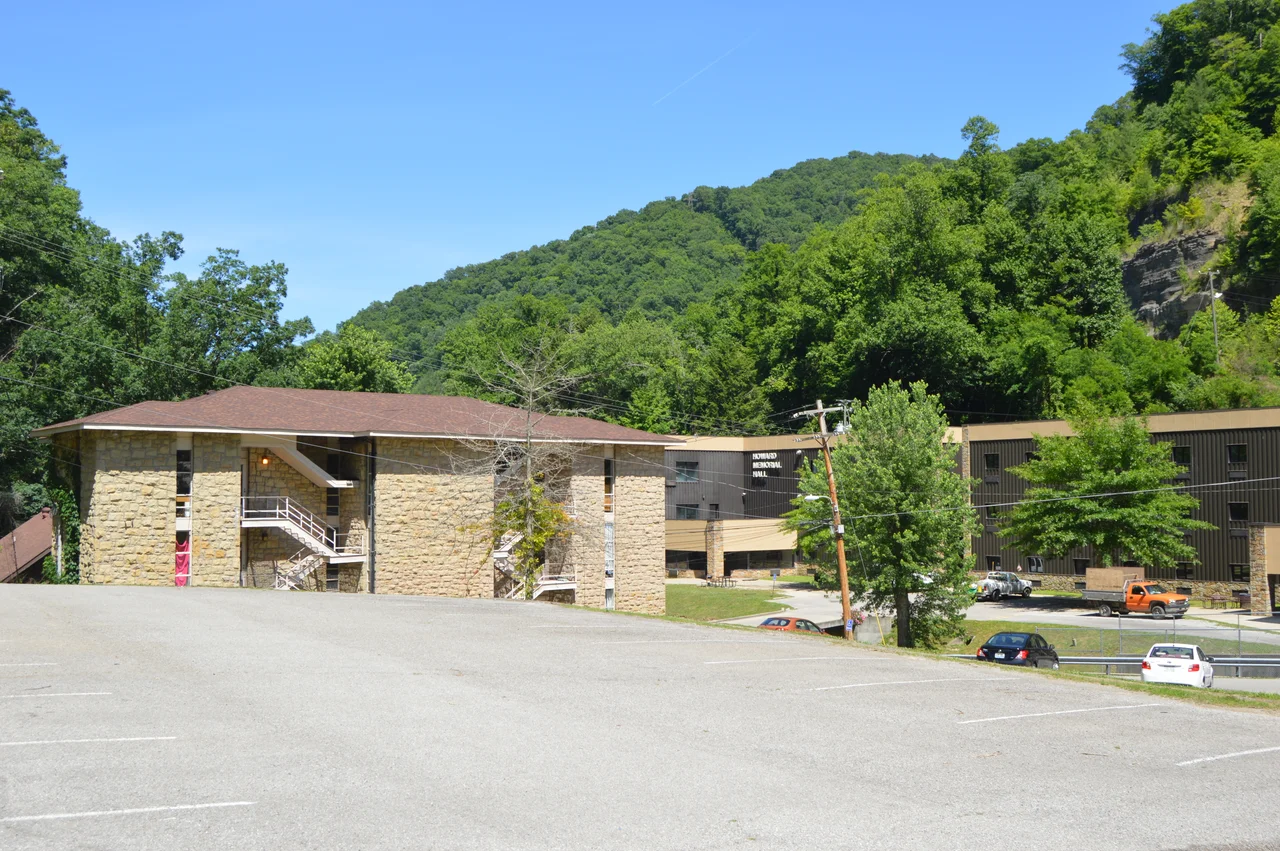
Alice Spencer Geddes Lloyd was a journalist from Cambridge, Massachusetts. She arrived in eastern Kentucky in 1916, partially paralyzed and using a wheelchair, and chose to stay in a hollow on Caney Creek in Knott County where the nearest paved road was a long way away. In 1923, with a New Yorker named June Buchanan, she founded a junior college and named it Caney. Its mission was singular: to educate young people from the Kentucky mountains to lead in the Kentucky mountains. Lloyd ran the school for almost forty years until her death in 1962. Today the college bearing her name sits in the village of Pippa Passes, named for a Robert Browning poem, and guarantees free tuition to students from 108 mountain counties across five states.
The Work College
Every Alice Lloyd student works. That is not a financial-aid option or a labor exchange for the poor kids while the rich ones study - it is a requirement, for all students regardless of income. Janitorial, cafeteria (called Hunger Din), tutoring, office work, maintenance, grounds, resident advising, craft-making. At least 160 hours every semester. Alice Lloyd is one of only nine work colleges in the United States, and one of only two in Kentucky - Berea, eighty miles north, is the other. The principle Lloyd founded the school on was that nobody should be excluded by inability to pay, and nobody should graduate with a sense that the world owed them something. Seventy-five percent of Alice Lloyd graduates are the first in their families to earn a college degree.
The Appalachian Leaders Scholarship
Students from 108 specific counties in the Appalachian regions of Kentucky, Ohio, Tennessee, Virginia, and West Virginia pay no tuition at all through the Appalachian Leaders College Scholarship. The 2009 graduates averaged $6,500 in education debt - against a Kentucky state average of $19,112 and a national average of $24,000 in the same year. The college accepts federal Pell Grants but takes no direct state or federal money to fund itself. It draws operating revenue from a small endowment, gifts, and the student labor that keeps the institution running. The selectivity has tightened: for the class of 2017 the college accepted 262 of 6,337 applicants. The wager Lloyd made - that mountain leadership grown locally would lift the mountains - is still the wager the college makes.
Voices and Convocations
The Voices of Appalachia choir, formed in 1962 the year Alice Lloyd died, tours every spring performing hymns and old ballads from the mountains. They have appeared on NBC's Today and CBS News Sunday Morning. Convocations - mandatory speaker series, six per semester - bring outside voices to students who often grew up in dry counties where the only crossroads stop is a gas station. Knott County is dry; alcohol is prohibited on campus. Professional dress is required Tuesday mornings until 2 p.m. and at every convocation. The college is not affiliated with a denomination but emphasizes Christian values in its mission. Dormitories are gender-separated. The strictures sound austere on paper but in practice make space for the students Lloyd wanted to reach - many of whom arrive having never lived in a building with two stories.
Caney Cottage
There is an apartment building near the University of Kentucky campus in Lexington called Caney Cottage. It belongs to Alice Lloyd College. Graduates who get into University of Kentucky graduate school can live there rent-free, utility-free, and parking-free while they earn their next degree. Graduates going elsewhere can apply for cash scholarships toward tuition. The condition for either is the same: after graduate school, the scholarship recipients must commit to service in the Appalachian region. The pipeline Alice Lloyd designed in 1923 still runs - from a Knott County hollow at Pippa Passes through a bachelor's degree in Kentucky's mountains, through graduate school in Lexington, and back home to the counties that sent them. The wager continues.
From the Air
Alice Lloyd College sits at 37.34 N, 82.87 W in Pippa Passes, Knott County, eastern Kentucky, in a narrow hollow of Caney Creek deep in the Cumberland Plateau. Surrounding ridges rise to about 1,800 feet; the campus floor sits near 1,200 feet. From the air the campus is a small concentration of buildings along a single stretch of valley, easily missed against the dense forest cover. Nearest airports: Big Sandy Regional (K0I8) in Prestonsburg about 20 nm northeast; Lexington's Blue Grass Airport (KLEX) is 110 nm west. Recommended viewing altitude 5,500 to 7,500 feet MSL to take in the surrounding ridges. The country is roughest in spring leaf-out and fall color.
Nearby Stories
- Bad Branch Falls State Nature Preserve 3.1 km away
- Battle of Matewan 8.8 km away
- Prestonsburg, Kentucky bus crash 8.9 km away
- 2002 Appalachian School of Law shooting 17 km away
- Washington County, Virginia 49 km away
- Cumberland Gap 63 km away
- The Kentucky Meat Shower: When Flesh Fell From a Clear Sky 67 km away
- Lexington: The Horse Capital of the World 129 km away