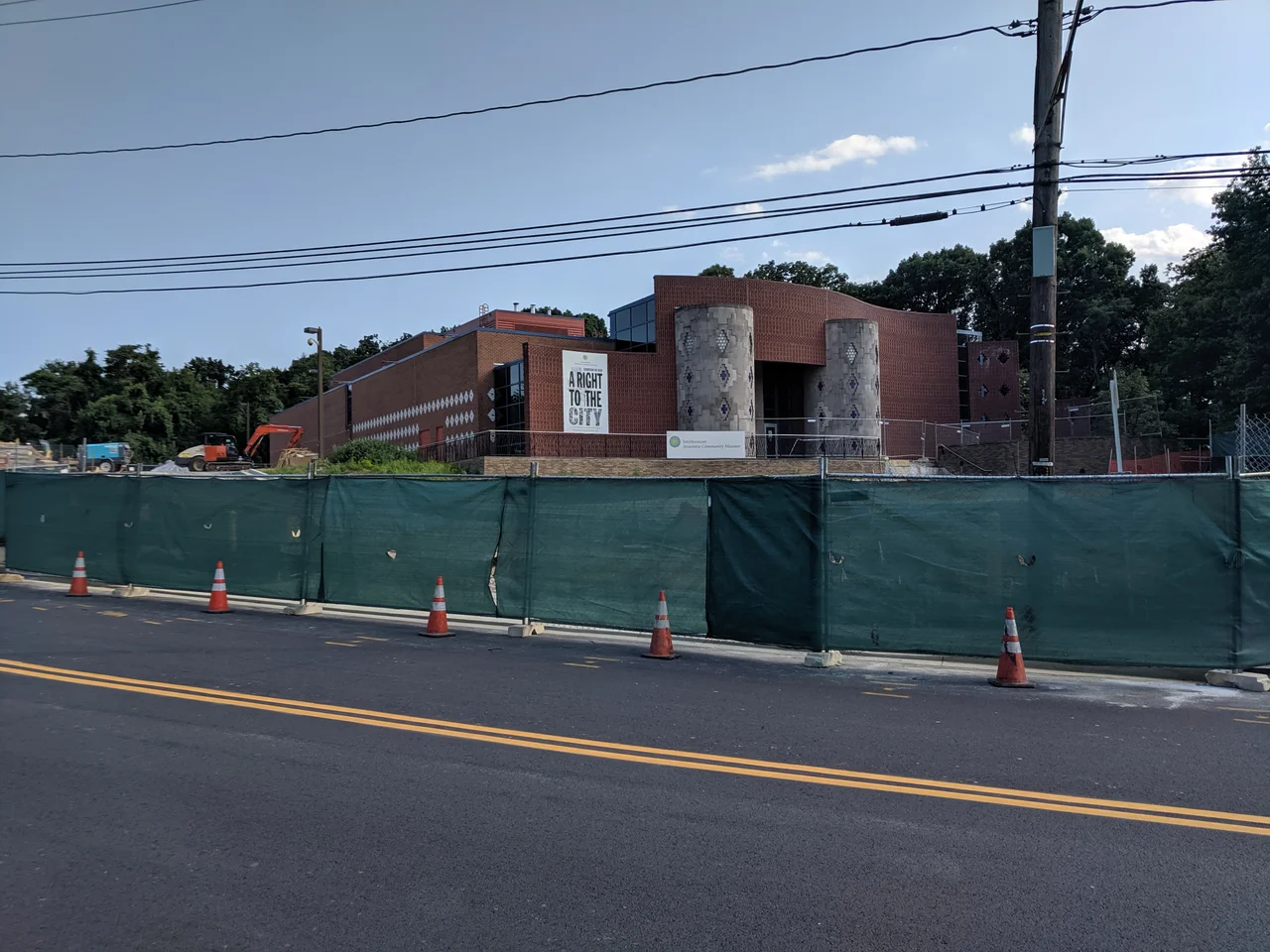

Anacostia Community Museum
The idea was simple and a little radical for 1966: the Smithsonian Institution had built nearly a dozen museums on the National Mall, but very few of the people who lived just across the Anacostia River ever visited them. So Smithsonian Secretary S. Dillon Ripley proposed taking the Smithsonian to them instead. In March 1967, the institution acquired the Carver Theater on Nichols Avenue in Anacostia and converted it into what was initially described as an experimental store-front museum. John Kinard, a Baptist pastor and civil rights activist deeply rooted in the neighborhood, was named director in June. By September 15, 1967, the doors opened. The Anacostia Neighborhood Museum became the first federally funded community museum in the United States.
Uncle Beazley at the Door
The opening exhibition was a deliberately eccentric mix - the kind of jumble that makes sense only when you understand it was trying to do everything at once. There was a reproduction of an 1890 Anacostia storefront, a Project Mercury spacecraft on loan, a small theater, a varied natural-history display, and a tiny zoo. The zoo's parrot, George, was a gift from the National Zoo and lived in the museum until April 1977. Standing guard at the opening was a life-size fiberglass Triceratops called Uncle Beazley - the same model that would star in the 1968 children's television movie The Enormous Egg. Uncle Beazley now grazes near Lemur Island at the National Zoo. The first show was, in short, the kind of attic-and-storefront jumble that signals a museum still figuring out what it wants to be when it grows up.
John Kinard's Museum
Kinard set out to build something that worked for the neighborhood it sat in, not for the curators who might wander down from the Mall. A council of Anacostia residents helped shape programs and exhibitions. Young people from the community were brought into the work. The 1969 exhibition The Rat: Man's Invited Affliction confronted rat infestations head-on, an unglamorous urban reality that few museums anywhere would touch. It traveled nationwide and became a documentary film. In 1980, the museum became the first Smithsonian institution to use exhibit labels for hearing-impaired visitors. Kinard ran the museum for twenty-two years until his death in 1989, and the place's character is still recognizably his - working from the ground up, not the top down.
Names and Missions
The museum has changed names four times, each shift marking a different argument about what it should be. It opened as the Anacostia Neighborhood Museum in 1967. In 1987 it moved to a purpose-built facility at Fort Stanton Park and became simply the Anacostia Museum, with a broader mission to celebrate African American history globally. In 1995, hoping to position itself as the future home of what eventually became the National Museum of African American History and Culture on the Mall, it expanded its name to the Anacostia Museum and Center for African American History and Culture. The Mall museum eventually went elsewhere. In 2006, the institution returned to its roots and renamed itself the Anacostia Community Museum, recommitting to its original neighborhood-first mission. The name keeps moving because the question of who a community museum is for is itself a moving target.
Building a Collection from Nothing
For its first decade the museum had no permanent collection. The Smithsonian had decided early that the institution should focus on exhibitions, not acquisitions. That created a strange situation: the Smithsonian, the country's largest museum complex, owned almost no objects related to African American history because nobody had been collecting them. Kinard pushed for change, urging other museums to acquire works by Black artists and artifacts of Black life. By 1977 the Anacostia Museum was allowed to start collecting. The first official collections policy came in 1992. Today the museum holds the archives of Lorenzo Dow Turner, the linguist who proved the Gullah language carried African words across the Atlantic, donated by his wife Lois Turner Williams in 2003. It also holds works by James A. Porter, Sam Gilliam, and Benny Andrews.
What Survives
Anacostia itself sits on a bluff above the river, with views that stretch across to the Capitol dome. The neighborhood was Frederick Douglass's home for the last seventeen years of his life - his house at Cedar Hill is a National Historic Site, a short walk from the museum. The neighborhood has been through redlining, neglect, riots, gentrification, and the long slow work of self-definition that the museum has been documenting since 1967. In 2025, President Donald Trump's proposed federal budget would discontinue funding for the museum entirely - cutting roughly sixty percent of its operating budget at a stroke. The institution that began as a Smithsonian experiment in community access faces another inflection point about who it is for and whether it survives. Whatever happens next, the experiment of asking a neighborhood what it wanted its museum to be was, and is, a singular thing in American museum history.
From the Air
The Anacostia Community Museum is located at 38.8569 N, 76.9769 W, in southeast Washington, D.C., near Fort Stanton Park on the high ground east of the Anacostia River. The site is just outside the inner ring of the Washington Flight Restricted Zone but well within the surrounding Special Flight Rules Area, which requires prior coordination for general aviation traffic. Reagan National (KDCA) is three miles west; the museum's location offers clear sightlines across the river to the Capitol and the National Mall. From the air, look for the wooded grounds of Fort Stanton Park on the bluff overlooking the Anacostia River bend.
Nearby Stories
- Reston, Virginia 1.7 km away
- Thomas Viaduct 9.2 km away
- Monocacy Aqueduct 9.7 km away
- Stafford County, Virginia 26 km away
- Harriet Tubman Underground Railroad 28 km away
- Gunston Hall 30 km away
- Adkins Arboretum 31 km away
- Bombay Hook National Wildlife Refuge 71 km away