
Athens
The school came first. Before Athens, Ohio, had a town hall or a bank or a permanent population worth counting, Congress had set aside two townships in the Ohio Country specifically to support a college. The Ohio Company of Associates - the New England land speculators who pushed for the Northwest Ordinance - had insisted that any deal granting them land would include a reservation for education, and the 1787 charter eventually produced two contiguous townships set aside for what became Ohio University. The town of Athens was settled in 1797 to give the school a host community. The university was chartered in 1804 but did not open until 1808, when three students began instruction. Two hundred and twenty years later, Ohio University enrolls more than 30,000 students, and a town of roughly 23,000 wraps around its campus on a series of low hills above the Hocking River.
Founded for a College
The chartering of Ohio University in 1804 made it the first college established in the Northwest Territory and one of the earliest public universities in the United States. The early years were modest: a single brick building on what is now the College Green, a handful of students, faculty paid in produce and firewood as often as in cash. The institution grew slowly through the nineteenth century, picking up programs and buildings, and only began its modern expansion after World War II when the GI Bill brought a wave of veterans to campuses across the country. The university's red-brick buildings around the College Green form one of the most photogenic stretches of American collegiate architecture - oaks and maples shading walkways that have looked roughly the same for a century.
Court Street and the Bars
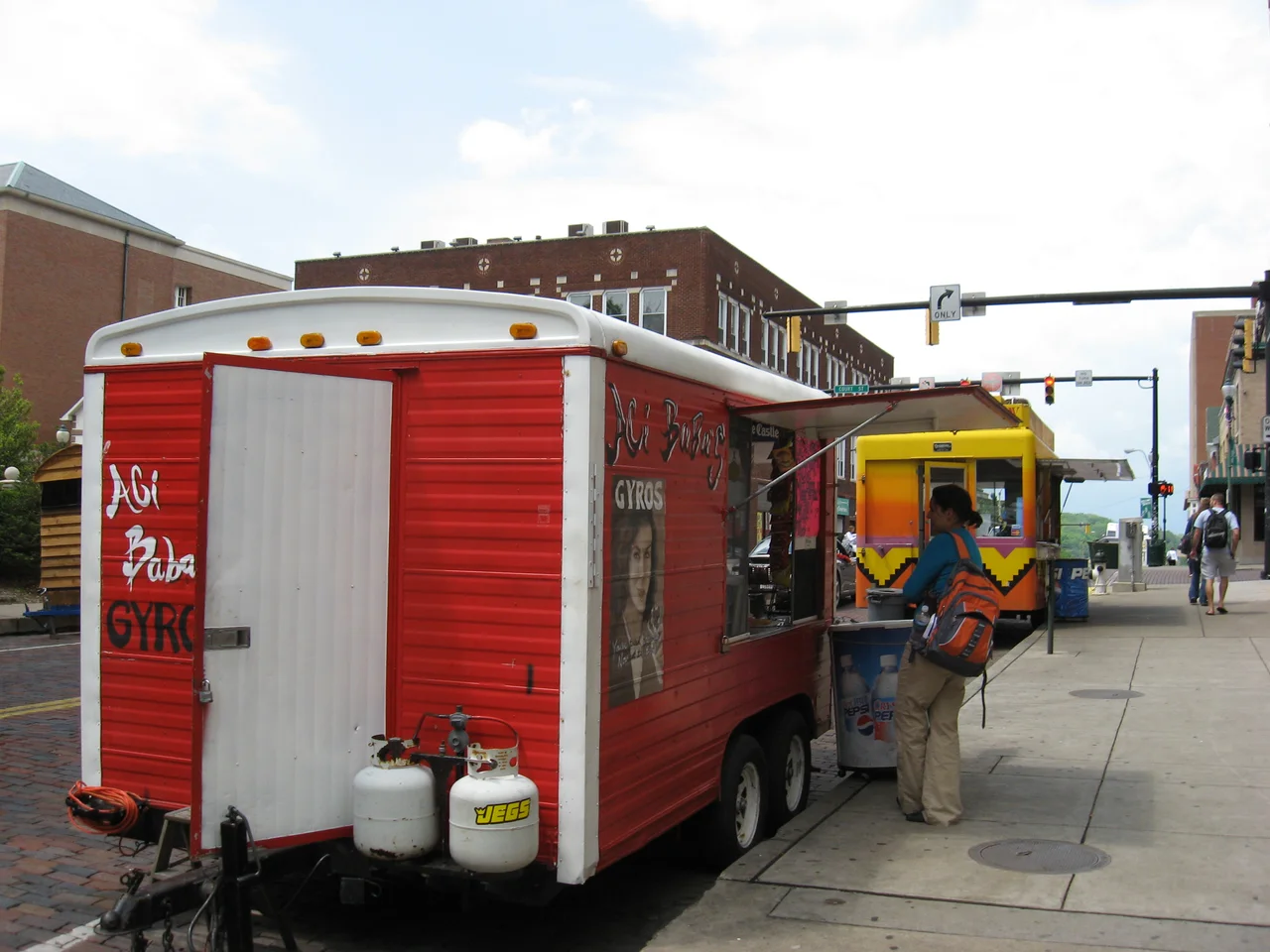
Uptown Athens centers on Court Street, a three-block commercial corridor that runs parallel to and just north of the College Green. The street is famously dense with bars - one running joke claims Athens has more bars per capita than any other city in Ohio, and the actual density is in fact unusually high for a town this size. The Athena Cinema sits halfway down. Restaurants serve breakfast and late-night pizza. On most days the street looks like a small Appalachian commercial district. On Halloween weekend, when tens of thousands of costumed visitors arrive for the annual block party, the same street becomes one of the densest crowds in Ohio.
The Hills and the Hocking
The town occupies a series of low hills wrapped by the Hocking River, with the campus on a slight rise above the floodplain. The Hocking Valley narrows here as it bends toward the Ohio River, and the surrounding terrain - the foothills of the Allegheny Plateau - rises into the forests of the Wayne National Forest just outside town. Strouds Run State Park, on Dow Lake, sits about ten minutes east; Burr Oak State Park and Lake Hope State Park are within an hour's drive. The combination of the small Appalachian college town and the surrounding wild country has shaped Athens's culture: it is academic and bohemian and outdoorsy in roughly equal measure, with food co-ops, hiking outfitters, and bookstores sharing Court Street with the bars.
Coal, Then Mental Hospital, Then Recovery
Athens County's twentieth-century economic story was difficult. The surrounding coal industry boomed and then collapsed by mid-century, leaving large parts of the county economically depressed - the same conditions that justified federal acquisition of what became the Wayne National Forest. The Athens State Hospital, a massive Victorian-era mental asylum on a hill above town, operated from 1874 to 1993; its imposing brick buildings now form part of Ohio University's expanded campus. The university itself, growing through the second half of the twentieth century, became the dominant economic force in the county. Today, county unemployment runs lower than much of Appalachian Ohio, and the town of Athens has become something close to economically stable - a balance that depends entirely on whether the university continues to grow.
Flying Over the College Town
From the air, Athens reads as a compact red-brick campus surrounded by a slightly less compact town, both wrapped in the loop of the Hocking River. The College Green is the obvious visual anchor: a few acres of grass framed by Cutler Hall, the oldest college building in the Northwest Territory. Court Street's commercial corridor runs parallel just north. The football stadium - Peden Stadium, the oldest active stadium in the Mid-American Conference - sits at the south edge of campus. The Ridges, with the Victorian buildings of the former state hospital, occupy a high ridge to the west. The Hocking River curves around the eastern edge before bending south toward the Ohio. Beyond the town, the forested ridges of Wayne National Forest stretch in every direction.
From the Air
Located at 39.33°N, 82.10°W, in the Hocking River valley of southeastern Ohio. The Ohio University campus, with its red-brick College Green, is the obvious visual anchor. The Hocking River loops around the eastern side of campus. The Wayne National Forest begins immediately east. Nearest airport: Athens-Albany (KUNI) about 7 nm southwest; longer-range traffic comes through Port Columbus (KCMH) about 60 nm northwest. Best photographed from 2,500-4,000 feet AGL, where the campus, river, and surrounding hills are all visible.
Nearby Stories
- Julia-Ann Square Historic District 1.9 km away
- Lakin State Hospital 7.7 km away
- Ratcliffe Mound 9.8 km away
- Burning Springs Complex 21 km away
- Hardin Village Site 41 km away
- The Y-Bridge of Zanesville 44 km away
- Columbus: The Test Market Where America Tries Things First 56 km away
- West Virginia Penitentiary 81 km away