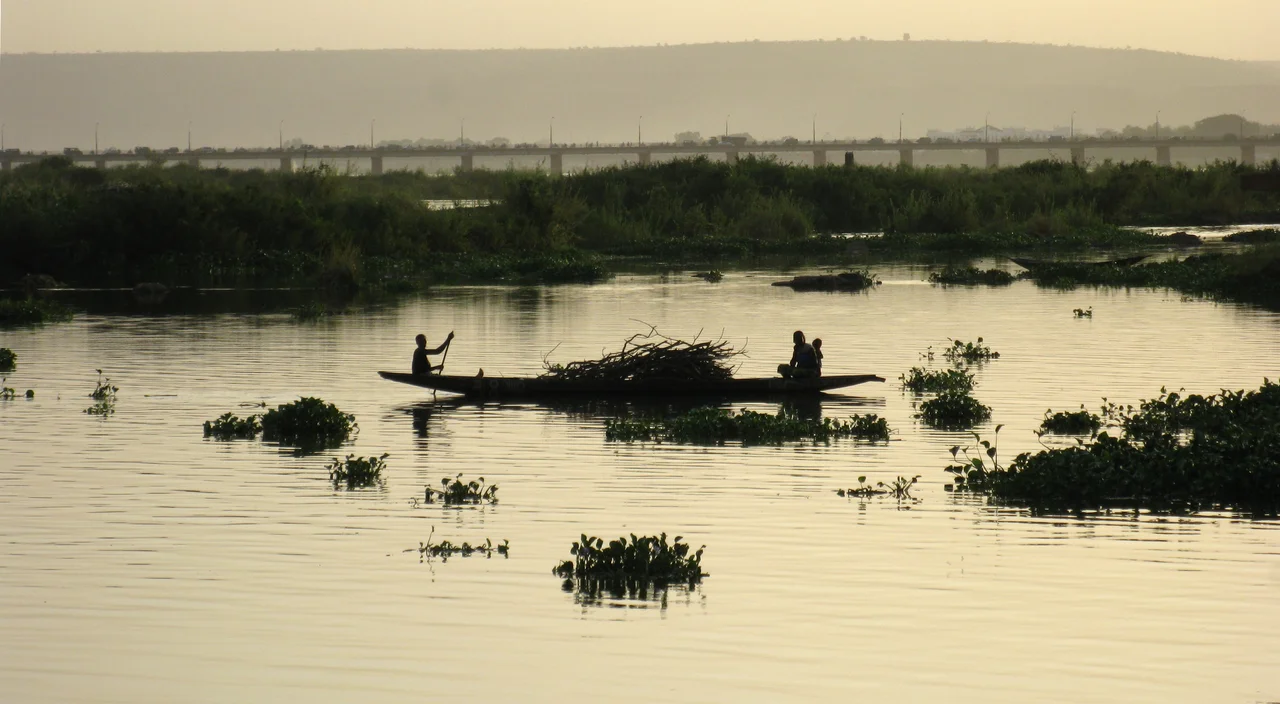

Bamako
There is no meter in a Bamako taxi. Price is settled before the wheels turn, and the same goes for nearly everything in this city of roughly 3 million on the Niger River. Bargaining is not friction here; it is the language of the market, and vendors enjoy a buyer who plays the game. A taxi-motorcycle will lead you through a maze of mostly unpaved lanes for as little as 100 CFA francs, weaving past the cars and motorbikes that fill every available gap. Arrive ready to haggle, ready to get a little dusty, and ready to be surprised by a capital that rewards patience over hurry.
Finding Your Way
Bamako can confound a newcomer. Road signs are scarce, the street layout is a tangle, and a one-way system traps the unwary. Only a few main roads, the goudrons, are paved; the rest turn to dust from November to May and to mud in the rains, when the puddles become breeding grounds for malaria-carrying mosquitoes. Traffic police are vigilant and mobile, riding their own motorcycles, so there is no outrunning them. The practical fix is to hire a motorcycle taxi as a guide and simply follow it to your destination. Carry a copy of your passport and visa at all times; a driving license alone may not satisfy a checkpoint.
The Pleasures of the Table
Whatever else the French left, they left good bread. Fresh baguettes are everywhere, and travelers can eat them without worry. Mornings bring streetside beans, fries, and fried plantains; small cafes sell a fried-egg sandwich with Nescafe morning, noon, and night. Lunch is rice and groundnut stew, a plate with meat rarely costing more than 500 to 1,500 CFA. Evenings offer attieke, the cassava dish, alongside spaghetti, beans, and boiled eggs. Carnivores fare best: beef and fish are excellent, especially beef kebabs and grilled Capitaine, the prized freshwater fish from the Niger. Vegetarians, fairly warned, will struggle, as refusing meat in a land of scarcity reads as eccentric. Keep food piping hot and skip raw vegetables to stay well.
Markets and Music
Near Bamako-Coura lies a lively artisan market where traders gather to sell silver jewelry, leather, musical instruments, and wood carvings. Prices are fair and bargaining is expected; inside, the mood is relaxed, though the crowded streets just outside reward a careful grip on your bag. Euros are widely accepted, and Ecobank ATMs take Visa and Mastercard. When the sun goes down, the city's nightlife stirs. The Evasion Jazz Club draws a crowd on Fridays and Saturdays, and the Hippo d'Or near the Hippodrome runs non-stop live music into the weekend. Spots like No Stress and Jet Set offer pool tables and an easier scene; Bla Bla and its Badalabougou twin get pumping by night's end.
A Day Beyond the City
When the capital's clamor wears thin, Siby waits an hour west on good asphalt road. The landscape opens into a place of scenery worth the trip: a historic grotto, a 45-minute hike up a mountainside, and a natural rock arch where climbers earn a panoramic view of countryside rolling to the horizon. A cascading waterfall feeds a surprisingly cool pool, a fresh plunge in a hot land, about a half-hour drive from the main road. The Saturday market adds color to the visit. A 4-wheel-drive helps once you leave the pavement for the sandy tracks that reach the scattered sights, but the village itself is an easy escape from Bamako's heat and dust.
From the Air
Bamako lies at 12.65 degrees N, 7.99 degrees W, straddling the Niger River about 350 m above sea level. The Bamako-Senou (Modibo Keita) International Airport, ICAO GABS, is roughly 15 km south of downtown. From the air, the Niger is the unmistakable landmark, with three bridges linking the banks and the dense, dusty street grid spreading on both sides. The dry season (November to May) brings hazy, dust-laden air; visibility and greenery improve during the June to October monsoon.
Nearby Stories
- Narena 23 km away
- Koulikoro 37 km away
- Nyamina 69 km away
- Kangaba 69 km away
- Niagassola 79 km away
- Morila Gold Mine 91 km away
- Boucle du Baoulé National Park 147 km away
- Tukulor Empire 154 km away