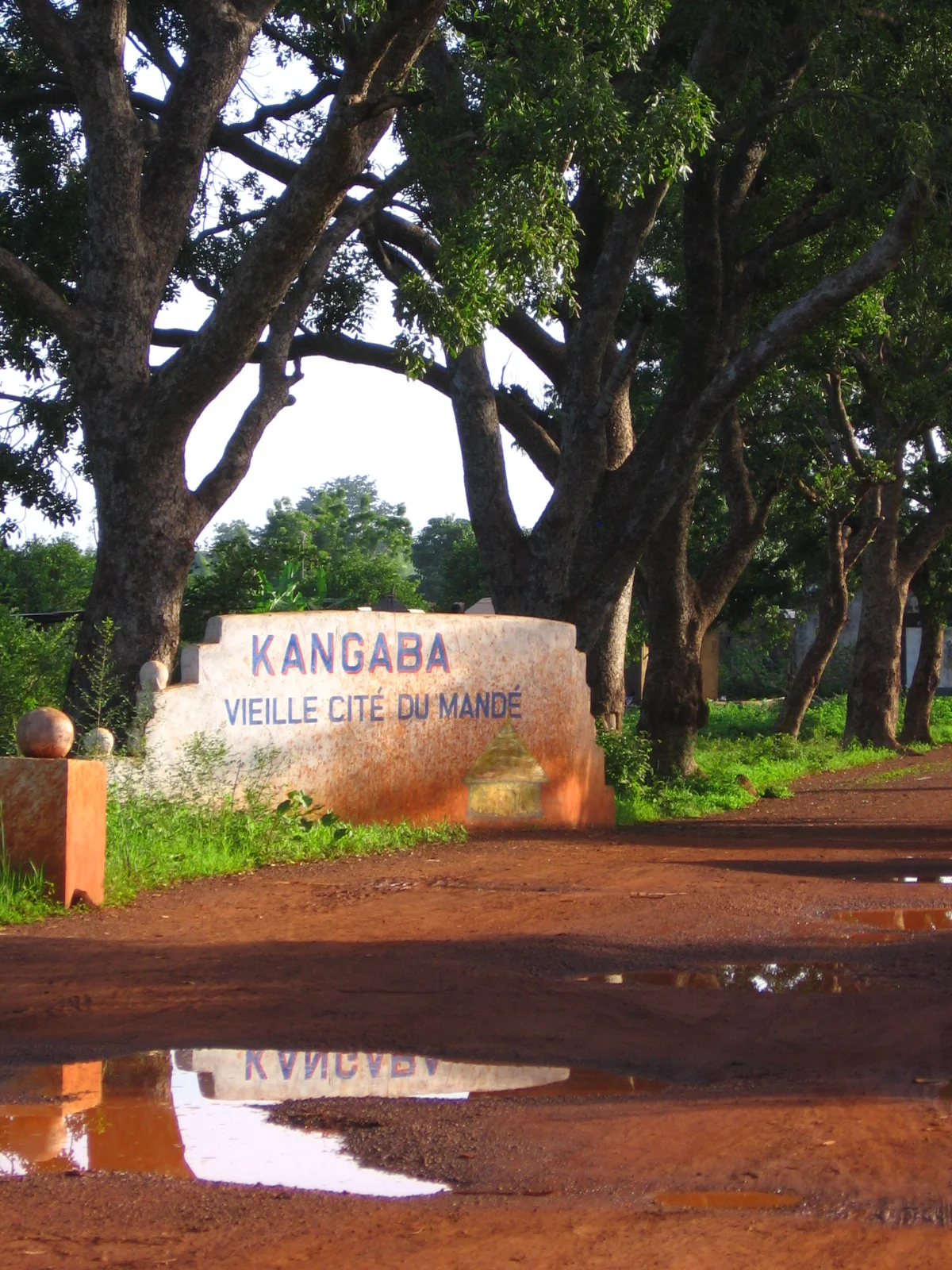

Kangaba
Every seventh year, the men of Kangaba climb a small round building at the heart of town and take its roof apart. They are young, twenty or twenty-one years old, and they work under the eyes of elders who have done this before. Over five days they strip away the old thatch and raise a new one, and as they work the griots sing. What they are rebuilding is the Kamablon, the sacred house of the Mandé, and the song they sing is the history of a people. This is one of the oldest living ceremonies in West Africa, and it has been performed here since 1653.
The House That Remembers
The Kamablon is a circular building of mudbrick crowned with a conical thatched roof, set in the bara, the great public square at the center of Kangaba. It is the oldest structure of its kind in the entire Manden cultural zone. Inside, it shelters objects and furniture of deep symbolic value to the community and functions as a kind of village senate, a place where matters of consequence are weighed. Its septennial re-roofing draws together the traditional castes, the founding dynasties of the old Mali Empire, and the griots, the hereditary oral historians who recite the tradition of the region. UNESCO inscribed the ceremony on its Representative List of the Intangible Cultural Heritage of Humanity in 2009. The re-roofing is far more than maintenance: it is an occasion to settle disputes, strengthen social bonds, and, by tradition, to foretell what the next seven years will bring.
Older Than the Empire
Kangaba is believed to have been founded around 1050 by Mandinka settlers, beginning life as a vassal of the Ghana Empire. Once known as Kaba, it grew into a core province of the Mali Empire that rose to dominate West Africa in the medieval centuries. The list of its early kings stretches back nearly a thousand years, from Taraore around 1050 through a line of rulers whose names the griots still keep. The last on that list is Mari Jata I, better known to the world by another name entirely: Sundiata Keita, the legendary founder of the Mali Empire itself.
The Field Where the Charter Was Born
After Sundiata Keita won the decisive Battle of Kirina in 1235 and broke the power of his rival Soumaoro Kanté, he proclaimed the Manden Charter on a field near Kangaba called Kurukan Fuga. The charter, also remembered as the Kouroukan Fouga, is sometimes described as one of the oldest constitutions in the world, a code of conduct binding the peoples of the Manden together in a message of peace and fraternity. UNESCO recognizes it too. To this day, ceremonies in the town honor those ancient traditions and the social order they set down nearly eight centuries ago.
Legend and Fact
Not everything about Kangaba's grand reputation holds up cleanly. Some accounts call it the boyhood home of Sundiata himself and the first capital of the Mali Empire. Historians are more cautious: the Keita clan more likely established a base here only after the larger empire had begun to decline, and the town's association with the original legend grew in the popular imagination over time. But that blurring of memory and myth is itself part of what Kangaba preserves. The griots do not separate the two. They keep both, generation after generation, and pass them down whole, the way they have rebuilt that small round roof for nearly four hundred years.
From the Air
Kangaba lies at 11.93°N, 8.42°W on the upper Niger in south-western Mali, in the Koulikoro Region. From the air, look for the town set along the river plain; the Kamablon sits at the center of the settlement in the main public square. The nearest major airport is Bamako-Sénou (GABS / Bamako–Modibo Keïta), roughly 90 km to the north. Best viewed at 2,500-4,000 ft AGL; harmattan haze from December through February can sharply cut visibility over this part of the Niger valley.
Nearby Stories
- Niani, Guinea 28 km away
- Siby, Mali 29 km away
- Bougouni 34 km away
- Niagassola 41 km away
- Siguiri 46 km away
- Koulikoro 84 km away
- Morila Gold Mine 99 km away
- Samorian State 219 km away