.jpg)
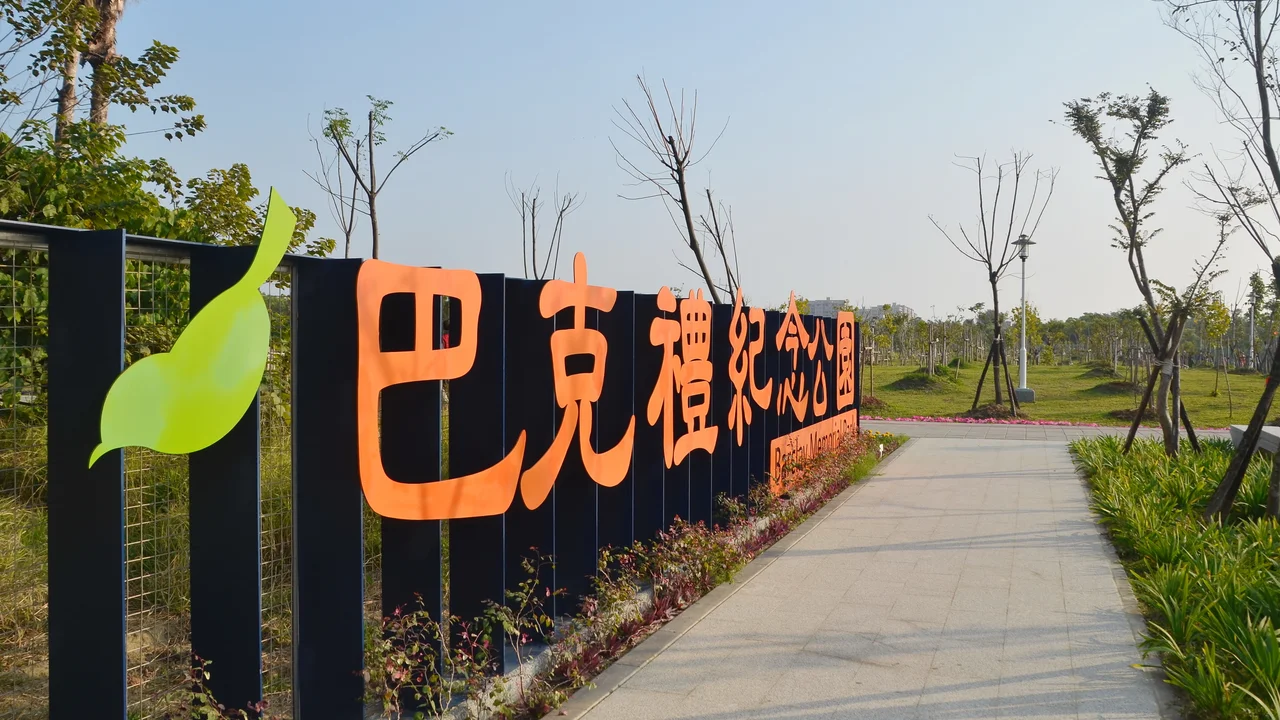
Barclay Memorial Park
The land sat idle for nearly a decade, buried under wild growth and accumulated rubbish, designated as Park No. 18 on a city plan that no one had followed through on. Then in 2001, the chief of Chongming Village decided enough was enough. He gathered some friends; they began clearing. Others joined. By the time the work was done, 57 volunteers had rebuilt creek slopes, relaid walking paths, replanted native vegetation, and reintroduced fireflies to a patch of Tainan that the city had forgotten. They named it for Thomas Barclay — the Scottish missionary who had arrived in southern Taiwan in 1875 and stayed for sixty years, reshaping the island's educational and religious landscape in ways that still echo today.
The Man Behind the Name
Thomas Barclay arrived in Tainan in 1875 as a young missionary with the Presbyterian Church of England, and he did not leave until 1935. Sixty years in one city is a commitment that resists easy description. During that time he established a printing press that became the foundation of Taiwan's first newspaper. He translated the entire Bible into the Taiwanese Hokkien language, a project that required both deep linguistic scholarship and the kind of patience that long residence alone can produce. He founded schools and advocated for literacy in a period when colonial and dynastic power in Taiwan changed hands dramatically — from Qing China to Japan in 1895, a transition Barclay witnessed directly. When the Japanese authorities threatened Presbyterian institutions, he negotiated their continuity. By the time he died in Tainan in 1935, Barclay had outlasted the Qing, navigated Japanese colonial rule, and earned a place in Tainan's civic memory that a park, six decades later, would acknowledge.
From Landfill to Living Park
The Barclay Memorial Park's own history is a smaller story, but an instructive one. In 1993, Tainan City Government designated the land in Chongming Village as Park No. 18. Construction was supposed to begin that same year, but a dispute over land ownership between Tainan City and the then-separate Tainan County left the project in legal and bureaucratic limbo. Without oversight, the land reverted to nature and then to disorder — wild plants colonized the paths, and the site gradually became an informal dumping ground. A decade passed. Then the village chief intervened, drawing volunteers who worked without institutional backing to do what the institutions had failed to accomplish. Vehicles hauled away rubbish. Creek banks were reshaped and stabilized. Plants were trimmed and supplemented. Fireflies — sensitive indicators of water quality and habitat health — were reintroduced and took hold. The park opened fully in 2003, covering approximately three hectares.
Fireflies at Dusk
The firefly reintroduction is more than a detail. Firefly populations require clean water, dense vegetation, and the absence of heavy light pollution — conditions that a newly restored urban park in a city of over a million people cannot guarantee easily. That the fireflies have persisted in Barclay Memorial Park says something about the quality of the restoration and the commitment of those who maintain it. Tainan's subtropical climate means the park is green year-round, with a microclimate noticeably cooler and more humid than the surrounding urban grid. Families come in the evenings; joggers use the paths; elderly residents occupy the benches in the morning hours. The park has become, in the two decades since it opened, exactly the kind of neighborhood anchor that the 1993 city plan envisioned — just arrived twenty years late and built by people who didn't wait for permission.
A Legacy in Two Scales
Standing in Barclay Memorial Park, it is worth holding both scales of the story in mind simultaneously. Thomas Barclay's sixty years in Tainan reshaped how southern Taiwanese communities related to literacy, religion, and the Hokkien language — contributions that operated at the level of institutions and generations. The park named for him was rescued by 57 people with shovels and borrowed trucks, operating at the level of a single neighborhood over two years. Both are stories about what sustained attention to a place can accomplish. The park covers three hectares in the East District, a short distance from the older heart of Tainan. It is modest in scale and unhurried in character, the kind of green space that a city needs more of and rarely manages to create. That it exists at all is a result of community action more than government planning — which Barclay himself, as a man who operated largely through persuasion and patient presence rather than authority, might have appreciated.
From the Air
Barclay Memorial Park sits at approximately 22.973°N, 120.223°E in Tainan's East District, set within the denser urban fabric of southern Taiwan's oldest city. From the air, the park appears as a sliver of green interrupting the closely packed rooftops of the East District, close to the central city grid. The nearest major airport is RCKH (Kaohsiung International Airport), approximately 40 km to the south; RCNN (Tainan Airport) lies approximately 5 km to the northwest. At lower altitudes approaching Tainan from the north or east, the Zengwen River and the distinctive grid of the old colonial-era city center serve as navigation landmarks, with the park located in the district just east of the historic core.
Nearby Stories
- Chung Li-ho Museum 0.7 km away
- Jingzaijiao Tile-paved Salt Fields 8 km away
- Wanchin Basilica of the Immaculate Conception 9.3 km away
- Namasia District 16 km away
- Battle of Penghu 21 km away
- Shoushan (Kaohsiung) 21 km away
- Penghu Air Raids 62 km away
- Daya Bay 512 km away