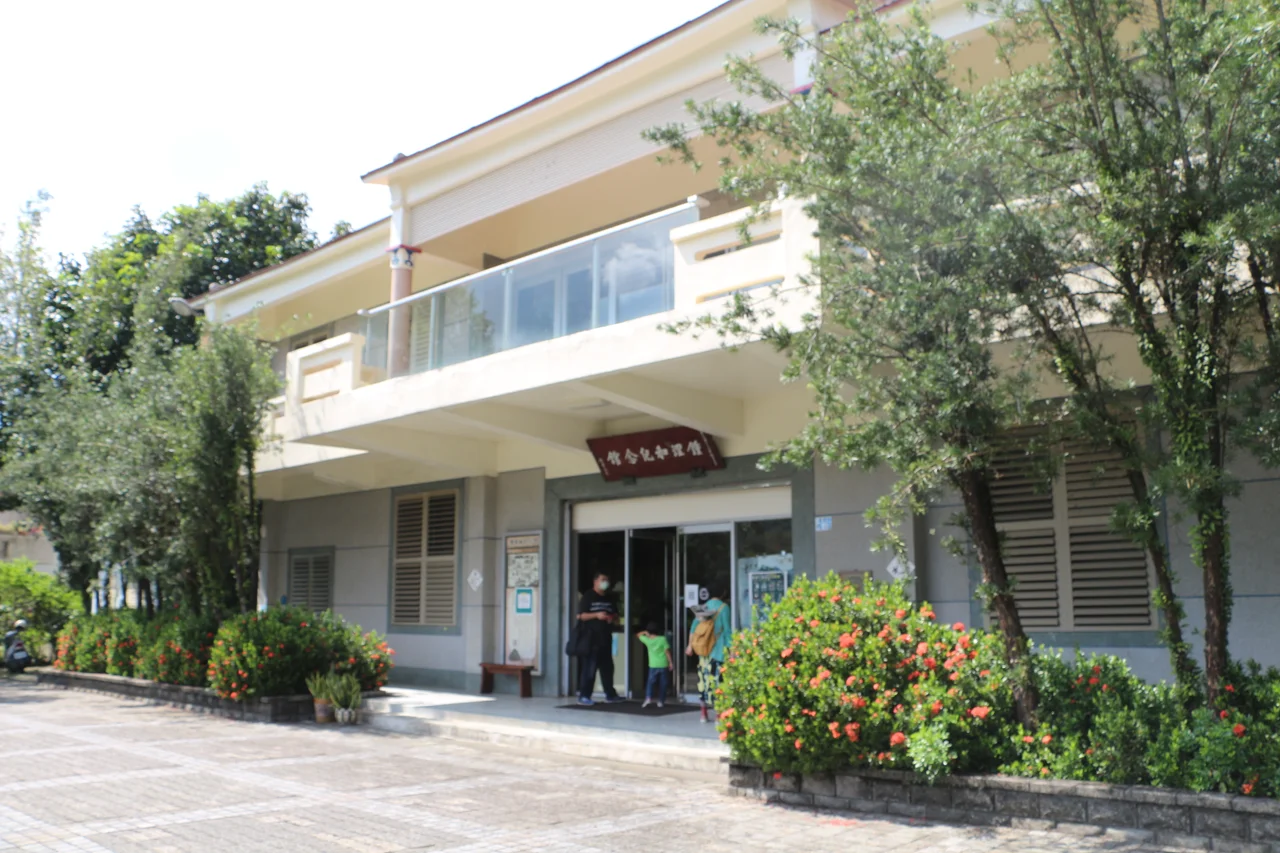

Chung Li-ho Museum
Chung Li-ho fell in love with a woman who shared his surname, and that was enough to make them outcasts. Under the social conventions of 1930s Taiwan — and the Japanese colonial rules that reinforced them — marriage between people with the same family name was prohibited, the prohibition doubly charged by the fact that Chung Tai-mei worked on his family's farm. So they left. The young writer and his soulmate eloped to northern China, and in the displacement and poverty that followed, he found the material for a body of fiction that would eventually make him one of the most celebrated figures in Taiwanese literary history.
A Life in Two Exiles
Chung Li-ho was born on December 15, 1915, in Gaoshu, Pingtung, into a Hakka landlord family. His parents later moved the family to Meinong, where the young Chung grew up amid the tobacco fields and banana groves that define the Meinong basin. The elopement with Chung Tai-mei took them first to Manchuria and then to Beijing, where they lived in conditions that were financially precarious and, eventually, medically catastrophic. Chung contracted tuberculosis — a disease that would define the rest of his life and much of his fiction. The couple returned to Taiwan after the Second World War, and Chung spent his remaining years writing in Meinong, the mountain village at the foot of Mount Jianshan where the museum now stands. He died in 1960 at the age of 44, reportedly dying with a pen in his hand. His most celebrated works include the novel Lishan Farm (笠山農場), the novella Rain (雨), and the short stories The Man from the Native Land (原鄉人) and Poor Couple (貧賤夫妻) — fiction rooted in the lives of tenant farmers and working people who faced hardship without self-pity.
The Museum the People Built
The Chung Li-ho Museum opened in 1983, and its founding story is inseparable from what the museum stands for. The idea began in June 1979, not with government initiative but with citizens — readers, writers, teachers, and admirers who believed that Chung Li-ho deserved a permanent home in the community that shaped him. It was the first writer's museum in Taiwan to be built through a citizens' organization, a grassroots cultural act in a period when civic life in Taiwan was still tightly constrained. The two-story building, covering a total area of 1,655 square meters, is designed around the theme of traditional Taiwanese homes — vernacular architecture rather than institutional grandeur, appropriate for a writer who spent his career attending to the lives of ordinary people. In 1997, the Kaohsiung County Government added a statue of Chung and constructed a trail park at both sides of the museum. The building sits at the foothill of Mount Jianshan, looking out over the valley that Chung knew from childhood.
Meinong's Hakka Character
The museum exists in a landscape that cannot be separated from Chung's work. Meinong District is one of the most intact Hakka cultural areas in Taiwan — a community that maintained its language, its architecture, its paper umbrella craft tradition, and its particular relationship to the land across centuries of external pressure. The Hakka people arrived in this valley from Guangdong province in the eighteenth century and shaped its agriculture and social order. Chung Li-ho wrote in Mandarin Chinese, but his sensibility was formed in Hakka Meinong, and the people in his fiction are recognizably from this world: stubborn, rooted, subject to poverty, capable of great endurance. Walking the trail park beside the museum, surrounded by the vegetation of the Jianshan foothills, it is easy to understand why returning here after China felt not like retreat but like arrival.
Manuscripts and Memory
Inside the museum, the primary collection consists of Chung's manuscripts and personal objects — the physical evidence of a literary life sustained under illness and poverty and without institutional support. The manuscripts show his working methods: dense, revised, committed to getting the sentence right. The museum also collects and exhibits manuscripts from other Taiwanese writers, situating Chung within the broader tradition of Taiwanese literature rather than isolating him as a solitary genius. His life was dramatized in the 1980 film China, My Native Land, directed by Li Hsing, with a theme song performed by Teresa Teng — a measure of how far his reputation had traveled beyond the literary world. But the museum in Meinong returns him to the specific place where that reputation was earned, in a valley between mountains where the tobacco fields have long since given way to other crops and the Hakka community that made him still gathers to remember.
From the Air
The Chung Li-ho Museum is located at approximately 22.934°N, 120.586°E at the foothill of Mount Jianshan in Meinong District, Kaohsiung, at an elevation of roughly 50 meters. The Meinong basin is visible from 3,000–6,000 feet as a broad flat valley surrounded by low ridges — the western edge of the Central Mountain Range. The nearest major airport is RCKH (Kaohsiung International Airport), approximately 25 km to the west-northwest. The Laonong River valley runs to the east; the Meinong River drains the basin to the west.
Nearby Stories
- Ten Drum Rende Creative Park 0.4 km away
- Donghe, Taitung 4 km away
- Dongli Story House 7.3 km away
- Namasia District 8.4 km away
- Beimen Crystal Church 13 km away
- Wanchin Basilica of the Immaculate Conception 18 km away
- Green Island, Taiwan 20 km away
- Daya Bay 584 km away