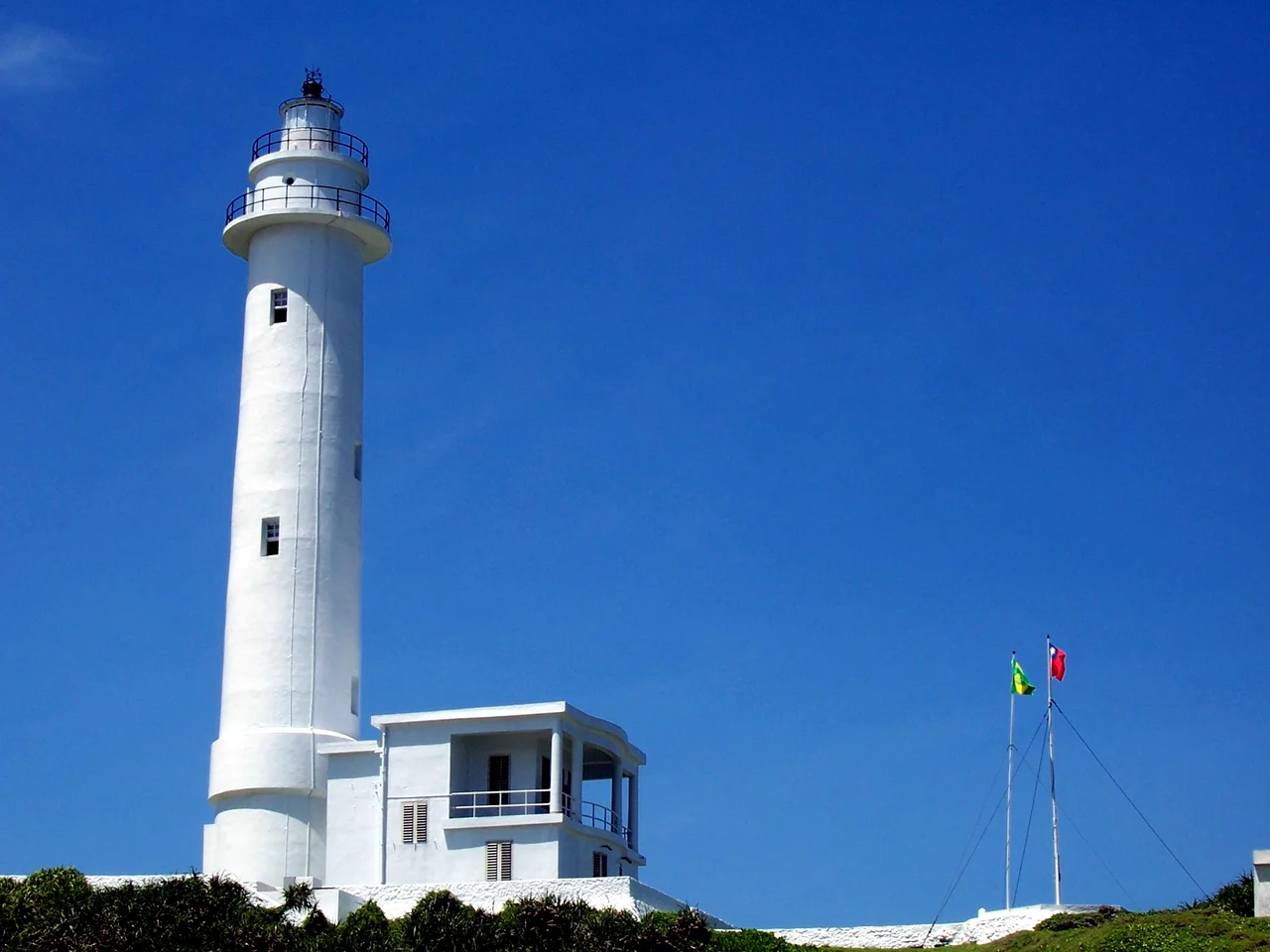

Green Island, Taiwan
The prisoners who survived Green Island went on to build a democracy. During Taiwan's decades of martial law, this small volcanic island 33 kilometers off the eastern coast served as one of the regime's most isolated detention facilities, where political dissidents were imprisoned by the Kuomintang government through the era known as the White Terror. Among the inmates were the founders of the Democratic Progressive Party, including Shih Ming-teh, and the writer Bo Yang, whose satirical commentary on Chinese political culture earned him years behind bars. Today, the prison cells stand open to the public. Tourists step through the same gates that once locked in Taiwan's political conscience, then walk down to the harbor to catch a boat to the coral reefs.
An Island of Many Names
The Amis people, the island's original inhabitants, called it Sanasai. Before 1949, the Chinese name translated roughly as 'Fire-Burned Island' - Huoshao Dao. On 1 August 1949, the Republic of China renamed it Green Island at the behest of Taitung magistrate Huang Shih-hung, giving it the name by which it is known today. In Hokkien, Mandarin, and Wade-Giles romanization, the name shifts form but keeps its meaning. The island has been known to British sailors who wrecked on its shores in 1864, to Presbyterian missionaries who glimpsed it from passing ships in the 1870s, and to the passengers of the SS President Hoover, a luxury ocean liner that ran aground on a reef at Zhongliao Bay during a typhoon in December 1937 - all 503 passengers and 330 crew survived.
The Prison Years
Martial law descended on Taiwan in May 1949, and Green Island became a place of exile. The Kuomintang government built Taiwan Lyudao Prison in 1951, filling it with political dissidents, intellectuals, and anyone suspected of opposing the regime. The main detention facility, known as 'Green Island Lodge,' held prisoners like Shih Ming-teh, who would spend a total of twenty-five years in various prisons for his advocacy of democracy. 'Oasis Village' served as the primary penal colony. During the 1950s, imprisoned physicians from National Taiwan University Hospital established a clinic on the island, treating fellow inmates, prison guards, and local residents alike. As these doctors were gradually released, the clinic shrank and finally closed in 1960. The prisons held political prisoners from the late 1940s through the late 1980s - four decades of confinement that shaped a generation of Taiwan's democratic leaders.
Born from Fire
Green Island is volcanic, formed from tholeiite and andesite rock ejected during eruptions spanning the Pliocene to Pleistocene epochs. It sits on the Luzon Volcanic Arc, created by the subduction of oceanic crust roughly 25 kilometers below the surface. At 15 square kilometers at high tide, it is Taiwan's seventh-largest island - small enough to circumnavigate in an afternoon, large enough to harbor diverse ecosystems. Formosan sika deer browse its grasslands. Ryukyu flying foxes hang from its trees. Reeves's muntjacs move through its forests. At Zhaori Hot Spring, seawater heated by residual volcanic activity rises to the surface at 53 degrees Celsius next to coral reefs - one of only a handful of saltwater hot springs in the world.
From Penal Colony to Dive Destination
The transformation has been dramatic. Where political prisoners once stared at the sea and dreamed of freedom, scuba divers now descend to explore some of Taiwan's richest coral reefs. About 150 meters offshore from Shilang lies the 'Big Mushroom Coral,' a massive formation 12 meters tall and 31 meters wide. The island's dive sites are established with walkways leading down to the water's edge. On land, the Green Island Human Rights Culture Park preserves the prison facilities as a memorial and museum, while the Ludao Lighthouse guides ships past the same reefs that have claimed vessels for centuries. Sleeping Beauty Rock, a coastal formation that resembles a reclining figure, has become the island's most photographed natural landmark.
A Dwindling Community
Fewer than half of Green Island's 2,634 registered residents actually live there. The population has been declining for years, drained by the difficulty of finding work on an island whose economy depends almost entirely on seasonal tourism. The island supports two pre-schools, a kindergarten, two elementary schools, and one middle school, but anyone pursuing education beyond that must move to Taiwan's main island. A single diesel power plant provides electricity through 28 generating units. Flights from Ludao Airport connect to Taitung; ferries run from Nanliao Harbor to the mainland. Several aboriginal settlements in Gongguan Village have been abandoned entirely - Youzihu, Nanzihu, Haishenping, Dabaisha - their former residents gone to the cities, leaving the island to tourists and to memory.
From the Air
Located at 22.67N, 121.48E, approximately 33km off Taiwan's southeastern coast in the Pacific Ocean. Green Island is a distinct volcanic landform, roughly 4km across, visible from altitude as a dark green mass against blue ocean. Ludao Airport (RCGI) on the island's northwest coast has a short runway serving small turboprop flights to Taitung Airport (RCFN). Approach with caution - terrain rises steeply from the coast and wind conditions can be turbulent. The surrounding waters feature extensive coral reefs. Ferries operate between Nanliao Harbor and Fugang Fishery Harbor in Taitung City. Recommended viewing altitude 3,000-6,000 feet for island overview.
Nearby Stories
- Shouka Mountain Pass 14 km away
- Kucapungane 20 km away
- Old Donghe Bridge 21 km away
- Orchid Island 31 km away
- Chung Li-ho Museum 37 km away
- Twin Forts of Romblon 1084 km away
- Sibuyan Island 1133 km away
- Sinking of MV Sewol 1321 km away