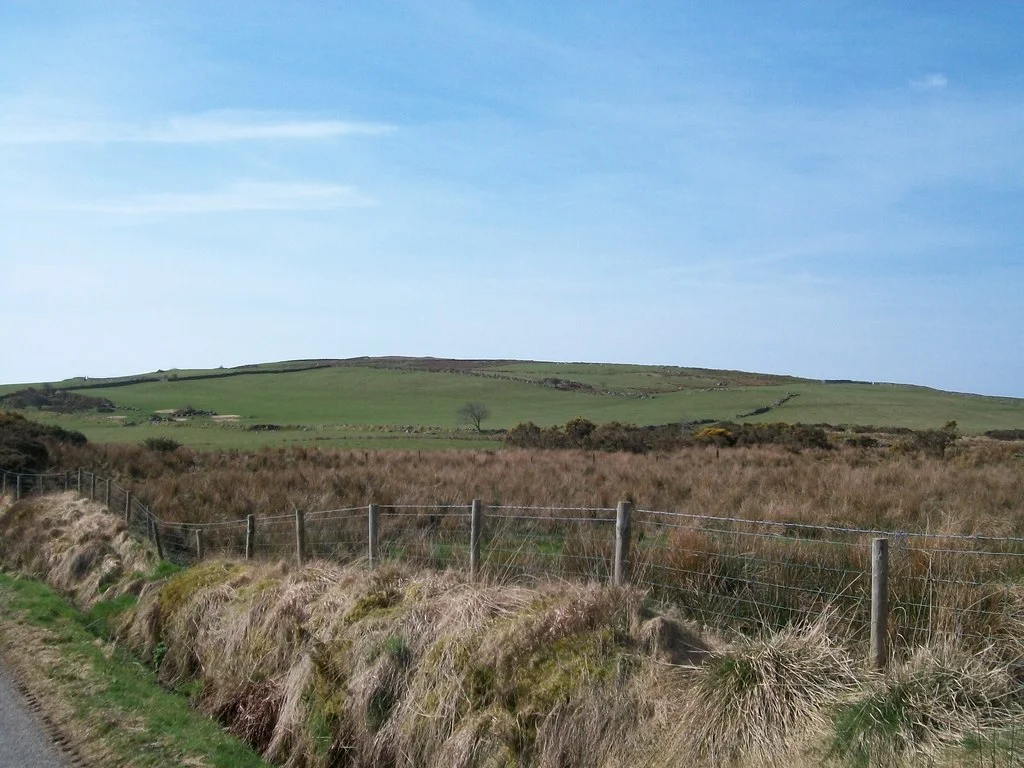

Battle of Bryn Derwin
Three brothers met on a hillside in Eifionydd in June 1255, and within an hour two of them were prisoners and the third was on his way to becoming the most powerful Welshman who would ever live. The Battle of Bryn Derwin was small as medieval engagements go - probably a few hundred men on each side - but the consequences were enormous. It collapsed a fragile family settlement that had held Gwynedd together for nine years, and it put Llywelyn ap Gruffudd on the road that would end with his recognition as Prince of Wales by the Treaty of Montgomery twelve years later. Everything that followed - the wars with Edward I, the death at Cilmeri, the conquest of 1282 - began here.
A Truncated Kingdom
Their uncle Dafydd ap Llywelyn had died in 1246 without an heir, leaving Gwynedd unstable and squeezed by Henry III's England. By the Treaty of Woodstock in 1247 the kingdom was carved in half: the Crown took everything east of the Conwy, and the part that remained was split between two of Gruffudd ap Llywelyn's sons, Llywelyn and Owain Goch. A third brother, Dafydd ap Gruffudd, was young and not yet a ruler. A fourth, Rhodri, kept his distance from politics. The arrangement was meant to keep peace. What it actually did was leave the brothers staring at each other across a shrinking territory, each watching for any sign that the others were about to claim more than their share.
The Brothers Quarrel
By the early 1250s Dafydd was old enough to demand his own portion of land. Llywelyn refused. Owain Goch took Dafydd's side. The two younger brothers raised a force and marched against Llywelyn through the hills of the Llŷn. He met them at a pass called Bwlch Derwin, in the rolling country south-east of Clynnog Fawr. The medieval chroniclers say little about the fighting itself - no famous tactics, no long siege, no dramatic single combat. Just an hour of close-quarters work on a Welsh summer afternoon, and then Llywelyn's men had the upper hand. Both his brothers were taken captive. The kingdom that had been a shared inheritance was now his alone.
Two Brothers, Two Fates
What happened next reveals everything about Llywelyn's political mind. Dafydd, the younger brother who had started the quarrel, was released quickly and given a senior place in the government of Gwynedd. Llywelyn needed an heir-presumptive and a partner in command, and he chose to make Dafydd that man rather than break him. It worked - until the mid-1260s, when Dafydd defected to England and spent years scheming against his brother before returning to the Welsh cause and dying horribly on Edward I's scaffold in 1283. Owain Goch was treated very differently. He stayed in his brother's prison for twenty-two years. Only the humiliating Treaty of Aberconwy in 1277, when a defeated Llywelyn had to grant his brother's release as one of Edward's terms, finally set him free. He retired to a small estate in north-west Wales, never challenged his brother again, and died around 1282 - the same year Llywelyn himself was killed.
The Prince of Wales
Within two years of Bryn Derwin, Llywelyn was on the march. The 1257 campaign brought back territory in Perfeddwlad. The 1260 push extended Welsh control into Builth and Brecon. By 1267 the Treaty of Montgomery formally recognised him as Prince of Wales, with the homage of every other Welsh ruler owed to him alone. No earlier Welsh prince had ever held such a title with such breadth of authority. For a brief period - twenty years, give or take - Gwynedd was the centre of a Welsh polity that English kings had to negotiate with on something approaching equal terms. The base for all of it was the unified Gwynedd that Bryn Derwin had handed to a single ruler in one short, decisive hour.
A Field Without a Marker
There is no monument at Bwlch-derwin. The site sits in the gentle wooded country east of Clynnog Fawr, where the road climbs over a low pass on the way down to Garndolbenmaen. A passing motorist would never know that the last unified principality of native Wales was decided here. In 2025 the field briefly returned to the news when an unusual archaeological find was reported nearby, but for the most part the place keeps the medieval anonymity it has had for nearly eight centuries. Llywelyn's hour at Bryn Derwin echoes through the rest of Welsh history. The hillside itself just keeps growing grass.
From the Air
52.99°N, 4.29°W in the hills of Eifionydd, between Clynnog Fawr on the coast and Cwm Pennant inland. Best viewed at 1,500-3,000 ft to take in the low pass at Bwlch-derwin running between two ridges. The Llŷn Peninsula stretches west; Snowdonia rises east. EGCK (Caernarfon) is 12 nm north.
Nearby Stories
- GeoMôn 1.9 km away
- Battle of the Conwy 3.2 km away
- Irish Sea Bridge 5.2 km away
- Ysbyty Ifan 10 km away
- Machynlleth 16 km away
- Barmouth Lifeboat Station 23 km away
- Irish Sea 27 km away
- HMS Tyler 32 km away