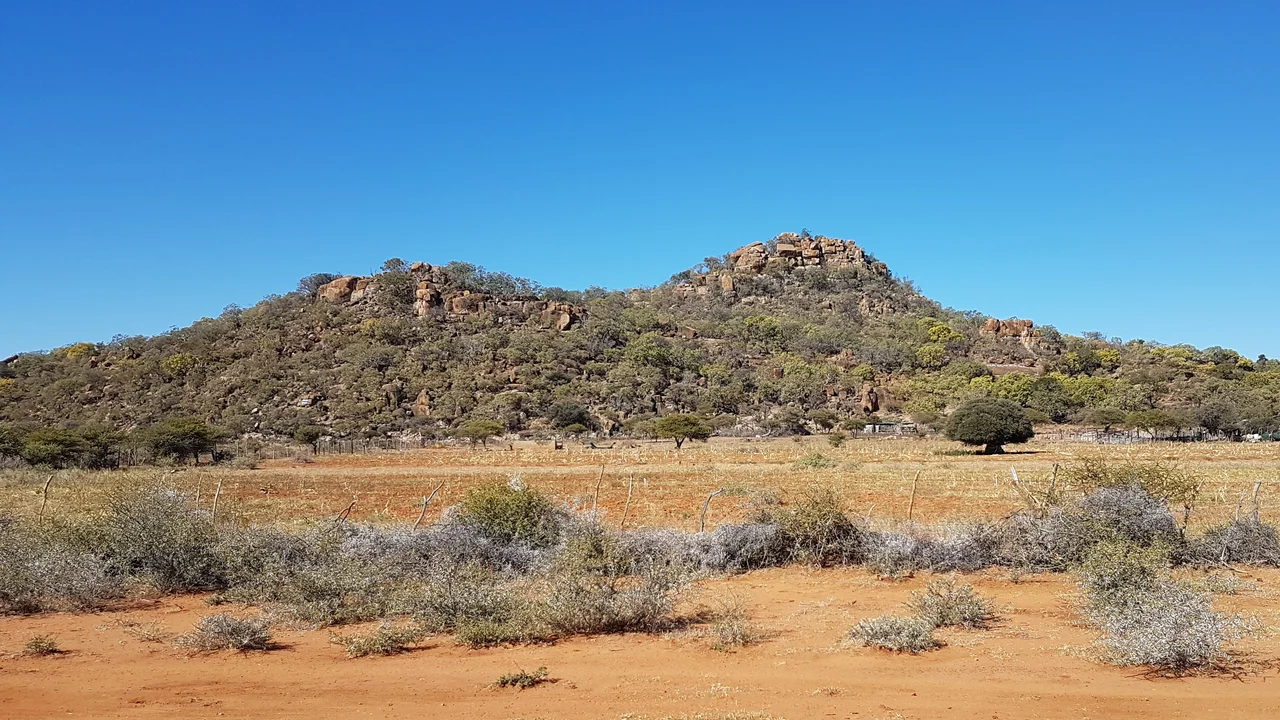

Battle of Dimawe
"Who wants Mosielele can come and fetch him out of my stomach." With those words, Kgosi Sechele I refused to surrender a fellow chief who had sought his protection, telling the Boers that the man was now as much a part of him as food he had eaten. It was a refusal that brought war to a quiet hill in what is now southeastern Botswana. In August 1852, around Dimawe Hill, a coalition of Batswana met a Transvaal commando in battle - and held their ground. The fight is little known outside the region, but in Botswana it is remembered as a turning point.
A Chief Who Would Not Hand Over a Friend
The quarrel that led to Dimawe was, at heart, about sovereignty and human freedom. Bahurutshe people who had escaped enslavement by Boer settlers had fled to the Bakwena for protection, and Sechele, leader of the Bakwena, would not give them up. Nor would he surrender Mosielele, a neighboring chief the Transvaal Boers wanted to punish. Sechele was no isolated figure: years earlier he had met the missionary David Livingstone, who built the Kolobeng Mission in Bakwena country, and Sechele became Livingstone's first and only convert. By 1852 his refusals had made him, in Boer eyes, a dangerous example of an African ruler who would not bend.
The Commando at Dimawe
Late in August 1852 a Transvaal commando under Acting Commandant-General Piet Scholtz reached the outskirts of Sechele's town near Dimawe Hill. There the Boers found not one tribe but several standing together: the Bakwena joined by Bahurutshe, Balete, and Batlokwa fighters. The fighting stretched across days. Among the Boer officers leading the advance was a young Paul Kruger, the future president of the South African Republic, who would later recall the two sides exchanging fire across the slopes. The Batswana fought from prepared positions on the high ground, and though the Boers eventually entered the town, they could not break the coalition's will to resist.
The Cost and the Counterstroke
War's cruelty fell hardest, as it so often does, on those who could not fight back. The raiders carried off roughly 400 captives, mainly women and children, to be put to forced labor on distant farms, and they burned Livingstone's mission, seizing the workshop and supplies they found there. But the Batswana did not stay beaten. Sechele regrouped and struck back, raiding and plundering Boer farms with European firearms until the commando was forced to withdraw. By January 1853 the two sides had signed an agreement. The hill the Boers had attacked remained in Batswana hands.
The Road to a Nation
Sechele understood that muskets alone would not secure his people's future, so he set out for Britain to seek protection, only to be turned back at Cape Town; the British, unwilling to anger the Boers, would not deal with him. The journey failed, but the idea did not. Four decades later, in 1895, three Batswana kings, Khama III, Sebele I, and Bathoen I, traveled all the way to Britain and won what Sechele could not: recognition of the Bechuanaland Protectorate, kept deliberately apart from Cecil Rhodes's company and the Transvaal republic. That protectorate became modern Botswana. The stand at Dimawe, a coalition of chiefs refusing to be ruled, stands near the start of that long road to independence.
From the Air
Dimawe Hill lies in southeastern Botswana at about 24.76 S, 25.63 E, in the Kolobeng River valley southwest of the capital, Gaborone, near Molepolole and the Kweneng district. From the air it is a modest hill rising from gently rolling bushveld, with the seasonal Kolobeng River nearby; the ruins of Livingstone's Kolobeng Mission lie in the same valley. Sir Seretse Khama International Airport (FBSK) at Gaborone is the nearest major field, a short flight to the east-southeast. Recommended viewing altitude 2,500 to 4,000 feet AGL; the dry Kalahari-fringe air usually offers long visibility, with heat haze building on summer afternoons.
Nearby Stories
- Matsieng Footprints 19 km away
- Jwaneng diamond mine 33 km away
- Limpopo River 91 km away
- Siege of Mafeking 100 km away
- Pilanesberg National Park 114 km away
- Marakele National Park 216 km away
- Botswana 280 km away
- Kalahari Meerkat Project 317 km away