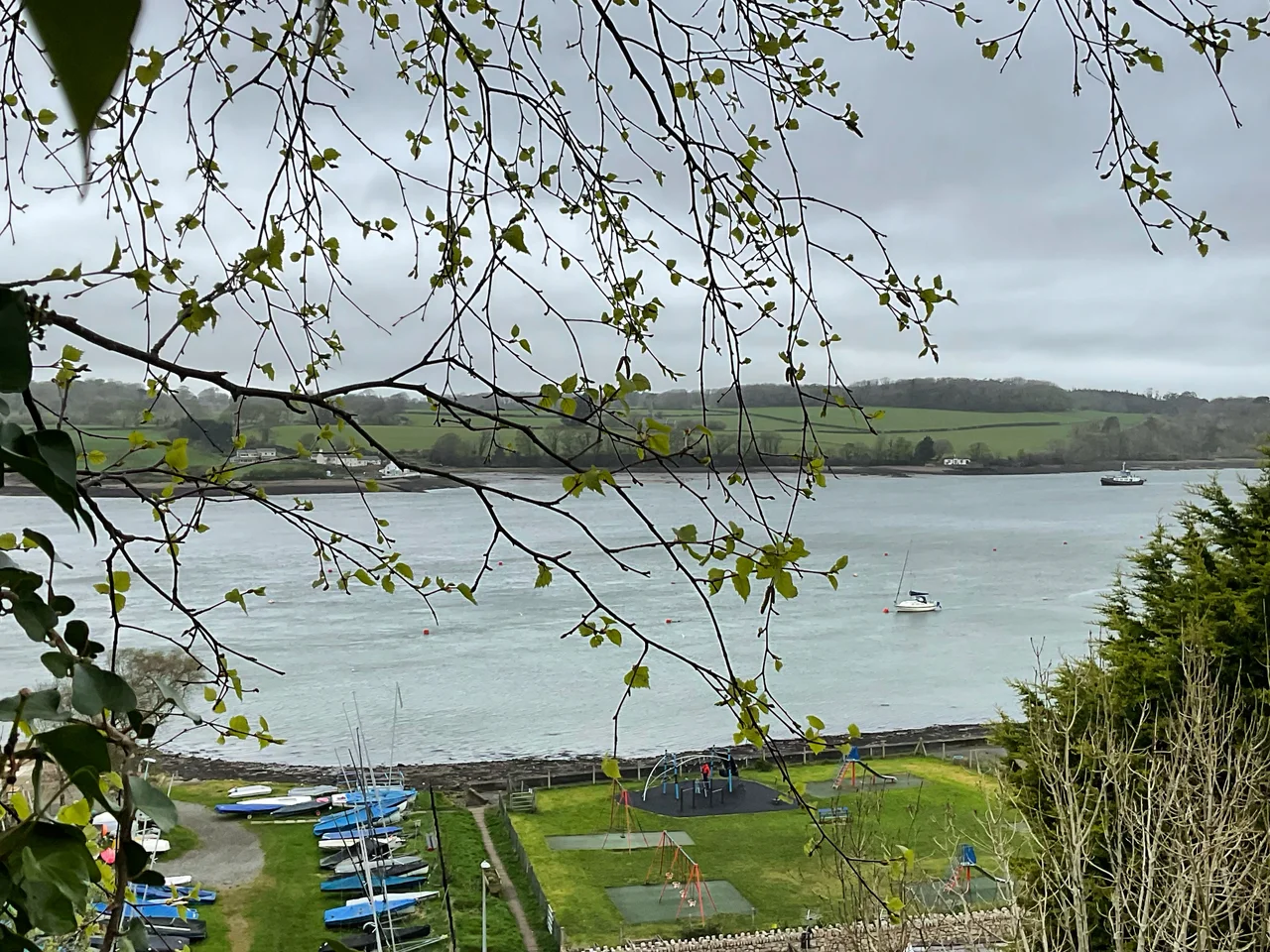

Battle of Moel-y-don
The tide was coming in when the Welsh appeared on the heights. Below them, on the shingle and salt grass east of Anglesey, hundreds of English knights and men-at-arms were strung out along a beach they had reached by walking across the sea. Behind them stretched a bridge made of boats lashed together - Luke de Tany's pontoon, the most ambitious engineering feat of Edward I's Welsh war. In front of them, swarming down from the high ground above the Menai Strait, came Llywelyn ap Gruffudd's army. The tide rose. The boats lifted. The way back closed.
The Bridge Across the Strait
By autumn 1282 Edward I had spent the better part of a year trying to crush Llywelyn the Last, the only Welsh prince still styling himself the prince of Wales. Edward's strategy was envelopment: armies on every front, castles springing up faster than the Welsh could besiege them, and the conquest of Anglesey - the breadbasket that fed Gwynedd. Luke de Tany, a former constable of Gascony, took the island with 2,000 infantry and 200 cavalry that summer. Then he ordered his engineers to do something audacious: lash boats together across the Menai Strait to make a bridge wide enough for a charging army. By September the bridge was finished. Edward's plan called for Tany to wait, then cross in concert with the king's own army pushing west from the River Conwy. Tany did not wait.
A Trap of Tide and Mountains
Tany believed he could finish Llywelyn alone. He had contacts in the clergy at Bangor - sympathisers who had promised to signal him when the moment was right. On 6 November the signal came. The English crossed at low water, marched inland from the strait's eastern shore, and walked into open ground beneath the mountains. Llywelyn had been watching. Welsh scouts had tracked the English from the moment the bridge was laid, and the prince's response came down the slopes in a roar of spears. The first clash drove the English back toward the water. By then the bridge of boats was rising and parting with the tide. Walter of Guisborough, writing later, described what happened next in a sentence as cold as the strait itself: "They went into the sea but, heavily laden with arms, they were instantly drowned."
What the Sea Took
Sixteen English knights died at Moel-y-don, along with more than 400 of their men. The Chester chronicler preserved the roll of the dead, a list of names that reads like a roster of Edward's inner court: Roger de Clifford the Younger, the brothers Philip and William Burnell (kin of the chancellor), Henry Tyeis, Hywel ap Gruffudd, Luke de Tany himself. The future justiciar of north Wales, Otto de Grandson, made it back to the bridge "with much difficulty," the chronicler noted - a polite phrase for a man who had nearly drowned in his armour. The actual battle site was probably not at the village now called Moel-y-don but somewhere further north along the strait, near Bangor. Either way, the result was the same. The most expensive expedition Edward had launched all year ended with English knights face-down in the Menai mud.
A Reprieve That Did Not Last
The disaster at Moel-y-don and the parallel slaughter at Llandeilo Fawr in south Wales bought Llywelyn a few weeks of breathing room. Edward, who rarely admitted setbacks, never spoke of his lost pontoon again. Otto de Grandson, the soaked survivor, recovered quickly enough to lead reinforcements from Gascony back into Gwynedd by the end of the year. Then, on 11 December 1282, Llywelyn was killed in a chance skirmish near Cilmeri in mid-Wales - a Welsh head delivered to Edward, by some accounts in a sack. The conquest resumed. Within two years the great castles of Caernarfon, Conwy and Harlech were rising along the coast. The bridge of boats was the last Welsh victory of any size in Edward's war. Moel-y-don is one of those battles that did not change the outcome but reminded the conquerors that the conquest had a price.
Looking Down on the Strait
Today the strait is calm in most weathers, and the line where the boats once floated runs invisible beneath yachts and ferries shuttling toward Bangor pier. The actual ground where men drowned is uncertain - a strip of foreshore somewhere along the southern shore of Anglesey, lost to seven centuries of silt and reclamation. The mountains the Welsh came down are not lost. From the air, the Carneddau and Glyderau still rear up behind the strait, the high ground from which Llywelyn watched and decided when to strike. The story persists in the place-name on the Anglesey side - Moel-y-don, "the bare hill of the wave" - and in the quiet fact that, for one afternoon in November, the sea beat the most modern army in Britain at the suggestion of a Welsh prince and a careless tide chart.
From the Air
Located at 53.23°N, 4.15°W along the southern shore of the Menai Strait between Anglesey and the mainland. Best viewed from 2,500-4,000 ft AGL on a westbound track from Bangor with the strait curving north below. The pontoon site lies between the Britannia Bridge and the open strait. Nearest airports: EGCK (Caernarfon Airport) 6 nm SW, EGOV (RAF Valley) 18 nm WNW. Watch for the orographic turbulence rolling off the Carneddau in northerly winds.
Nearby Stories
- Tudweiliog 3.6 km away
- Denbigh Castle and Town Walls 6.4 km away
- Rhoscolyn Lifeboat Station 7.6 km away
- Butlin's Pwllheli 20 km away
- East–West Interconnector 20 km away
- New Brighton Lifeboat Station 31 km away
- Battle of Oswestry 31 km away
- Celtic Array 44 km away