
Battle of Turtle Gut Inlet
Three hundred and eighty-six barrels of gunpowder were rowing toward shore in the fog. It was the morning of June 29, 1776, and the British frigates Orpheus and Kingfisher had chased the American brig Nancy into Turtle Gut Inlet on the New Jersey coast. Captain John Barry, the man Americans would later call the Father of the Navy, had a choice to make. He could fight the better-armed British and lose. He could surrender and hand the Royal Navy enough powder to deny the rebellion its supply line for months. Or he could improvise. Barry split his crew - half to fire the cannons and hold the British at bay, half to ferry the powder ashore where local Cape May residents waited to hide it behind the dunes. The day America declared independence in Philadelphia was still five days away.
A Cargo Worth a Country
The Nancy was not a warship. She was a brigantine - a swift cargo vessel with six cannons and an eleven-man crew under Captain Hugh Montgomery, chartered out of Philadelphia by financier Robert Morris of the Pennsylvania Committee of Safety. In the spring of 1776, Morris was the closest thing the rebellion had to a quartermaster, and the Caribbean was his black market. The Nancy had spent weeks at St. Thomas and St. Croix loading 386 barrels of gunpowder, fifty firelocks, one hundred and one hogsheads of rum, and sixty-two hogsheads of sugar - the kind of cargo that could keep an army in the field. None of it would do the Americans any good if it ended up in British hands. Morris alerted Barry. The race was on.
The Royal Navy Blockade
The British understood Philadelphia's importance and had thrown a blockade across the mouth of Delaware Bay. More than two hundred and forty cannons floated on Royal Navy decks between the open Atlantic and the city's wharves. The Americans had responded with cheveaux-de-frise - submerged wooden spikes meant to gut any hostile ship that tried to push up the river. The blockade was effective enough that any vessel trying to slip in or out faced a sprint past Cape May with British frigates standing watch offshore. The British plan for late June was simple: hold the Delaware approach while the bulk of the Royal Navy moved north toward New York Harbor for the invasion of Manhattan. The vanguard of that fleet - more than one hundred ships - was set to enter New York on the very morning of the battle.
Fog and Longboats
Late on June 28, the Kingfisher's lookout spotted the Nancy beating toward Cape May. The Orpheus joined the chase, and Captain Barry's escort squadron - the fourteen-gun Lexington and the larger Reprisal under Lambert Wickes - moved to intercept. By morning the wind had failed and a thick fog had rolled across the inlet. The Americans, blocked from running up the bay, drove the Nancy into the shallow Turtle Gut Inlet and grounded her. While the British closed within cannon range, Barry organized two crews. One worked the guns to keep the British from boarding. The other formed a chain of longboats moving between the stranded ship and the beach. The barrels of powder went into the boats, then onto the sand, then into the hands of Cape May locals who carried them inland and buried them behind the dunes.
The Wickes Brothers
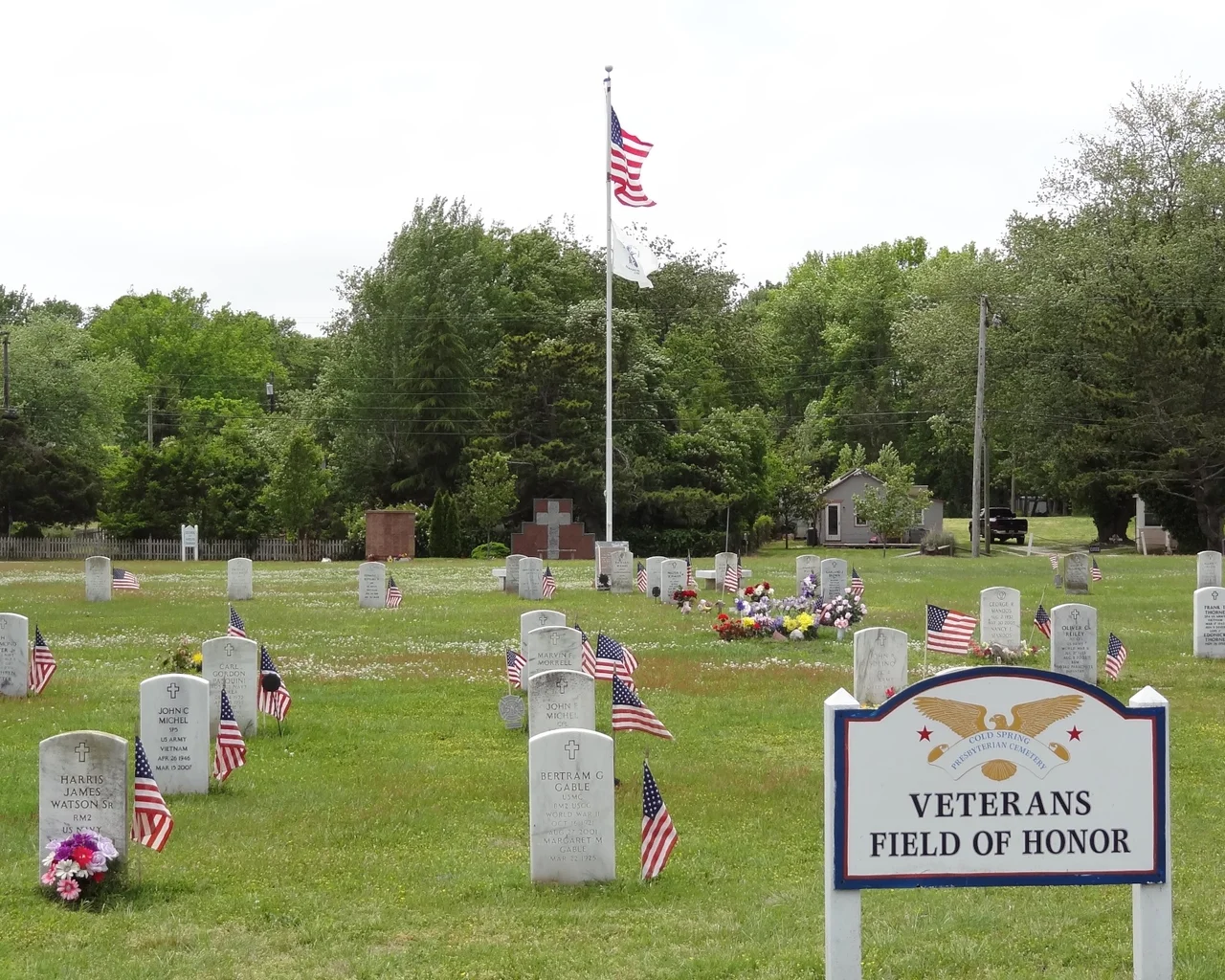
Lieutenant Richard Wickes commanded one of the boats. He was the younger brother of Captain Lambert Wickes, who was at the same moment fighting his own action aboard the Reprisal a short distance offshore. Near the end of the battle, a British cannonball struck Lieutenant Wickes and killed him. He was buried at the Cold Spring Presbyterian Church cemetery, where his grave still stands in a section dedicated to him called the Veterans Field of Honor. He was one of the first naval officers to die in the Revolutionary War. His brother Lambert sailed onward to the West Indies after the battle and would die at sea himself less than a year later. The Wickes brothers gave their lives so that gunpowder might reach Washington's army.
The Only Battle Here
The Battle of Turtle Gut Inlet was the only Revolutionary War engagement ever fought in Cape May County, and the first privateer battle of the war. Its consequences ran beyond the gunpowder saved. The British took the lesson and pulled their blockade further out to sea, opening a wider corridor for American supply ships to slip through. The town of Wildwood Crest - built on the dunes where the gunpowder once lay buried - placed the brigantine Nancy on its municipal seal and on the seal of its historical society. A memorial park marks the approximate landing site. The inlet itself has shifted in the centuries since, the way all New Jersey inlets do, and Turtle Gut Inlet no longer exists by that name. The story does.
From the Air
The battle site lies on the Atlantic coast of the Cape May Peninsula at approximately 38.96 degrees north, 74.84 degrees west, in what is now Wildwood Crest, New Jersey. From cruising altitude, the area appears as the developed strip of barrier-island towns between Cape May and Atlantic City. Cape May County Airport (KWWD) lies four nautical miles to the southwest. Atlantic City International (KACY) is about thirty-five nautical miles northeast. The original Turtle Gut Inlet has shifted closed over the centuries; the memorial park sits inland on Ocean Avenue in Wildwood Crest.
Nearby Stories
- Woodbine, New Jersey 9.4 km away
- Absalom Jones 15 km away
- USS Jacob Jones (DD-130) 16 km away
- USS General G. W. Goethals 18 km away
- Bombay Hook National Wildlife Refuge 22 km away
- Atlantic Shores Offshore Wind South 24 km away
- Arthur W. Perdue Stadium 42 km away
- The Burning of the Morro Castle: Murder, Fire, and a Ship That Beached Itself at a Resort 115 km away