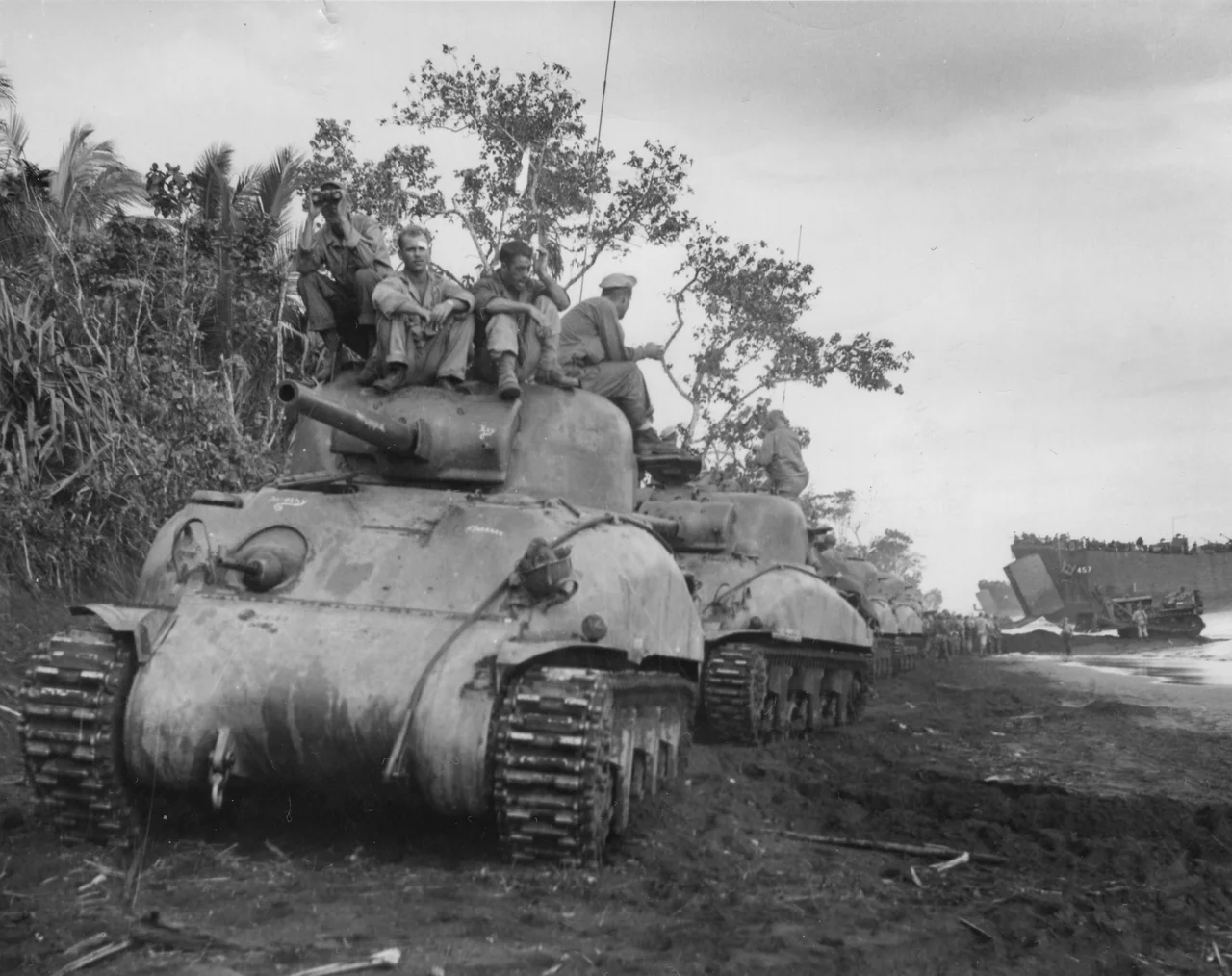
.jpg)
Battle of Wakde
The island is small enough that you could walk across it during a coffee break - 1.5 miles long, 3,000 feet wide at its thickest point, flat as a coral table. It sits two miles off the north coast of what was then Dutch New Guinea, surrounded by reef. In peacetime Wakde - known to locals as Insoemoar - would have been a nearly anonymous speck. But in May 1944, on an island that small, the Japanese Army had built an airstrip, placed over 100 bunkers, dug in 800 defenders, and turned every coral cave on the coastline into a firing position. For three days, American soldiers crossed the channel and fought their way across the island foot by foot. The battle ended with 759 Japanese dead, 40 Americans killed, 107 wounded, and an airfield that would launch the bombers for the next stage of the Pacific war.
Why a Speck Mattered
General Douglas MacArthur's original plan called for taking Sarmi, a town on the mainland. Aerial reconnaissance changed his mind: Sarmi could not support heavy bombers. Wakde could. More specifically, once its coral strip was extended, Wakde would put American B-24s within range of Biak Island 180 miles away, and Biak's airfields would put them within range of the Philippines. The Mariana and Palau Islands campaign was coming too, and aircraft from Wakde could strike targets central to that operation. Timing was tight - the landing on Biak was scheduled for ten days after Wakde, using most of the same landing craft. The Allies had just finished the Battle of Hollandia 120 miles east on 26 April. Discovering that Hollandia's Sentani plain airfields also could not handle heavy bombers made Wakde urgent.
A Three-Phase Plan
The beach frontage on Wakde was too narrow to land a full regimental combat team at once, so planners broke the operation into three phases. Phase one put three battalions of the 163rd Regimental Combat Team - about 7,800 men total under Brigadier General Jens A. Doe - onto the mainland around Arara, east of the Tor River, on 17 May. Phase two, the same afternoon, sent a company of heavy weapons troops and the 641st Tank Destroyer Battalion across the bight to occupy Insoemanai, the smaller of the Wakde twin islands, to serve as a base of fire. Phase three, the following morning, would put the 1st Battalion across two miles of reef-dotted water onto Insoemoar itself. A British-led carrier raid on Surabaya, designated Operation Transom, ran simultaneously as a diversion. Japanese commanders did not take the bait.
The Crossing
On the morning of 18 May, three companies from the 1st Battalion plus Company F from the 2nd Battalion loaded into LCVPs crewed by engineers from the 542nd Engineer Boat and Shore Regiment. Four Sherman tanks from the 603rd Tank Company followed in LCMs. The destroyers Wilkes and Roe opened naval gunfire at 08:30, pounding the Japanese 75mm emplacements and damaging bunkers. American mortars and machine guns on Insoemanai joined in, firing across the narrow bight. The waves of landing craft hit Insoemoar at five-minute intervals. Companies B and F, with the Shermans, pushed west along the coast. Company A swung southwest to clear machine-gun nests. Company C drove north toward the airfield and ran straight into heavy resistance. By noon they had reached the strip; by 13:30 they held the north edge. The eastern side, where most remaining Japanese defenders had concentrated, held out.
Three Days and Coral Caves
The 1st Battalion dug in at 18:00 on 18 May. That night, a small group of Japanese soldiers attacked the American command post; Company D repelled the assault, killing twelve attackers at a cost of three Americans wounded. The next morning at 09:15 the advance resumed. By day's end the rest of the airfield was captured, but Japanese survivors withdrew into coral caves along the coast and held on for hours before being overcome. The third day, 20 May, was mostly mop-up in the northeastern corner of the island, though a series of banzai charges meant the mop-up was not quiet work. The Japanese lost 759 killed and 4 captured - nearly complete annihilation of the garrison. The Americans counted 40 killed and 107 wounded. Even after the island was declared captured, Company L spent from 22 to 26 May clearing snipers. Simultaneously, airfield construction troops from the 836th Engineer Aviation Battalion - who had landed on 18 May while shooting was still going on - began repairing and extending the strip.
The Mainland Kept Fighting
Capturing Wakde did not end the campaign. Fighting on the New Guinea mainland continued until early September as American troops pushed west along the coast toward Sarmi, trying to clear Maffin Bay and take the airfield at Sawar. Japanese defenders held strong positions in the Trier Mountains, and the Battle of Lone Tree Hill that followed cost American battalions more casualties than the Wakde landing itself. The Kumamba Islands to the northeast were occupied on 19 May to install early-warning radar for the new base. Wakde's airfield, once rebuilt, launched the bombing missions that supported the Biak landing ten days later and the Marianas campaign that followed. By the time the fighting subsided around Sarmi, the speck of coral called Insoemoar had paid its strategic freight - and paid it at the cost of nearly every soldier who had defended it.
From the Air
The Wakde island group lies at approximately 1.93 degrees south, 139.02 degrees east, two miles off the north coast of Indonesian Papua near the town of Sarmi. Insoemoar, the larger island, hosts the coral airstrip captured in 1944; from altitude the rectangular outline of the old airfield is still visible, though the site has reverted substantially. The nearest modern airport is Jayapura's Sentani (ICAO WAJJ), about 120 miles to the east, and Biak's Frans Kaisiepo Airport (WABB) about 180 miles to the west. The reef flats around the islands are hazards for low-altitude flight; the area can be subject to rapid weather changes characteristic of equatorial north Papua.
Nearby Stories
- Battle of Lone Tree Hill 49 km away
- Foja Mountains 55 km away
- Mamberamo River 70 km away
- Lake Sentani 119 km away
- Naval Base Hollandia 148 km away
- 1996 Biak Earthquake 202 km away
- Mapenduma Hostage Crisis 238 km away
- Mikura-jima 3942 km away