
Naval Base Hollandia
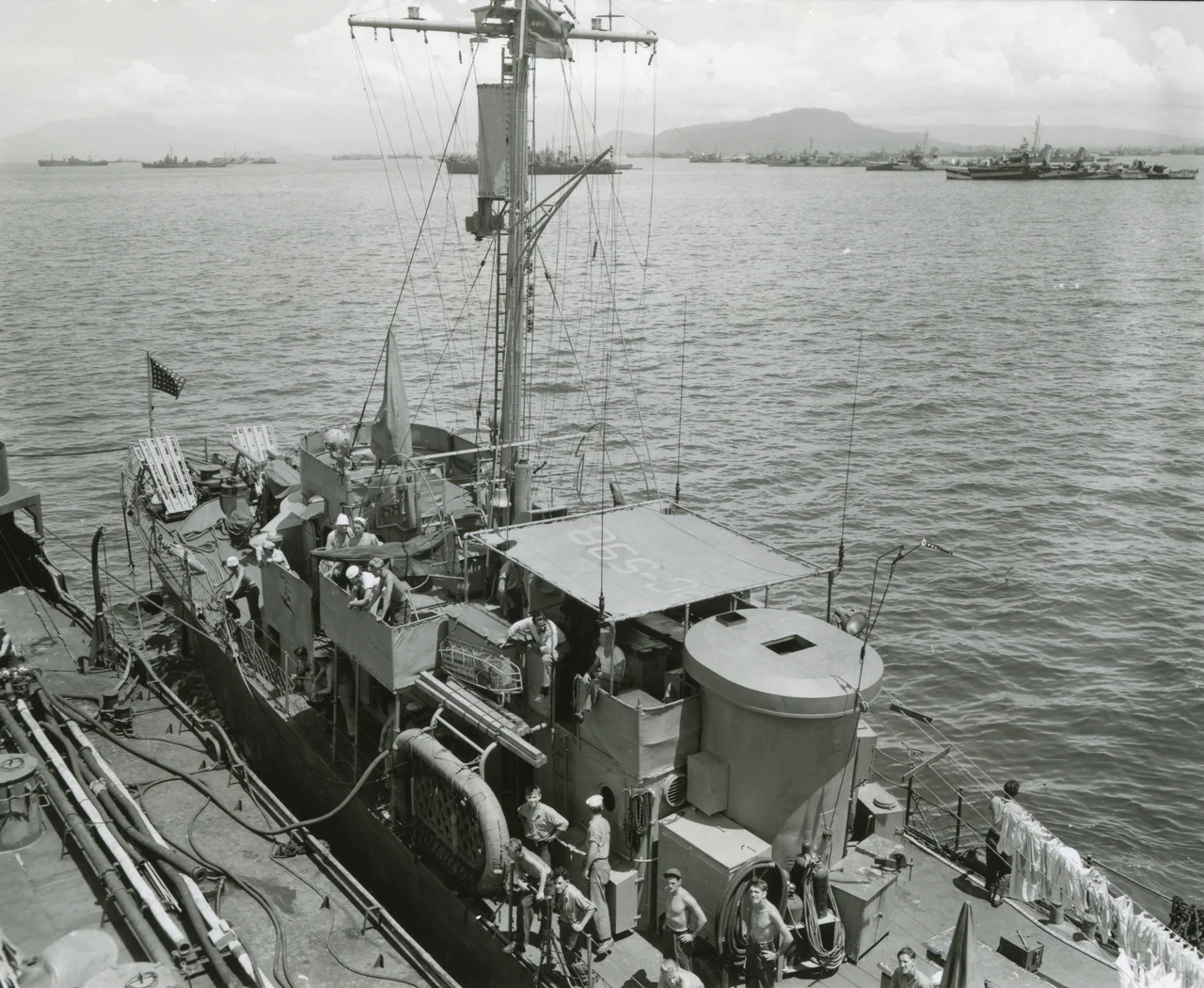
On 22 April 1944, American forces waded ashore at Humboldt Bay and Tanahmerah Bay, twelve miles apart on the north coast of New Guinea. Two weeks later, on 9 May, the 113th Seabee Construction Battalion arrived to turn what they'd just captured into a city. What rose from the mangroves and equatorial rain over the next six months became, for a time, one of the busiest military ports on the planet. Half a million U.S. personnel passed through Naval Base Hollandia before it was shuttered in December 1945. Today the site lies within modern Jayapura, the jungle having reclaimed most of the rest.
Two Bays, One Base
Humboldt Bay, on the eastern side, was the main port - good anchorage, protected by headlands, with enough flat land along the shore for piers and depots. Tanahmerah Bay, twelve miles to the west, was where the fuel went: a large tank farm for the fuel oil and diesel that a Pacific campaign consumed by the shipload. Eight miles inland from Tanahmerah, on the shore of Lake Sentani, the Seabees built an advance naval headquarters in a setting that might have been a resort if it hadn't been a war. Roads and airfields connected the pieces. Buildings went up on ground that, a month earlier, had been thick forest. The whole thing was temporary. Everyone knew it. It still had to work.
The Seabees' War
The 113th Battalion started the port. The 102nd arrived on 12 June to speed things up. The 119th and 122nd followed for Tanahmerah Bay and outlying airfields at Wakde and Aitape. While the piers went up, the Seabees installed pontoon barge docks so cargo could move immediately. A pier for merchant ships was finished by 9 June 1944. A destroyer repair facility came online on 1 September. A second, larger pier for troop staging opened 23 November. A major landfill project pushed the shoreline out into the bay to make room for more of everything. There was no glamour in this work - no medals for driving pilings through coral, no songs about water purification plants or power stations. But the Philippines invasion would not have happened without it.
MacArthur's Address
Naval Base Hollandia was General Douglas MacArthur's headquarters from its founding until the Philippines campaign pulled the war's center of gravity north in March 1945. His command staff worked from buildings the Seabees had hammered together weeks earlier. Cyclops Airfield, inland from Hollandia, launched bombers over occupied territory. The Leimok Hill radio station tied the whole operation into the Pacific command network. When the invasion of the Philippines launched on 20 October 1944, Hollandia was its principal supply base - the point of departure for ships, troops, fuel, ammunition, rations, mail, and every other thing an army needs to cross an ocean and retake a country. The Seventh Fleet ran its advance headquarters here. For months, this forgotten corner of the world was the hinge on which the Pacific War turned.
Empire Walked Away
The base closed in December 1945, four months after Tokyo's surrender. The Naval Construction Maintenance Unit 558 shipped the usable pieces forward to bases closer to the remaining action. What was left - the buildings, the piers, the airfield - was sold to the Netherlands East Indies government, which would try, unsuccessfully, to hold onto western New Guinea for another seventeen years. The jungle took back what it could. The Seabees had built for a war, not for decades. What survives now survives mostly in grainy photographs: Dauntless dive bombers over Tanahmerah Bay in April 1944, LSTs disgorging tanks onto the beach, busy docks in 1945 that within a year would be silent. The bay is still there. The city that grew along its edges is called Jayapura now. But the rusted pilings and overgrown concrete foundations are still there, if you know where to look.
A Network of Small Bases
Hollandia didn't stand alone. It was the anchor of a chain of outlying stations knitting together the northern New Guinea coast. Naval Base Aitape sat 125 miles east, home to a PT boat base operating craft like PT-370, PT-114, PT-144, and PT-368, serviced by USS Oyster Bay. Naval Base Wewak, Saidor, and Saidor Sungum extended the network further. Wakde Airfield operated on a small island west of Humboldt Bay. Each had its own Fleet Post Office number - Aitape was FPO 927, Wewak was 3074, Saidor 3086 and 3088 - the bureaucratic fingerprints of a war machine that stretched from Brisbane to the Philippines through a chain of bases most Americans had never heard of. Hollandia was the biggest. Hollandia was the heart. And when the war ended, Hollandia was the first to close.
From the Air
Coordinates 2.54 degrees south, 140.71 degrees east. The site overlaps modern Jayapura; the main port area sat on Yos Sudarso Bay (historically Humboldt Bay). Tanahmerah Bay is twelve miles west. The Seabees' Lake Sentani headquarters was eight miles inland from Tanahmerah, roughly where Sentani International Airport (WAJJ / DJJ) now operates. From cruising altitude, look for Lake Sentani's distinctive scalloped shoreline and the Cyclops Mountains rising north of the bay. Tropical rainforest climate brings heavy afternoon buildups year-round; morning approaches offer the clearest views.
Nearby Stories
- Battle of Driniumor River 119 km away
- Aitape 131 km away
- Foja Mountains 132 km away
- Battle of Wakde 145 km away
- Baliem Valley Campaign 193 km away
- Merpati Nusantara Airlines Flight 9760D 212 km away
- Battle of Lone Tree Hill 250 km away
- HMS Nabaron 619 km away