
Baliem Valley Campaign
The operation was named for a bird. Cenderawasih - the bird of paradise - gives the Indonesian province its nickname and decorates its provincial seal, a creature so fantastical that European naturalists once refused to believe it existed. In July 1977, that same bird's name was stamped onto military orders for a campaign that would bring OV-10 Broncos and Bell UH-1 helicopters into the Central Highlands of Western New Guinea. For thirteen months, across the Baliem Valley and the neighboring Paniai region, Indonesian forces conducted aerial and ground attacks against the Free Papua Movement and its armed wing. The campaign's other, later names - the Baliem Valley massacre, the neglected genocide - describe what the aviation did when it arrived.
Aircraft from Two Continents
Between September 1976 and May 1977, the Indonesian Army took delivery of sixteen OV-10 Broncos from the United States, arriving in six batches. The Bronco was a counterinsurgency aircraft built for exactly this kind of terrain - slow enough to spot targets in jungle, tough enough to absorb ground fire, armed for close air support. Helicopter transport came from another direction. According to later reporting from Australian outlets including ABC News and the Sydney Morning Herald, Indonesia acquired Bell UH-1 Iroquois helicopters from Australia in early 1977, and the Royal Australian Air Force sent pilots for a six-week mapping exercise over the highlands. The RAAF has disputed the characterization of this cooperation. The documentary record, compiled by the Asian Human Rights Commission and Yale Law School researchers under the title The Neglected Genocide, suggests that Western aviation technology arrived in Papua just as a counterinsurgency campaign was beginning.
A Valley Not Yet on the Map
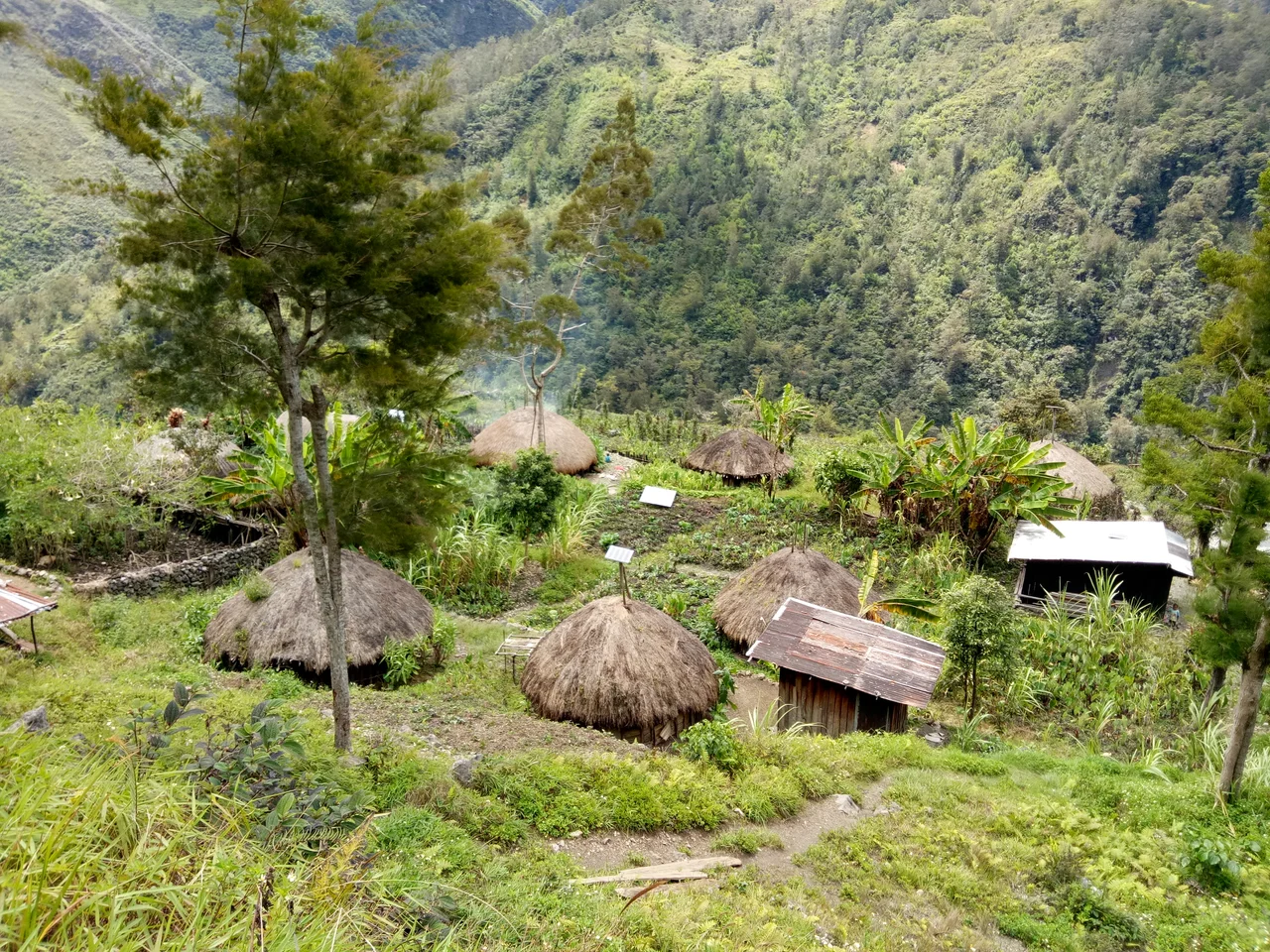
The Baliem Valley had been known to the outside world for only thirty-nine years when Operation Cenderawasih began. Richard Archbold's 1938 expedition had accidentally discovered it from the air - a hidden agricultural civilization of two hundred thousand people, cultivating sweet potatoes in irrigated fields the Dutch named the Grand Valley. The Dani, Yali, Lani, Mek, and Nduga peoples who lived there had been connected to the modern world through Dutch missions, then briefly through Indonesian administration after 1963. In 1977, for many villagers in the remoter districts, the sound of turbine engines overhead was still a recent thing. Napalm was new.
The Helicopter That Fell
On 29 July 1977, an Australian-built Bell helicopter with Indonesian markings, serial A2-379, crashed into the forest canopy during Operation Cenderawasih. The pilot, Flight Lieutenant Ralph Nigel Keith Taylor, was killed instantly. His co-pilot, Lieutenant Greg Cashmere, lost consciousness. Crewman Patrick Sinclair - everyone called him Paddy - had a tree branch punch through the floor of the aircraft and fracture his pelvis; when he bent down to pull Cashmere from his seat, the fracture dislocated. Two other crew were injured. The survivors fired a signal flare the next day at a passing DHC-4 Caribou, and Australian SAS troops were sent in by helicopter A2-149 to extract them. Years later, Sinclair would describe the rotor chopping the foliage as the aircraft fell: it felt, he said, like being an ant watching someone mow the lawn.
The Neglected Genocide
What happened on the ground was documented in fragments: the 5 July 1977 reports of over a thousand villagers killed in napalm attacks and bombings in the Yamsi-Arso border area; the accounts from Tiom of attacks with axes and razors; the killing of the tribal leader Nalogian Kibak in Dila; the reported forcing of village elders, teachers and priests to drink his blood at gunpoint. In Kuyawagi, survivors described pregnant women killed with bayonets. These accounts come from the 2013 report by the Asian Human Rights Commission and the Human Rights and Peace for Papua coalition, titled The Neglected Genocide, and from a parallel investigation by Yale Law School's Allard K. Lowenstein International Human Rights Clinic. Confirmed civilian casualty figures remain incomplete. The Indonesian government has never acknowledged the full scope of the operation. Forty-nine years on, Highland Papua remains under special security restrictions, and independent journalists rarely reach the valleys where Operation Bird of Paradise flew.
Flying Over History
From altitude, the Baliem Valley looks exactly as Archbold's pilots described it in 1938 - a long green trough ringed by three-thousand-meter walls, fenced gardens laid out in geometric patterns, drainage ditches cut by hand. Wamena sits near the center, its airstrip still the region's main lifeline. The terrain that once hid a stone-tool civilization from five centuries of outside contact also hid the aftermath of Operation Cenderawasih from most of the world for decades. The bird of paradise whose name marked the campaign still lives in these forests. So do the people the campaign sought to pacify.
From the Air
Baliem Valley campaign area centered near 4.08 S, 139.08 E in the Central Highlands of Highland Papua province, Indonesia. Cruising altitude 15,000-25,000 feet offers the best view of the long east-west valley, approximately 80 km by 20 km. Floor elevation around 1,600-1,800 m; surrounding peaks exceed 3,000 m, with Puncak Trikora (4,760 m) and Puncak Mandala (4,750 m) to the east. Nearest airport is Wamena (WMX / WAVV) at 1,660 m elevation, serving mainly STOL and turbo-prop traffic. Jayapura's Sentani Airport (DJJ / WAJJ) lies roughly 220 km to the north-northeast on the coast. Expect orographic cloud build-up after mid-morning; most valley traffic flies in early morning VFR only.
Nearby Stories
- 1981 Irian Jaya Earthquake 29 km away
- Mapenduma Hostage Crisis 37 km away
- New Guinea Highlands 83 km away
- Lorentz National Park 85 km away
- Trigana Air Flight 267 128 km away
- Foja Mountains 141 km away
- Lake Sentani 175 km away
- Mamberamo River 276 km away