
Bethel AME Church
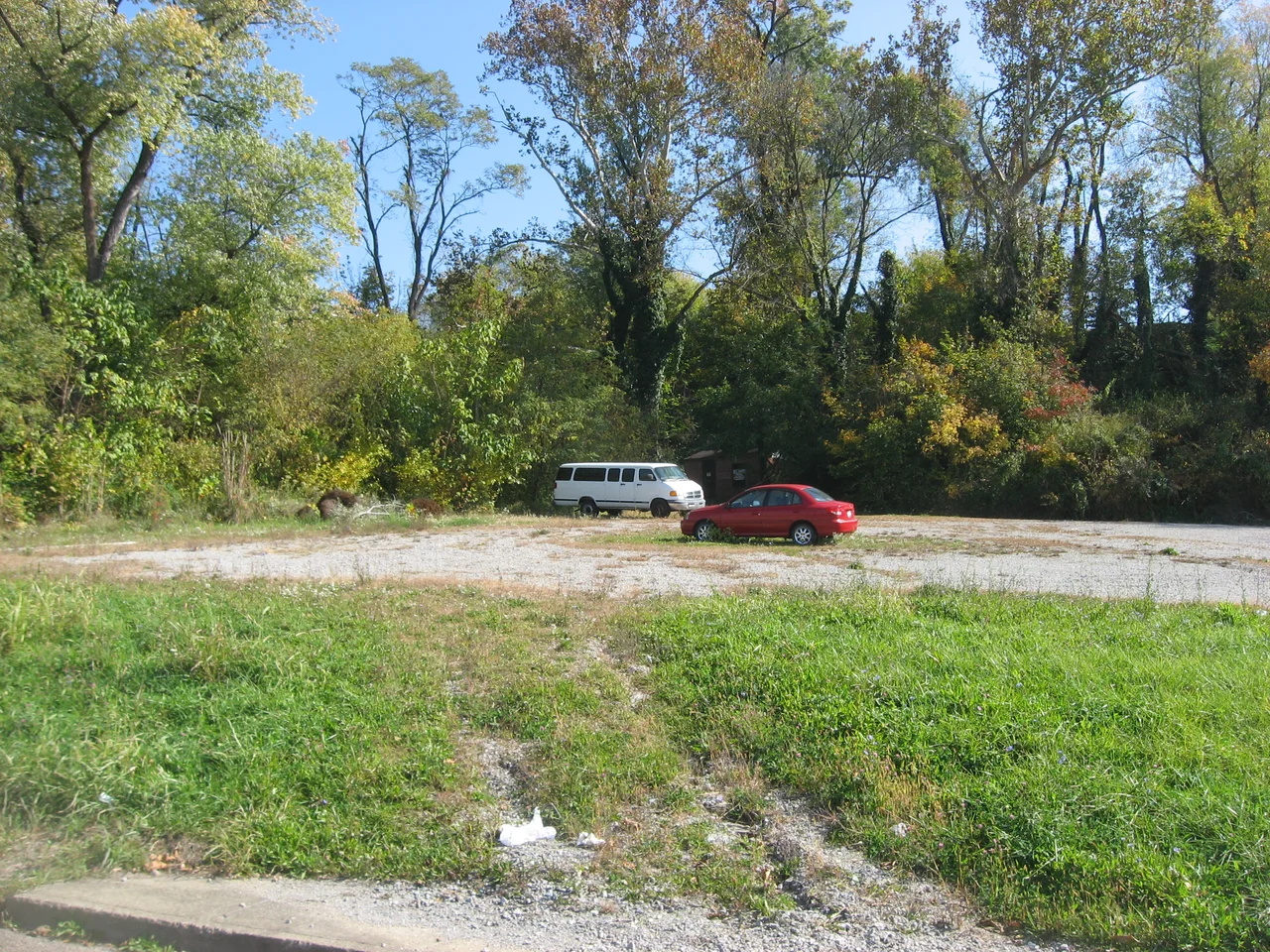
Sometime after 1998, the building at 820 Clay Street in Parkersburg disappeared from the streetscape. The two-story stucco church in vernacular Gothic Revival, built in 1887 by an African Methodist Episcopal congregation, had been added to the National Register of Historic Places that same year. The Wikipedia entry on the building uses the careful phrase 'presumed to have been demolished or moved since then.' Nobody, in the public record, has said exactly when, or by whom, or why. What was lost was the oldest Black church building in west-central West Virginia.
The AME Church
The African Methodist Episcopal Church was founded in 1816 in Philadelphia by Richard Allen and others who had walked out of a white Methodist congregation that demanded segregated seating. It became the first independent Black Protestant denomination in the United States. By the late 19th century, AME congregations had spread across the country, particularly in cities with growing Black populations after the Civil War. Parkersburg, with its industrial base and its location on the Ohio River, was a meaningful destination for African Americans seeking work in West Virginia. The Bethel congregation organized to serve that community. The 1887 building they constructed was their permanent home, replacing whatever earlier meeting spaces they had used.
The Building
Bethel AME was a two-story stucco structure in a vernacular interpretation of Gothic Revival style - meaning it had the pointed-arch windows, the steep roof gable, and the general silhouette that 19th-century church architecture associated with Christian worship, but executed in modest local materials by a congregation working within its means. Stucco rather than carved stone. Vernacular rather than high-style. The building stood at 820 Clay Street, a block from downtown, in a neighborhood of late-19th-century wood-frame houses. It was, the National Register nomination notes, one of three Black churches in Parkersburg, and the oldest surviving Black church building in the west-central region of the state.
What Made It Significant
Historic preservation in the United States has tended to focus on buildings associated with prosperous communities - the Avery Streets and Julia-Ann Squares of the world. Buildings associated with marginalized communities, including Black churches, were less often preserved, less often researched, and more often lost to deferred maintenance, urban renewal, and the slow attrition of neighborhoods. By the late 1990s, that imbalance was beginning to shift. The 1998 National Register listing of Bethel AME was part of a broader effort to document the African American architectural heritage of West Virginia - the kind of buildings that had carried Black communities through Jim Crow and the civil rights era but had rarely been formally protected.
The Loss
Sometime after 1998, the building was lost. The phrasing in current sources - 'presumed to have been demolished or moved' - reflects the kind of incomplete record-keeping that often accompanies the loss of structures associated with marginalized communities. The categorization on the article is more specific: it is listed as a demolished church. What is harder to determine is when exactly the demolition occurred, who ordered it, and whether any effort was made to preserve elements of the building. The National Register itself has a category for buildings that have been demolished but remain on the register - an acknowledgment that the listing was earned and the building's historical significance does not disappear just because the structure does. Bethel AME falls into that category.
What Remains
The congregation that built Bethel AME in 1887 was the congregation, not the building - and the AME presence in Parkersburg has continued, though in different structures. The architectural loss is real. The community continuity is also real. The lesson of Bethel AME is one that historic preservation has been slowly absorbing: that the buildings of marginalized communities require active preservation effort, not the passive protection that more prosperous neighborhoods can sometimes rely on. The Avery Street Historic District a few blocks away retains most of its 1900s housing stock. Bethel AME is gone. The difference between those outcomes is not random. It reflects, among other things, who had access to preservation resources in the late 20th century, and who did not.
From the Air
Located at 39.27 degrees N, 81.56 degrees W in Parkersburg, Wood County, West Virginia. The Bethel AME site was at 820 Clay Street, about a block from downtown Parkersburg. The building no longer stands. Mid-Ohio Valley Regional Airport (KPKB) is the nearest tower-controlled field about 6 nm north. Recommended viewing altitude 3,000 to 4,500 feet MSL. Expect dissected plateau terrain throughout the area; the Ohio River runs along the west side of the city.
Nearby Stories
- Mountaineer Power Plant 5.3 km away
- Burning Springs Complex 7 km away
- Glenville, West Virginia 10 km away
- Strouds Run State Park 11 km away
- Salem University 26 km away
- West Virginia Penitentiary 42 km away
- The Y-Bridge of Zanesville 44 km away
- The Wheeling Suspension Bridge: The Longest Span in the World 81 km away