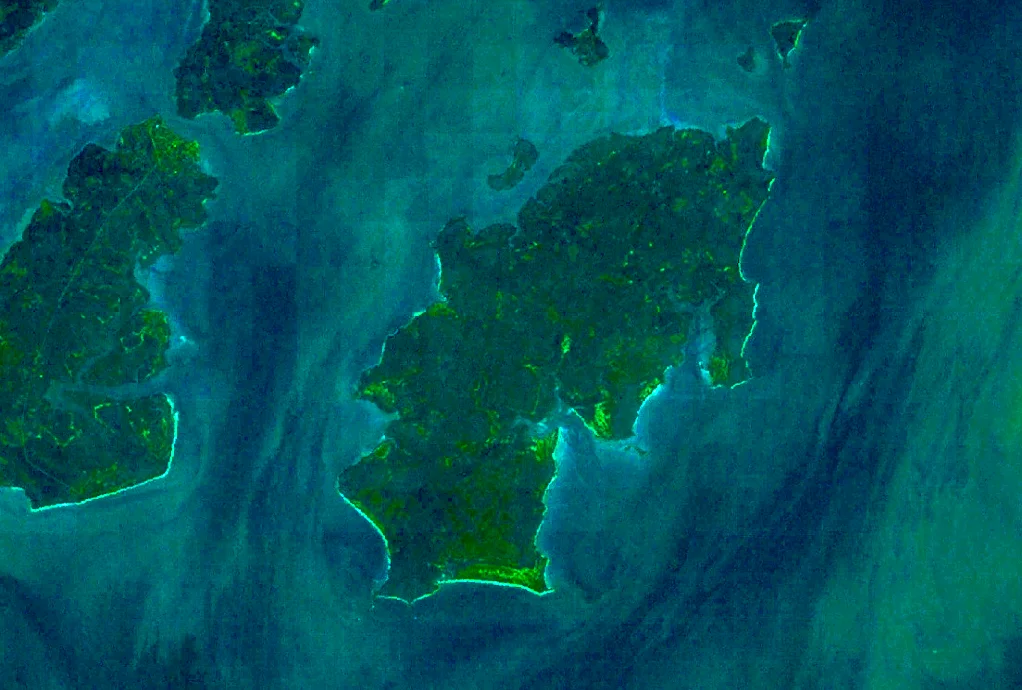

Bijagos Islands
There is no smooth way into the Bijagós, and that is rather the point. The dirt airstrip rattles your teeth on landing, the weekly boat from Bissau takes hours, and the cheaper pirogues are slow, crowded, and entirely at the mercy of the sea. But cross that water and you reach an archipelago that has held the modern world at arm's length - eighteen major islands and a dozen smaller ones, scattered off the coast of Guinea-Bissau, where many of the remote islands remain genuinely unspoilt. Getting here is the price of admission, and the Bijagós are worth every uncomfortable mile.
Crossing the Water
Boat is how almost everyone arrives, and every route departs from the port in Bissau. The local pirogues are cheap - around 3,000 CFA - but slow and often unpleasant, packed tight and exposed to the conditions. For comfort, the Spanish operator Consulmar runs a reliable scheduled boat once a week in each direction, and during the dry season adds frequent fast boats - roughly 30,000 CFA - that reach Bubaque or Rubane in ninety minutes to two and a half hours. There is also a dirt airstrip served by Air Bijagos, advertising flights most days for about 90,000 CFA each way, though the schedule is famously unreliable. Once you are island-bound, motorized canoes and the larger, safer boats are the way to move between islands.
Where to Go
The archipelago rewards island-hopping. Bubaque is the most populated island and the administrative center of the chain - the practical hub where most journeys begin and where the beaches stretch out largely untouched by mass tourism. Some islands are famous for their salt-water hippos, others rank among the best places anywhere for turtle-spotting. Roxa carries old significance, and one island sits as a sacred place that the Bijagó people hold apart - reachable on a three-hour boat trip from Bissau, but to be approached with respect for the customs that protect it. Bolama, a town of around 5,000 people, lies just a short pirogue trip from the mainland and makes an easy first taste of the islands.
Doing and Seeing
Life here runs on water and on quiet. Boating is the activity - the means of travel doubling as the main entertainment, threading between mangroves and palm-fringed shores. Bubaque's beaches are the headline draw: wide, clean, and blessedly free of the crowds that have overrun easier destinations. The economy you will see is mostly rural - families living from subsistence farming and fishing - and the tourist infrastructure is thin, which is precisely what keeps the islands feeling like a discovery rather than a resort. Slow down, hire a boat, and let the archipelago set the pace.
Sleeping and Staying Safe
Accommodation is limited and simple. On Bubaque, Cajou Lodge offers air-conditioned rooms in the evenings - courtesy of a generator, since round-the-clock power is not a given out here - and can arrange activities both on the island and on its neighbors. Beyond a handful of lodges, options thin out quickly, so plan ahead and travel light. And take the wildlife warnings seriously: the marshes and channels are home to Nile crocodiles and saltwater hippos, the latter unique to this corner of the world. They are extraordinary to glimpse from a boat and genuinely dangerous up close. Keep your distance, heed local guides, and the Bijagós will reward you with a version of West Africa that almost nowhere else still offers.
From the Air
The Bijagós Islands lie in the Atlantic off Guinea-Bissau, centered near 11.25°N, 16.08°W. From the air the archipelago reads as a maze of low green islands divided by silt-brown tidal channels and broad mangrove flats - a distinctive coastal waypoint. The gateway is Osvaldo Vieira International Airport in Bissau, ICAO GGOV; inter-island flights use Bubaque's dirt strip. Recommended viewing altitude 3,000-6,000 ft to take in the scale of the island scatter and the color shifts between water, sandbank, and forest.
Nearby Stories
- Poilão 31 km away
- Boké Museum 131 km away
- Nadir Crater 178 km away
- Pongo River (Guinea) 180 km away
- Dakar 377 km away
- Gouina Falls 554 km away
- Bafoulabé 620 km away
- SS Noemijulia 810 km away