
Birdsville Races
Picture a town of about a hundred people. Now picture seventy times that many descending on it in a single week - by light plane, by four-wheel-drive convoy, across a thousand kilometres of dust - for two days of horse racing in the middle of a desert. That is the Birdsville Races, and it has been happening, with very few interruptions, since 1882. They call it the Melbourne Cup of the outback, but the comparison undersells the strangeness of it: this is a major racing carnival held at the end of the Birdsville Track, where the grandstand is the sky and most of the crowd flew themselves in.
The Melbourne Cup of the Outback
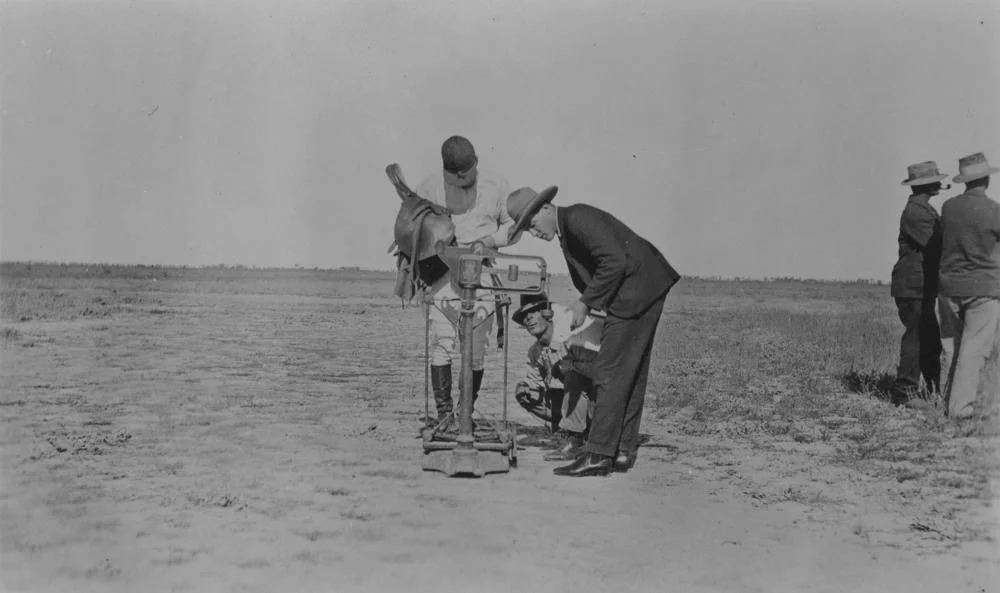
The first races were run in 1882, organised by what was then called the Birdsville Amateur Turf Club. The Cup has always been run over a mile - 1,600 metres - and the meeting has carried that thread of continuity across more than 140 years. The numbers around it have swung wildly with the times. Prize money for the Cup ran to 500 pounds in the boom of the 1880s, collapsed to just 50 pounds in the 1940s, climbed to A$5,000 by 1982 and $25,000 by 2002. In 2009, Queensland named the races one of its 150 official icons. What began as a bush meeting for local horses has become one of the most recognisable events in the Australian calendar - and it has done so without ever leaving its tiny, improbable home.
Seven Thousand in the Dust
For most of the year Birdsville's population sits around 100. For the September meeting it swells to roughly 7,000. Because the town is so remote, a large share of the crowd arrives by air - hundreds of light aircraft pack the town's airstrip, pilots sleeping under the wings - while the rest come overland, and the town of Quilpie throws its own welcome for travellers driving the long road west. The infrastructure strains to cope: with only one hotel, even the old courthouse is pressed into service as accommodation, and around 20 extra police are posted in to manage a crowd that briefly makes Birdsville one of the larger gatherings in inland Australia. The result is part race meeting, part festival, part endurance test - and entirely unforgettable for the people who make the journey.
Racing for the Flying Doctor
Beneath the spectacle runs a serious purpose, and it has always been a local one. In 1949 and 1950, the meeting set aside its Cup and ran a 'Hospital Handicap' instead, raising money to build the very Birdsville hospital that anchored the town's medical care. Today the cause has shifted but the spirit is identical: the races raise funds for the Royal Flying Doctor Service and the Birdsville clinic. It is a fitting partnership. The same outback that makes the races so hard to reach is the outback the Flying Doctor exists to serve, and the people who fly in for a weekend of revelry are, in effect, helping to pay for the aircraft that might one day come for them. Celebration and survival, raising a glass to the service that keeps the inland safe.
When the Track Won't Allow It
The desert still has the final say. For 128 years the meeting ran without a single cancellation - and then, in 2010, floodwaters across the Channel Country forced the races off for the first time in their history. The old course, three miles west of town and once home to steeplechase races, had been abandoned long before for exactly this reason: it flooded. The pandemic took two more years, 2020 and 2021, before the crowds returned. The lesson is the one every Birdsville story eventually arrives at. Out here, human plans are provisional, written in pencil against the weather and the land. The races endure not by conquering the outback but by bending to it - and coming back, every September the country allows, to run a mile in the dust once more.
From the Air
The Birdsville racecourse lies just outside the township at roughly 25.917°S, 139.383°E, a short distance from the town centre. The nearest airfield is Birdsville Airport (ICAO YBDV, IATA BVI), elevation about 159 ft, immediately west of town with a single sealed runway 14/32 - on race weekend (first weekend of September) up to 200 light aircraft fly in and traffic density is extreme, so broadcast early and expect non-towered, see-and-avoid conditions. Distant alternates: Windorah (YWDH), Boulia (YBOU), Bedourie (YBIE), Marree to the south in South Australia. Hazards include heat-driven density altitude, blowing dust, wildlife on the strip, and very long distances to fuel and services; the old western racecourse and Channel Country are flood-prone. Landmarks: the red Simpson Desert dunes to the west, the Diamantina River channels, and the dense temporary tent city that springs up around town each September.
Nearby Stories
- Annandale Station 3.4 km away
- Eromanga Sea 11 km away
- Carcory Homestead Ruin 50 km away
- Koonchera Point Massacre 56 km away
- Munga-Thirri National Park 86 km away
- Cordillo Downs 90 km away
- Munga-Thirri–Simpson Desert National Park 99 km away
- Currawilla 154 km away