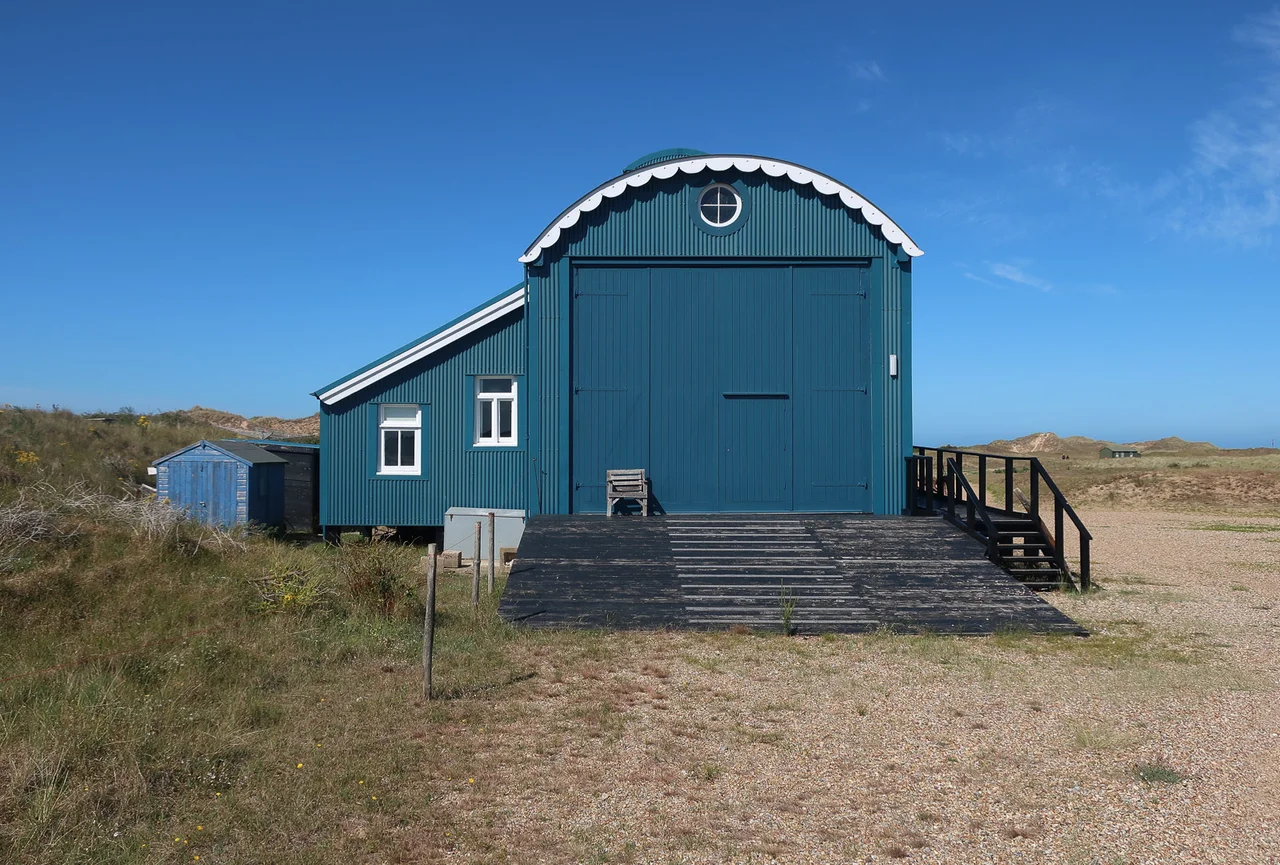

Blakeney Lifeboat Station
Blakeney Point is one of Norfolk's most distinctive natural features — a long shingle spit curling out from the coast between Wells-next-the-Sea and Sheringham, ending in a hook of beach where grey seals haul out in winter. The boathouse that stood at the tip of that spit from 1898 still stands today, now a visitor centre for the National Trust. But for most of the period between 1862 and 1935, it was an operational lifeboat station, launching into waters that the lifeboat crews themselves repeatedly described as badly suited to the boats they were given.
The First Brightwell
The Norfolk Association for Saving the Lives of Shipwrecked Mariners placed a lifeboat at Blakeney as early as 1824, but no service records survive from that period, and the station closed around 1843. The Royal National Lifeboat Institution re-established the station on 6 October 1862, following a committee meeting order the previous November.
The opening lifeboat was funded by a private gift: a Miss Brightwell of Norwich, approached through the Reverend P. J. Saffery of Tottenham, wished to present the cost of the lifeboat — £180 — to the institution, and asked that the boat be named after her father. A boathouse costing £154 was ordered. The 30-foot self-righting Pulling and Sailing lifeboat, built by Forrestt of Limehouse, was duly named Brightwell. Within months of its arrival, the RNLI committee had concluded it was too small and not powerful enough for the conditions at Blakeney. The crew agreed.
Eight Rescues in Six Years
The second Brightwell — the original boat having been extended to 36 feet 4 inches and returned with 12 oars rather than 6 — served through a remarkable run of rescues. Over six years from 1864 to 1870, the Blakeney lifeboat made eight lifesaving calls and brought 53 people ashore alive.
The vessels they rescued came from France, England, and across the North Sea: a French chasse-marée out of Nantes, a schooner from St Malo, a barque out of Sunderland carrying 18 people, sloops and brigs from Goole, South Shields, and Hartlepool. The coast off Norfolk, with its shallow approaches and unpredictable weather, caught ships from across northern Europe. The coxswain and crew went out to meet them.
Despite this record, the crew continued to report that the boat was ill-suited to Blakeney's waters — too narrow in the beam, not sufficiently stable. The Brightwell was withdrawn in 1873.
Wartime and the Caroline
The final lifeboat stationed at Blakeney was the Caroline (ON 586), a 38-foot Liverpool-class vessel funded from the bequest of Miss Caroline Everard of Laverstock, Wiltshire. She arrived on 17 November 1908 and went on to have one of the station's most dramatic service periods.
In January 1918, during the First World War, the Caroline launched twice in frosty, snowing conditions in a northwest gale. The crew rescued 16 men from the steamship General Havelock of Newcastle-upon-Tyne on 7 January, and 14 men from the tug Joffre on 8 January — 30 lives saved in 24 hours of winter storm. A wooden plaque in Blakeney church records the names of the crew who made those two launches. In the RNLI's own journal, the record of the rescues is a single line, wartime reporting suppressing the detail that such an effort deserved.
Closure
The RNLI committee voted to close Blakeney station on 14 March 1935. Motor-powered lifeboats had been established at flanking stations, and new ones were planned for stations either side of Blakeney in 1936. It had been eleven years since the Caroline had last been called out — in 1924. The logic of coverage had changed.
The 1898 boathouse at the end of Blakeney Point survived the closure and survives still. The National Trust manages it as part of the Blakeney Point nature reserve. The plaques in Blakeney church — recording the two great rescues of January 1918 — are still there. The station itself is gone, superseded by technology, but the work it did in its seven decades of service left marks that the town has not forgotten.
From the Air
Located at 52.97°N, 0.97°E at the tip of Blakeney Point, a shingle spit on the north Norfolk coast. The point and its distinctive hook shape are easily recognisable from the air. Nearest airport is Norwich (EGSH), approximately 30 miles southeast. The coast here is low-lying and subject to significant tidal variation, with the spit extending several miles into the North Sea.
Nearby Stories
- Wroxham 3.2 km away
- East Dereham Windmill 8.5 km away
- Alford Windmill 11 km away
- Mundesley 14 km away
- Batemans Brewery 14 km away
- Wisbech 15 km away
- HMS Cobra 24 km away
- SM U-97 118 km away