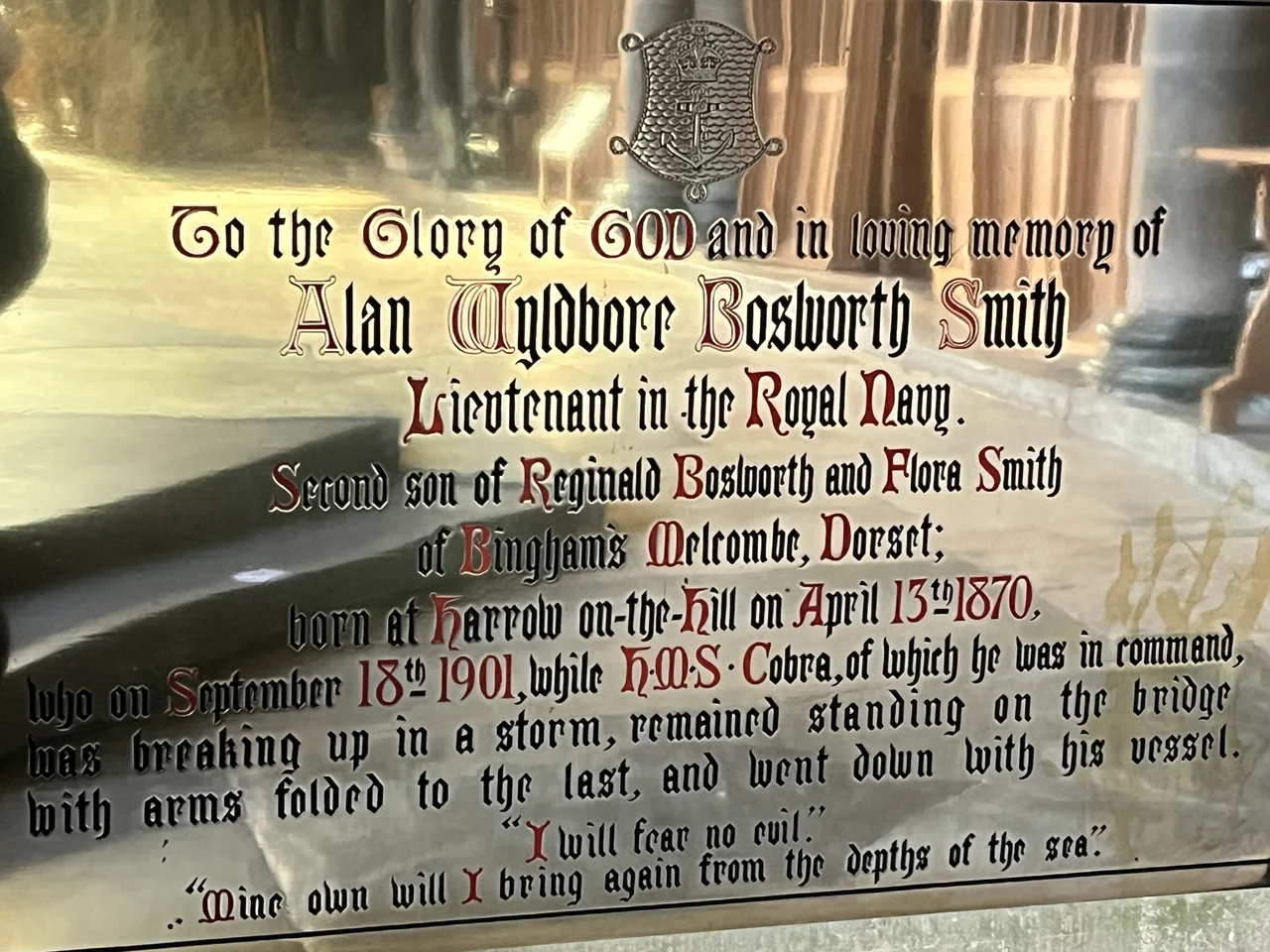

HMS Cobra
Six weeks after sister ship Viper sank in the Channel Islands, on the morning of 18 September 1901, the brand-new turbine destroyer HMS Cobra broke in half off the South Dowsing Shoal and went down. She had been at sea for less than two days, on her way south from the Tyne to Portsmouth for her guns and ammunition. Sixty-seven men died: forty-four Royal Navy officers and ratings, twenty-three civilians from the shipbuilders and from Parsons Marine, the firm whose revolutionary new turbines drove her. Twelve survived. The court-martial blamed structural weakness. The shipyard blamed wreckage in the water. The Royal Navy lost one of its only two turbine-powered ships and most of its faith in the experiment. The dead included the crew, the manufacturers' representatives, and the man whose company had just proven a technology that would eventually power every warship in the world.
Built on Speculation
Armstrong Whitworth laid down Yard 674 at Elswick on the Tyne on 27 May 1898, without an order. The firm believed it could sell a turbine-powered destroyer to the Admiralty if it built one fast enough. The launched hull was christened Cobra on 28 June 1899 and fitted with Parsons Marine turbines, the same revolutionary direct-drive steam turbines that had embarrassed the Royal Navy at the 1897 Diamond Jubilee Review when the unauthorised launch Turbinia tore through the fleet at over thirty knots, untouchable by patrol craft. The turbines promised sixty per cent more power than the reciprocating engines of the time. The Director of Naval Construction, Sir William Henry White, thought the hull less strong than he would have specified, but found no particular objections, and on 8 May 1900 the Admiralty bought the ship for seventy thousand pounds.
A Storm Out of Newcastle
Cobra left Elswick at 11:00 on 17 September 1901 under Lieutenant Bosworth Smith with two officers, forty-eight Navy men and twenty-three civilians, including Parsons Marine engineers and Armstrong Whitworth staff watching their handiwork put to sea. The wind was already up from the north-north-west. By the time she cleared the Tyne the sea was rough. She rolled so heavily that her stokers could barely stand and could not feed coal evenly to the boilers; two were allowed to die out, and her speed dropped to five knots. Stoker John Collins later testified that by the early morning of the 18th, the crew in the stokehold could hardly stand. Dawn brought some improvement. By seven in the morning she had worked up to eight knots, and the Outer Dowsing lightvessel came in sight about three miles off.
Cloud of Steam, Then Two Halves
The lightvessel crew watched Cobra plunging heavily as she came on. She stopped suddenly in a cloud of steam and broke in two between the aft boilers, 150 feet from her bows. The stern section sank quickly. The bow drifted in the wind. Chief Engineer Percey, in the engine room, felt an impact, came on deck, and found the ship breaking apart around him. The crew tried to launch the whaler; it capsized when forty or fifty men tried to crowd aboard. There was no time to assemble the three collapsible boats. Petty Officer Francis Barns got a fourteen-foot dinghy clear with seven men, threw out everything that would buoy it less, and pulled aboard four more, including Percey. Three of those rescued had to cling to the side of the boat for three hours in the cold sea before they could be hauled in.
One for Many
One sailor who reached the dinghy after a long swim looked at the men already aboard and said, by the survivors' account, "It's one for many, good-bye all," and let go. He sank and did not rise. Lieutenant Smith was last seen standing on the bridge as the bow went down. The twelve in the dinghy drifted for hours before the steamer Harlington picked them up around half past six in the evening and took them to Middlesbrough. The fishing boat 15, out of Great Yarmouth, found dead men in the water through the afternoon and went toward the wrecked bow still showing fifteen feet above the surface. The next day Commander Storey on HMS Hearty managed to drag the bow only a hundred yards before he had to leave it. A Swedish diver, Frank Carlson, made descents to a hull lying upside-down on the seabed, stem raised.
The Inquiry That Was Kept Secret
The court-martial in October 1901 absolved the surviving officers and found that the ship had broken from structural weakness rather than from striking anything. Carpenter's Mate Privett had reported two slight shocks before the break, and Armstrong's Philip Watts pointed to a one-inch indentation along the keel plate as evidence of a strike, but the court rejected that argument. A committee under Vice-Admiral Rawson tested the design by draining water from a cradled hull and found it stronger than the court had suggested, though weaker than most contemporaries. The full reports were sealed for fifty years, preventing outside scrutiny. A modern reading favours the alternative: that Cobra struck timber, suffered hidden flooding, and broke as the weight of water in the boiler room exceeded what the hull could bear. After Viper and Cobra, the Royal Navy refused to use snake names again. The wreck was found in September 2021 by divers from the BSAC Jubilee Trust.
From the Air
HMS Cobra was lost at approximately 53.43N, 1.10E in the North Sea, near the South Dowsing Shoal off the Lincolnshire coast. The wreck lies in waters east of Ingoldmells, well offshore in the shipping lanes north of the Wash. Norwich Airport (EGSH) is about 60 miles south-east; Humberside Airport (EGNJ) is about 35 miles west. The site is not visible from altitude, but the broad expanse of the Wash and the long Lincolnshire shoreline are the orienting features for any view across this sector of the North Sea.
Nearby Stories
- Amethyst Gas Field 6.1 km away
- HMS Vortigern 9.1 km away
- West Sole Gas Field 11 km away
- Brancaster 14 km away
- 2004 Ingoldmells Bus Crash 29 km away
- SM U-97 94 km away
- Battle of Lowestoft 103 km away
- SMS Blucher 271 km away