
Bob Jones University Museum & Gallery
It is a strange place to find a Botticelli. The Museum and Gallery on the Bob Jones University campus in Greenville, South Carolina, holds works by Tintoretto, Rubens, van Dyck, Cranach the Elder, Murillo, and Veronese. Seven Benjamin West paintings from the Progress of Revealed Religion series, originally commissioned by King George III, hang here. The collection is genuinely world-class. It is also impossible to talk about honestly without talking about the university that owns it, an institution that enforced racial segregation until 1971, that banned interracial dating until 2000, and that lost its federal tax exemption in 1983 because of those very policies.
What Bob Jones Jr. Bought
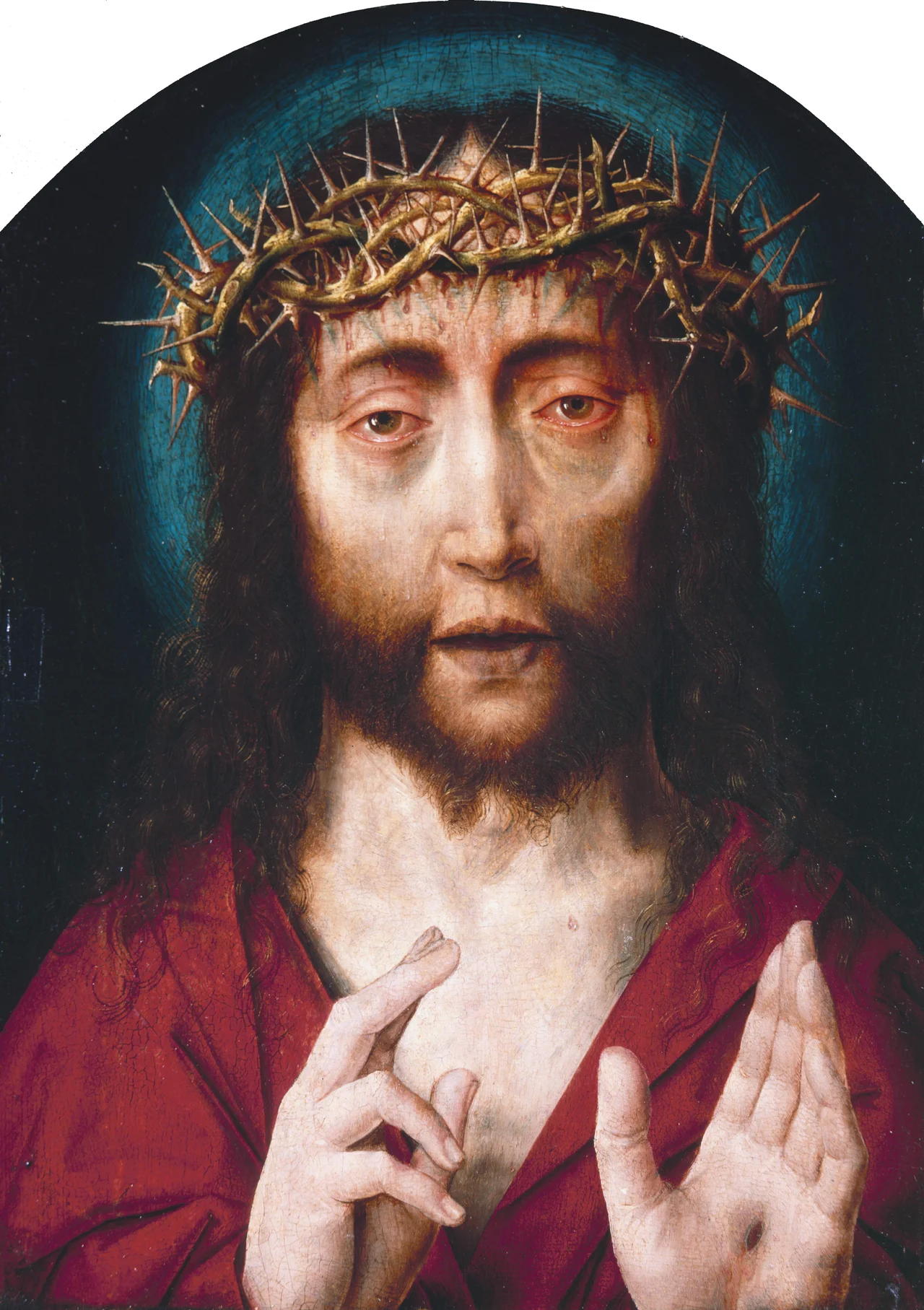
Bob Jones Jr., son of the university's founder, started collecting religious paintings in 1948. Three years later, on Thanksgiving Day 1951, the first 25 paintings went on display in two galleries next to a collection of antiquities. Even at the start, the holdings included works by Sandro Botticelli, Domenico Ghirlandaio, Tintoretto, Paolo Veronese, and Jusepe de Ribera. By 1962 the collection had grown past 200 works. The seven Benjamin West canvases were acquired in 1963. By the 1990s the museum held one of the largest collections of Italian Baroque and Northern European religious painting outside the major American museums, and serious scholars made pilgrimages to Greenville to study it. Jones bought aggressively in a postwar art market where European families were quietly selling off old altarpieces, and he had both an eye and a budget. His specialty was sacred art, the things other collectors of the period considered too overtly Christian for fashionable taste.
The Other Record
Bob Jones University was founded in 1927 by Bob Jones Sr., an evangelist who built the school on a Christian fundamentalist platform that rejected racial integration as forcefully as it rejected theological modernism. African American students were not admitted until 1971, and only if they were married at first. The university banned interracial dating among its students until 2000. In 1983 the United States Supreme Court ruled in Bob Jones University v. United States that the IRS had been correct to revoke the school's tax exemption because of those policies. The university paid back taxes for years. In 2008 it publicly apologized for what it described as racial policies that 'were wrong.' All of this happened while the museum down the hall held its Botticellis and Rubens and Tintorettos, and welcomed visitors from around the world to admire them. The art and the institution are not separable. Both are part of what made the place what it is.
The Move That Did Not Happen
In 2008, the museum opened a second location in downtown Greenville at Heritage Green, with the idea of reaching audiences that might not otherwise visit the university campus. It did not draw the crowds the trustees had hoped for. In 2017 the downtown satellite closed, and the main museum on campus also closed for what was described as a planned relocation to downtown Greenville. In 2019 the museum reorganized as Museum and Gallery, Incorporated, an independent nonprofit. As of the mid-2020s the collection remained largely off public view, awaiting a permanent new home and a curatorial framework that could present the works without the awkward institutional history attached to them. The art is too important to mothball forever. How it will eventually be shown, and what the wall labels will say, are open questions.
What You Can See When It Is Open
When the museum is open, the highlights include Botticelli's Madonna and Child with an Angel from around 1490, a small panel with the unmistakable Florentine lyricism of his Madonnas. Tintoretto's Visit of the Queen of Sheba to Solomon is a swirling dark Venetian canvas full of architecture and gesture. Rubens contributes Christ on the Cross, painted with the muscular drama his Antwerp studio was known for. Lucas Cranach the Elder's Salome with the Head of John the Baptist is one of two known versions; the other is in Lisbon. Carlo Dolci, the seventeenth-century Florentine specialist in devotional intimacy, is represented by a particularly fine Virgin and Child. The Benjamin West series, painted for King George III, mixes English Romantic drama with Old Testament narrative. Taken together, the collection traces the European tradition of sacred painting from the late Gothic to the early nineteenth century. As art, it is extraordinary. As an inheritance, it is complicated. Both of those things are true at the same time.
From the Air
Located at 34.88 degrees North, 82.36 degrees West on the Bob Jones University campus in northern Greenville. The campus sits on Wade Hampton Boulevard, identifiable from the air by its institutional buildings and the distinctive brick architecture. Nearest airports: Greenville Downtown (KGMU) about 3 nm south-southwest, Greenville-Spartanburg International (KGSP) about 7 nm east. Best viewed at 1,500 to 3,000 feet AGL; the campus is a compact, recognizable cluster of buildings on the northeastern edge of central Greenville.
Nearby Stories
- Battle of Musgrove Mill 6.9 km away
- Carl Sandburg Home National Historic Site 13 km away
- Stumphouse Mountain Tunnel 17 km away
- Forest City, North Carolina 20 km away
- Chiquola Mill Massacre 20 km away
- Battle of Blackstock's Farm 26 km away
- Great Smoky Mountains National Park 65 km away
- Tree That Owns Itself 84 km away