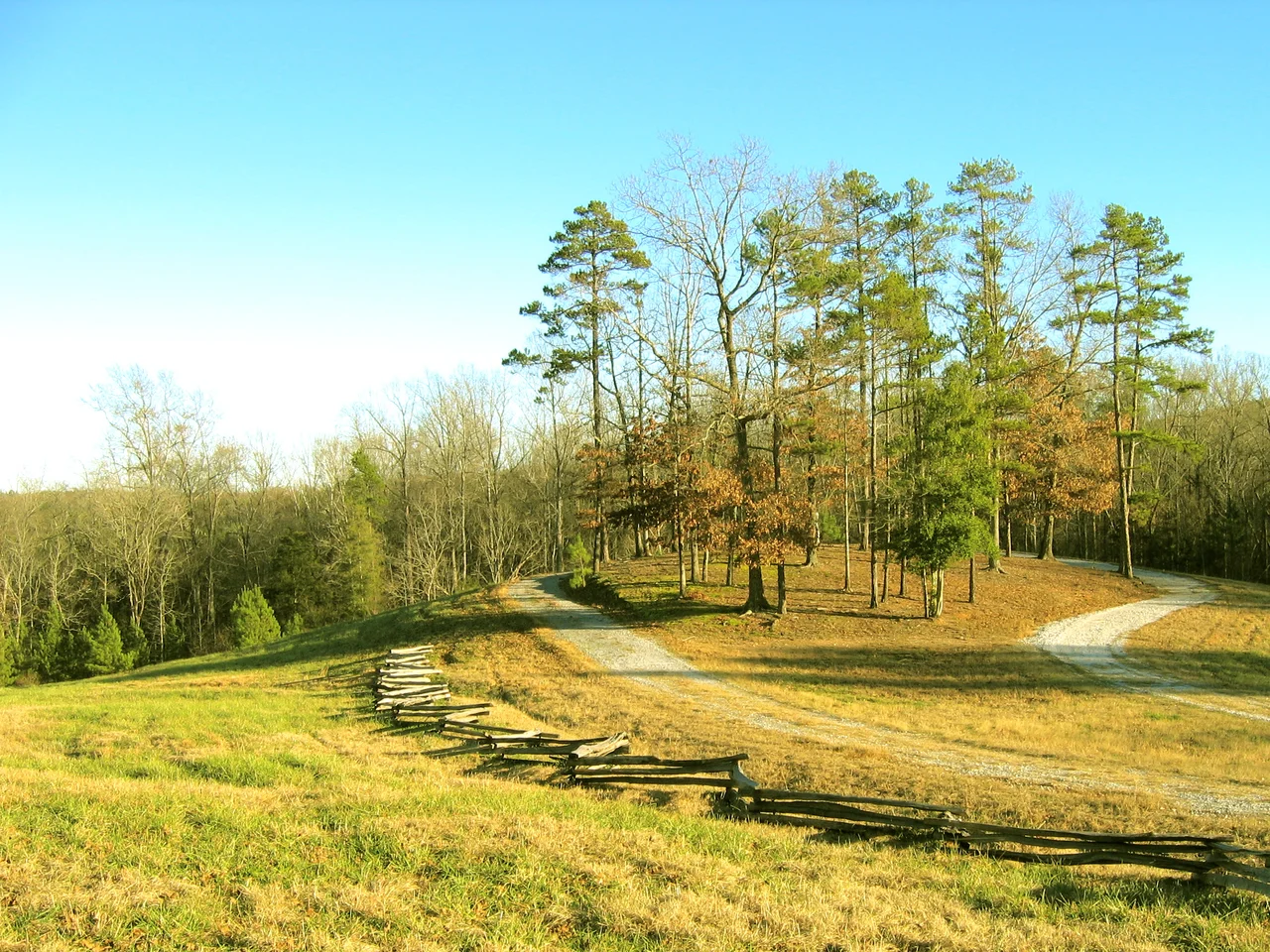

Battle of Blackstock's Farm
Banastre Tarleton was twenty-six years old and the most feared cavalry commander in the British Army. His name had become a verb among American partisans - to be 'tarletoned' meant to be hunted down and sabered without quarter. On the afternoon of November 20, 1780, on the hills above the Tyger River in what is now Union County, South Carolina, Tarleton arrived ahead of his infantry and artillery, took one look at the American militia entrenched at William Blackstock's farm, and ordered a frontal charge. It was the kind of decision that had worked for him at Waxhaws and the Catawba. This time it didn't.
After Kings Mountain
Major Patrick Ferguson's entire command of 900 men had been destroyed at Kings Mountain on October 7, 1780 - killed, wounded or captured. The southern campaign that had looked like a British walkover after the fall of Charleston in May was suddenly fragile. The South Carolina backcountry was tilting toward the Patriots. Lieutenant General Charles Cornwallis ordered Tarleton to abandon his pursuit of Francis Marion, the 'Swamp Fox,' and to disrupt the operations of Brigadier General Thomas Sumter instead. Sumter had been gathering partisan volunteers, and his force now numbered a thousand backcountry militiamen. Tarleton had roughly 500 regulars, including about 80 men from the 63rd Regiment of Foot and the cavalry and infantry of his own British Legion. He was outnumbered two to one and didn't care.
Blackstock's Hills
On November 18, Tarleton's dragoons and the mounted infantry of the 63rd were watering their horses on the Broad River when some of Sumter's raiders fired across at them. The British scattered them with a three-pounder 'grasshopper' field gun. The next evening Tarleton's advance guard caught Sumter's rear, forcing the Patriot commander to stand somewhere. A deserter from the 63rd warned Sumter what was coming. Colonel Thomas Brandon, who knew the country, recommended the nearby farm of William Blackstock - a homestead on hills above the Tyger River with cleared fields of fire and outbuildings made of hardwood logs left unchinked, providing 'narrow but convenient openings for men firing from behind cover.' To reach Sumter, Tarleton would have to cross fences and a creek under fire.
The Charge
Sumter put Colonel Henry Hampton and his South Carolina riflemen inside the farm outbuildings, stationed other units behind fences, and screened still more in the surrounding woods. Tarleton arrived late in a fall afternoon and chose not to wait for his infantry and artillery. He attacked. At first it worked: the Patriot militia fired at too great a distance, and before they could reload, Major John Money brought the 63rd forward with bayonets and broke their line. But the 63rd advanced too close to the buildings. Hampton's riflemen opened up from inside the hardwood walls. Money was killed. Two lieutenants went down with him. Roughly a third of the privates fell. Partisans worked around the right flank and hit Tarleton's dragoons, who were still mounted and watching.
Tarleton Carries Money Out
Tarleton ignored the rifle fire and led his dragoons uphill to rescue what remained of the 63rd. Many of his men and horses were wounded. He dismounted personally and carried Major Money to safety - one of the few moments in his record that suggests something other than ruthlessness. Patriots continued shooting at wounded men struggling back toward British lines, the kind of detail backcountry memory preserved. Then the British fell back in order. Tarleton retreated two miles to await reinforcements. Sumter was wounded - severely enough that Tarleton claimed three of his men had 'promised to fix Sumter immediately' for fifty guineas apiece. Colonel John Twiggs left campfires burning that night and slipped Sumter's command away through the dark. Tarleton woke the next morning to find empty ground.
What It Meant
Tarleton reported to Cornwallis that he had broken the Americans and seriously wounded Sumter. Technically he held the field. But the British Legion - the regulars - had been stopped by colonial militia, even if from behind cover, and even if the militia had outnumbered them three to one. It was the first time during the war that an American militia had defeated British regulars. The wounding of Sumter, paradoxically, may have helped the cause: it took him off the field long enough for George Washington to appoint Nathanael Greene to command the Southern department - the man who would turn the campaign around. The Battle of Blackstock's Historic Site joined the National Register of Historic Places in 1974.
From the Air
Located at 34.68 degrees N, 81.81 degrees W in Union County, South Carolina, on hills above the Tyger River a few miles from Cross Anchor. Best viewed at 2,500-4,000 feet AGL. The Tyger River valley is visible from altitude. Nearest airports: Union County Airport (K35A, 12 nm east), Spartanburg Downtown Memorial (KSPA, 18 nm northwest), Greenville-Spartanburg International (KGSP, 30 nm northwest). The battlefield is preserved as a state historic site.
Nearby Stories
- Battle of Great Cane Brake 8.2 km away
- Fairfield County, South Carolina 9.5 km away
- Chiquola Mill Massacre 12 km away
- Battle of Hammond's Store 13 km away
- Cherokee County, South Carolina 13 km away
- Huck's Defeat 17 km away
- Fort Mill, South Carolina 24 km away
- Caesars Head State Park 34 km away