
Bolton Abbey
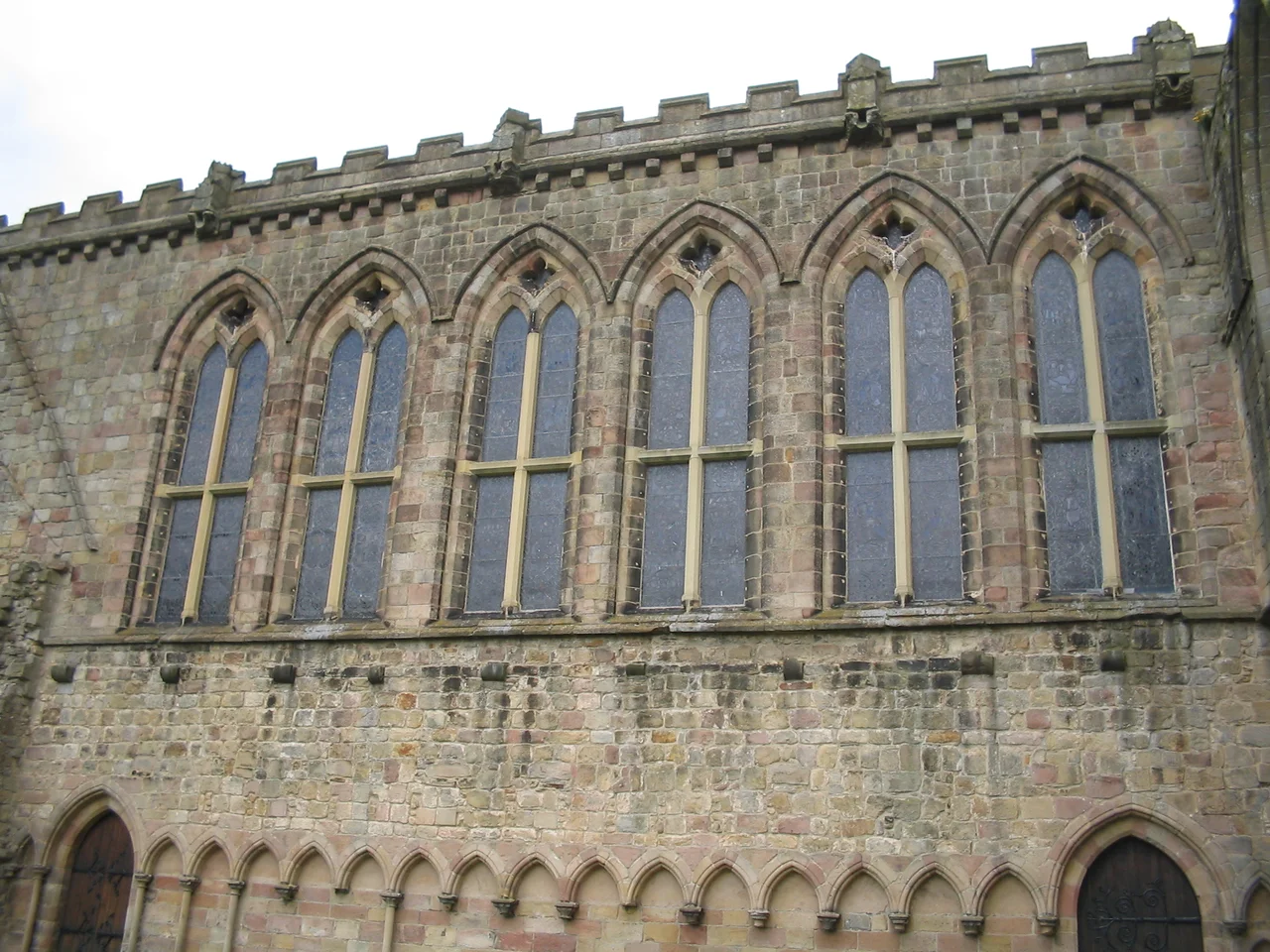
The east end of the church stands open to the sky. Stone arches that once framed candlelit Augustinian prayer now frame clouds passing over Wharfedale. Henry VIII closed Bolton Priory in January 1540, and the workmen who had been finishing a new tower simply put down their tools. The nave kept going as the parish church, the eastern end was left to weather, and almost five hundred years later, the contrast still defines the place. Along the River Wharfe, downstream from the famous stepping stones, the ruined abbey and the working church share one body of stone. The estate around them runs to thirty-three thousand acres.
From Embsay to Wharfedale
The Augustinian house began in 1120 at Embsay, four miles to the west, and moved to its present site in 1154 on land given by Lady Alice de Romille of Skipton Castle. The setting must have spoken to the canons regular at once: a deep curve of the River Wharfe, sheltered by woodland, with the limestone fells of the Dales rising behind. They built in the Gothic style that the rest of England was just learning. Scottish raiders sacked the priory in the early fourteenth century, but the canons rebuilt. By the time the Reformation reached Wharfedale, work was still in progress on a new tower begun in 1520. It got halfway. Then the king's commissioners arrived, the canons were pensioned off, and the half-built tower was left to stand as the porch of the parish church.
The Wharfe and the Strid
Cross the river by the stepping stones near the abbey, or by the wooden footbridge if the water is high, and you enter Strid Wood. The trail follows the Wharfe upstream through ancient oak. About a mile in, the river funnels into a narrow gap in the bedrock called the Strid. The whole flow of the Wharfe compresses into a slot a few feet wide. The current beneath is brutal; the underwater rocks are undercut into chambers that drowning victims have rarely escaped. Local lore claims a hundred percent fatality rate among those who fall in. Stand on the rim and listen. The Strid sounds quiet from a distance and roars up close, and the contrast between its summer-meadow surroundings and its lethal hydraulics is what makes Bolton Abbey's woodland walks unforgettable.
Cavendish Country
When Baroness Clifford married William Cavendish in 1748, the estate passed to the Dukes of Devonshire, who still hold it through the Chatsworth Settlement Trustees. Bolton Abbey has been a Cavendish landscape ever since. The eleventh Duke set up the modern trust; the family also owns Chatsworth in Derbyshire and Lismore Castle in Ireland. The estate today contains eighty-four farms, eight miles of river, six Sites of Special Scientific Interest, and twenty-seven small businesses from tearooms to bookshops. Cricketer Fred Trueman, Yorkshire's roaring fast bowler, is buried in the churchyard alongside a Royal Flying Corps officer killed in the First World War. The Brontes are said to have visited in the 1830s while Edwin Landseer was painting Bolton Abbey in Olden Times. Wordsworth wrote The White Doe of Rylstone after a visit in 1807. Turner painted it; The Cure put a blurred image of it on the cover of their 1981 album Faith.
Walking the Estate
There are sixty miles of paths. The Dales Way passes through on a permissive route. Barden Moor and Barden Fell, accessed under England's right to roam, climb to Simon's Seat at 1,591 feet, a prominent gritstone crag with a wide view over the Aire Gap. The estate charges for car parking but most of the land is open. In the early nineteenth century the Bolton Abbey estate bred the Craven Heifer, a cow that weighed nearly two tons and remains the largest ever recorded in Britain. The priory church still holds services, the rector lives in the rectory next door, and on warm Sunday afternoons families picnic on the lawns between the church and the ruins. Few places in England make the long arc of history so visible at a glance.
From the Air
Bolton Abbey lies at 53.98 N, 1.89 W in Wharfedale, six miles east of Skipton and twenty miles northwest of Leeds. The nearest airport is Leeds Bradford (EGNM), fifteen miles south-southeast. Manchester (EGCC) is forty miles south. From altitude, look for the distinctive ruined east end of the priory beside the meander of the River Wharfe; Strid Wood appears as a band of dark ancient oak following the river upstream. Barden Moor rises to the west and Simon's Seat to the east. Best viewed from 3,500 to 5,500 feet in clear weather, with the broad pastures of the Devonshire estate spread along the valley floor.
Nearby Stories
- Bolton Castle 1.2 km away
- Murder of June Anne Devaney 2.7 km away
- Sedbergh School 4.7 km away
- Battle of Boroughbridge 5 km away
- Allerton Bywater Colliery Explosion 5.8 km away
- Hebden Bridge 7.2 km away
- Mount Grace Priory 9.4 km away
- Forest of Bowland 14 km away