
Borneo Orangutan Survival
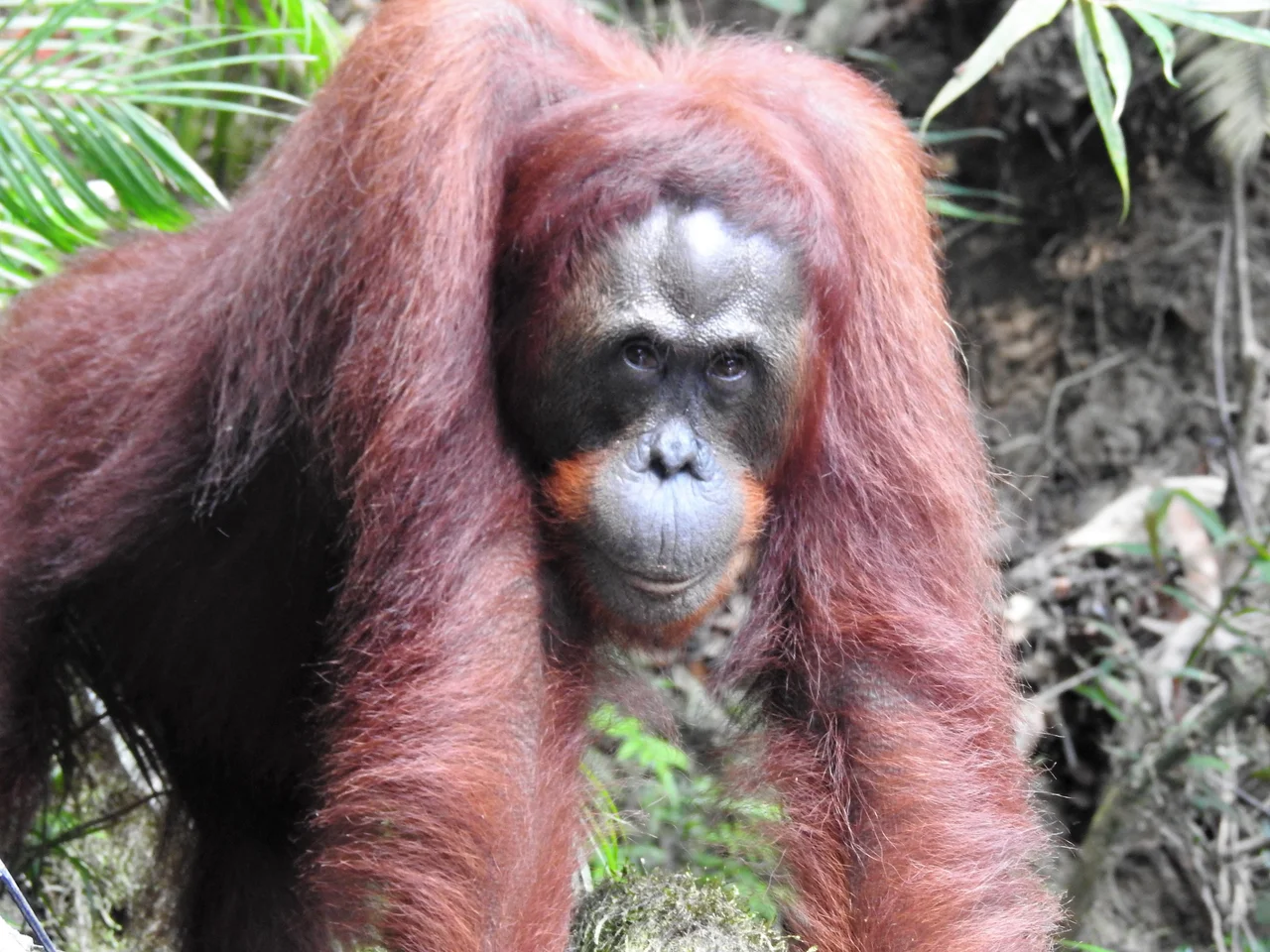
The baby orangutan arrives clinging to a blanket as though it were its mother. It is usually weeks old, often dehydrated, almost always traumatized. Someone kept it as a pet, or found it after loggers cleared the forest where its mother lived, or confiscated it from a wildlife trafficker at a roadside stall. At the Nyaru Menteng rehabilitation centre in Central Kalimantan, a surrogate human mother will carry this infant through its first months, then slowly, over years, teach it everything a wild orangutan mother would have -- how to climb, how to forage, how to build a sleeping nest in the canopy each night. The Borneo Orangutan Survival Foundation has been doing this since 1991, and the scale of the operation says everything about how badly Borneo's forests have been broken.
Schoolchildren and a Dutch Ecologist
BOS began not as a grand conservation initiative but as a local response to a visible crisis. In 1991, ecologist Willie Smits, teacher Peter Karsono, and a handful of colleagues in Balikpapan -- supported by schoolchildren who raised funds -- founded the Balikpapan Orangutan Society to rescue orphaned orangutans turning up in East Kalimantan's towns and markets. Their first centre at Wanariset, a tropical forest research station, was modest. But the orphans kept coming. By 1998, BOS had rescued over 500 orangutans in East Kalimantan alone. That year the organization gained official charity status in Indonesia, and in 2003 it adopted its current name. Today BOS operates across ten sites in East and Central Kalimantan, employs more than 440 people, and cares for over 400 orangutans at any given time -- making it the largest non-human primate conservation NGO in the world. Partner organizations in seven countries provide funding and advocacy.
Forest School
Nyaru Menteng, founded in 1998 by Danish conservationist Lone Droscher Nielsen with backing from the Gibbon Foundation and BOS, became the operation's emotional and logistical center. Located 28 kilometers from Palangkaraya, it was designed for 100 orangutans but at its peak housed over 600. The rehabilitation process is painstaking. Infant orangutans spend their first years with human caregivers who teach them basic survival skills -- climbing, identifying edible plants, avoiding threats. As they mature, they graduate to forested pre-release islands in the Rungan River, places like Kaja, Palas, and Bangamat, where feeding platforms offer a safety net while the animals practice independence. Only when an orangutan demonstrates it can find food, build nests, and navigate the canopy on its own does it earn release into true wilderness. Since February 2012, Nyaru Menteng has released 190 orangutans into the Bukit Batikap Protection Forest and 163 into the Bukit Baka Bukit Raya National Park.
A Population in Freefall
The urgency behind BOS's work is mathematical. The Bornean orangutan was uplisted to Critically Endangered in 2016 on the IUCN Red List. The population has collapsed to less than 20 percent of what it was in 1973, when an estimated 288,500 individuals lived on the island. Deforestation drives the decline -- illegal logging, fire, and the relentless expansion of oil palm plantations have shredded Borneo's rainforest into isolated fragments. The United Nations Environment Programme has warned that if trends continue, wild Bornean orangutans face extinction. Each orphan arriving at Nyaru Menteng represents a mother who was killed or displaced, a patch of forest that no longer exists. The foundation's rehabilitation work addresses the symptom. Its conservation programs -- particularly the 309,000-hectare Mawas area in Central Kalimantan, designated for BOS management by the provincial parliament in 2003 -- attempt to address the cause by protecting and restoring the habitat itself.
Kehje Sewen: A Forest Renamed
In July 2010, at an international conservation meeting in Bali, the Indonesian government granted BOS a permit to manage 86,594 hectares of former logging concession in East Kutai for orangutan reintroduction. The foundation named the site Kehje Sewen -- "home for orangutans" in the local Wehea Dayak language. Turning a logged-out concession into viable orangutan habitat requires more than releasing animals. BOS has planted hundreds of indigenous tree species across the site, restoring a forest that industry had reduced to scrub. The foundation also works with surrounding communities to develop sustainable livelihoods -- rattan cultivation, sugar palms, fruit orchards -- that offer alternatives to the extractive industries responsible for the deforestation in the first place. At the Samboja Lestari site near Balikpapan, an ecolodge built from recycled materials welcomes visitors and volunteers, embedding the conservation work in a local economy rather than imposing it from outside.
Cameras in the Canopy
BOS's work has become unexpectedly famous. The BBC's Orangutan Diary, NHNZ's Orangutan Island series, and most recently Orangutan Jungle School -- airing on networks from the Smithsonian Channel to Sky Nature -- have brought millions of viewers into the nurseries and forest schools of Nyaru Menteng and Samboja Lestari. In 2013, Harrison Ford visited Nyaru Menteng for the documentary series Years of Living Dangerously, connecting the plight of individual orphans to the global demand for palm oil. The footage is compelling because the subjects are compelling: orangutans share roughly 97 percent of human DNA, and watching an infant learn to climb or a rehabilitated adult make its first nest in the wild canopy produces something more than sympathy. It produces recognition. The cameras have also brought money and political pressure, both of which the foundation needs. Running Nyaru Menteng alone costs approximately $1.6 million per year. Every orphan that arrives is a seven-to-ten-year commitment before release is possible.
From the Air
Coordinates: 2.11S, 113.82E, in the lowland rainforest belt of Central Kalimantan. The Mawas conservation area is visible as a large contiguous forest block surrounded by plantation grids. Nearest airports: Tjilik Riwut Airport, Palangkaraya (WRBI/PKY), approximately 28 km from Nyaru Menteng. Balikpapan Sultan Aji Muhammad Sulaiman Sepinggan Airport (WALL/BPN) serves the Samboja Lestari site. Look for the contrast between intact forest canopy and palm oil plantations -- the patchwork tells the story.
Nearby Stories
- The Million-Hectare Mistake 11 km away
- The Night Kasongan Market Burned 38 km away
- The River of Four Names 129 km away
- Where the Streets Are Rivers 135 km away
- Kyai Gede Mosque 195 km away
- The Bay That Burned 292 km away
- The Monsun Boat That Almost Outlasted the War 295 km away
- Fort Alice 403 km away