
Botanical Garden and Zoo of Asunción
The trees here remember a dynasty. Spread across 110 hectares of natural forest on the northern edge of Asunción, the Botanical Garden and Zoo grows on ground that once belonged to Carlos Antonio López, who ruled Paraguay from 1842 to 1862 and built his country house, the Casa López, on this land in the 1840s. The López family were the closest thing Paraguay had to royalty, and this was their private retreat. Today their estate is one of the capital's great green lungs, where towering native trees more than 150 years old throw shade over visitors and nearly seventy species of animals draw families through the gates. A presidential garden became a public one.
From Dynasty to Bank to Garden
The land passed through hands that trace Paraguay's history. After Carlos Antonio López died, his estate eventually moved beyond the family, and in 1896 his descendants sold it to the state-owned Agricultural Bank. The old Casa López still stands, so representative of its era in architecture, technology, and decoration that it is formally protected as part of the city's cultural heritage. To walk past it now is to read the layers of a nation in a single property: a strongman's private villa, then an instrument of the state, then a place opened to everyone, the grand house surviving at the center of it all while the world around it changed completely.
The Botanist and the Woman in the Garden
The garden as we know it was the work of two scientists in love with this land. The German botanist Karl Fiebrig first came to Paraguay collecting plants and insects for European museums, settled there in 1910, and in 1914 transformed the López estate into a botanical garden and zoo with his wife, Anna Gertz. Fiebrig became professor of botany and zoology at the University of Asunción and founded a school of agriculture; Gertz designed much of the landscape that still defines the grounds. She did not live to finish it. Gertz died in May 1920, and some of her projects were left incomplete. She was buried in the gardens she had shaped, and in a sense she never left them.
A Zoo Ahead of Its Time
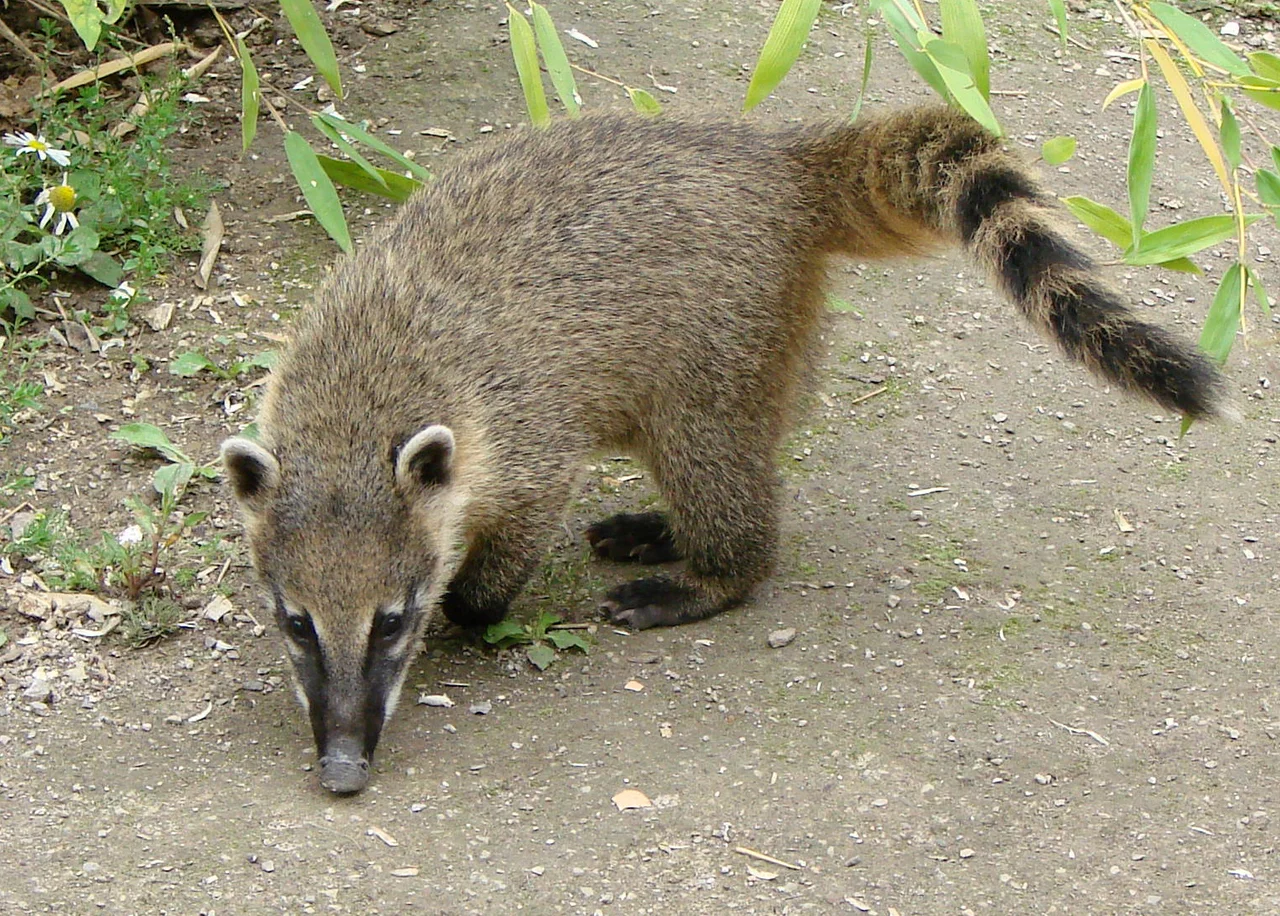
Fiebrig and Gertz built their zoo on an idea that was radical for 1914. Rather than caging animals in bare enclosures, they tried to house them in settings as close as possible to their natural habitat, a philosophy that would not become standard practice in the wider world for many decades. The collection still centers on the fauna of Paraguay, and its emblem carries a remarkable story: the tagua, or Chacoan peccary, a pig-like animal of the dry Chaco that science long believed extinct, known only from fossils until living animals were rediscovered in the early 1970s — found alive in 1971 and confirmed in a landmark 1974 paper by zoologist Ralph Wetzel. That a creature thought lost to time became the symbol of this garden feels exactly right for a place where the past keeps surviving into the present.
Exile and Endurance
Even paradise was not immune to the politics outside its hedges. Fiebrig went on directing the garden and zoo for years, was named head of Paraguay's Department of Agriculture in 1934, and built a Cotton Institute whose funds helped sustain the grounds. Then history turned against him. In 1936, in the bitter aftermath of the Chaco War, a wave of anti-foreign sentiment swept Paraguay, and the German scientist who had given the country one of its loveliest public spaces was forced to leave it, departing with his second wife and family. The garden outlasted his exile. Its nursery now cultivates more than 500 species, many of them medicinal, and a conservation and education center carries on the work that two immigrants began over a century ago.
From the Air
The Botanical Garden and Zoo of Asunción lies at roughly 25.25°S, 57.57°W on the northern side of Asunción, set in 110 hectares of forest near the Paraguay River. From the air it appears as a large, dense block of mature green canopy standing out against the surrounding city grid, with the river curving past to the west and north. The nearest airport is Asunción's own Silvio Pettirossi International (ICAO SGAS, IATA ASU), just northeast in the suburb of Luque, making this an easy landmark on approach or departure. Across the river to the south lies Argentina; Formosa's El Pucú airport (ICAO SARF) is the next field downriver. Viewing is good year-round, though the dry winter (June-August) offers the clearest air; humid summers bring haze and afternoon storms.
Nearby Stories
- Yaguarón 21 km away
- Río Pilcomayo National Park 22 km away
- New Australia 45 km away
- La Colmena, Paraguay 46 km away
- Nueva Germania 120 km away
- Pilar, Paraguay 155 km away
- Concepción 174 km away
- First Battle of Nanawa 241 km away